
5 Pillars of Tourism: Complete Guide with India Examples
The 5 Pillars of Tourism: A Complete Guide with India Examples Updated July 2026 — curated by the Idyllic India...
Read More →
Updated July 2026 — curated by the Idyllic India Tours travel team
For a few winter months, a stretch of white salt desert in western Gujarat turns into one of India’s most distinctive festival destinations. Rann Utsav 2026-27 opens at Dhordo, in Kutch, on 1 November 2026, only weeks from now, and the season is scheduled to continue until 7 March 2027. The draw is partly the landscape, an almost featureless salt plain that changes colour from afternoon to dusk to moonrise, and partly the craft, music and food culture of Kutch that has been built around it.
This guide covers what the festival actually is, the dates and full-moon nights worth planning around, how the permit system works, what the Tent City offers, how many days to allow and what to see beyond the tents. Where sources disagree, the differences are stated rather than quietly resolved.
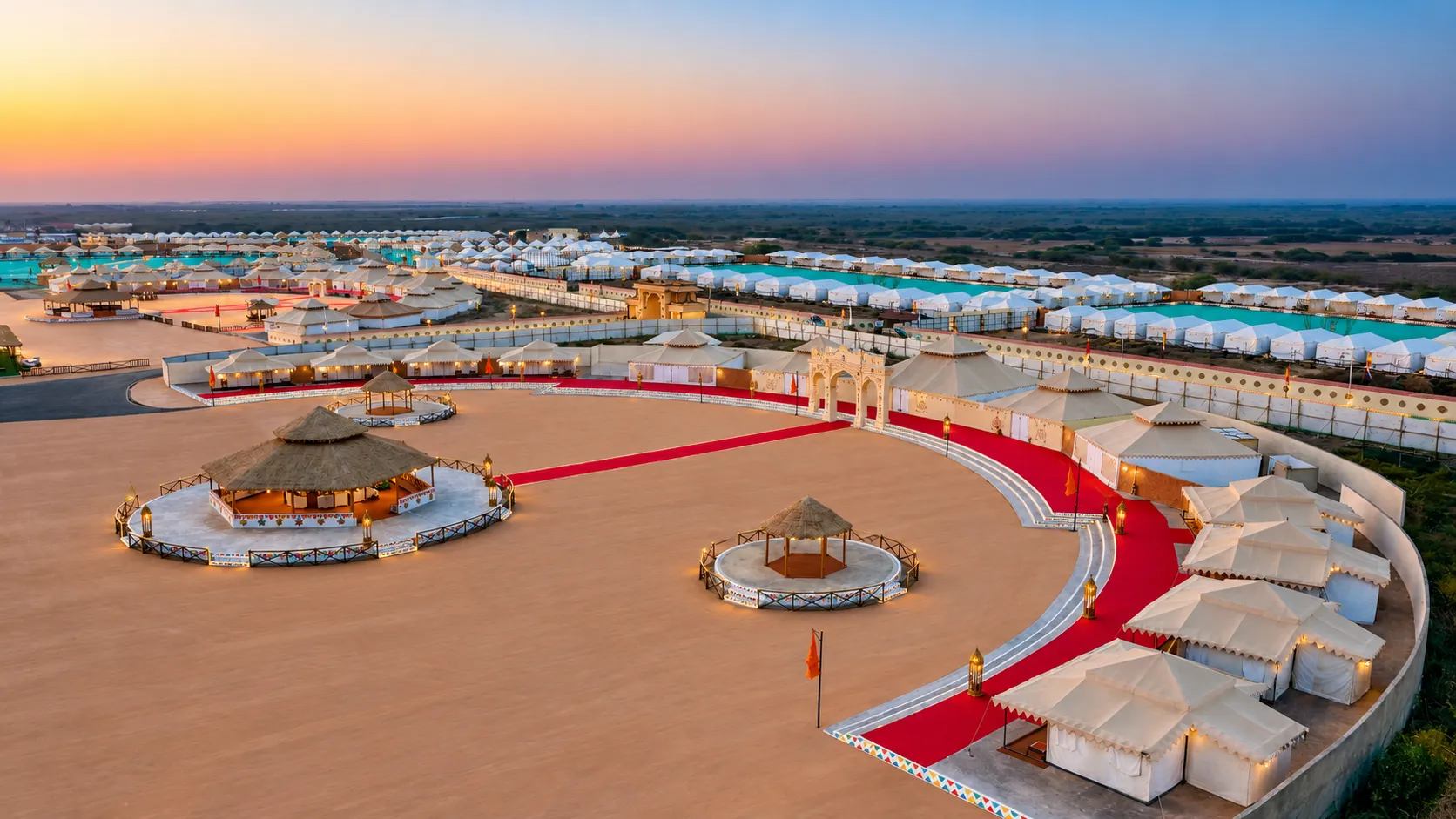
Rann Utsav is a seasonal cultural festival and tented stay at Dhordo, a village on the edge of the Great Rann of Kutch. It is organised by Gujarat Tourism, and trade reports name Evoke Experiences as the operator of the Tent City. It is not a single-weekend event with a fixed programme. Think of it as a tent village that stays open through the cold season, with daily folk performances, a craft market, food and a base from which to visit the white desert.
That distinction matters for planning. Nobody turns up for “the festival day”; travellers choose a few nights inside a season, and the quality of the trip depends far more on which nights they pick than on any programme schedule.
Dhordo itself was named among the UN Tourism (formerly UNWTO) Best Tourism Villages in 2023, according to Outlook Traveller, which is a useful signal that the village’s tourism is also tied to local community and craft life, not just tents on salt.
The official Rann Utsav website and the season announcements carried by several trade publications give the same window: 1 November 2026 to 7 March 2027. One third-party operator blog lists 5 November to 4 March instead. Official dates are confirmed each season, so treat the official booking page as final, especially if you are holding non-refundable flights.
Full-moon nights are the most requested dates, because the white salt reflects moonlight. Outlook Traveller lists the following windows for the 2026-27 season. The official special-dates page names these categories but did not show itemised dates at the time of writing, so confirm the exact nights at booking.
| Month | Full-moon window | Dark-moon night (stargazing) |
|---|---|---|
| November 2026 | 23–25 November | 9 November |
| December 2026 | 22–24 December | 8 December |
| January 2027 | 21–23 January | 7 January |
| February 2027 | 19–21 February | 6 February |
Diwali week, Christmas and New Year are consistently described as the busiest periods, so they sell out first and cost the most. If you want a full-moon night, book early, or consider the night just before or after the peak date. The sky is still bright, and the camp is usually calmer.
The Tent City is at Dhordo, roughly 80–85 km north of Bhuj, the nearest city, airport and railhead. Reported drive times vary: one source says 1.5 to 2 hours, trade reports say about three. Plan for two to three hours including a stop and you will not be caught short.
If you are connecting through Delhi, the capital is the natural starting point for travellers who also want the Golden Triangle before heading west.
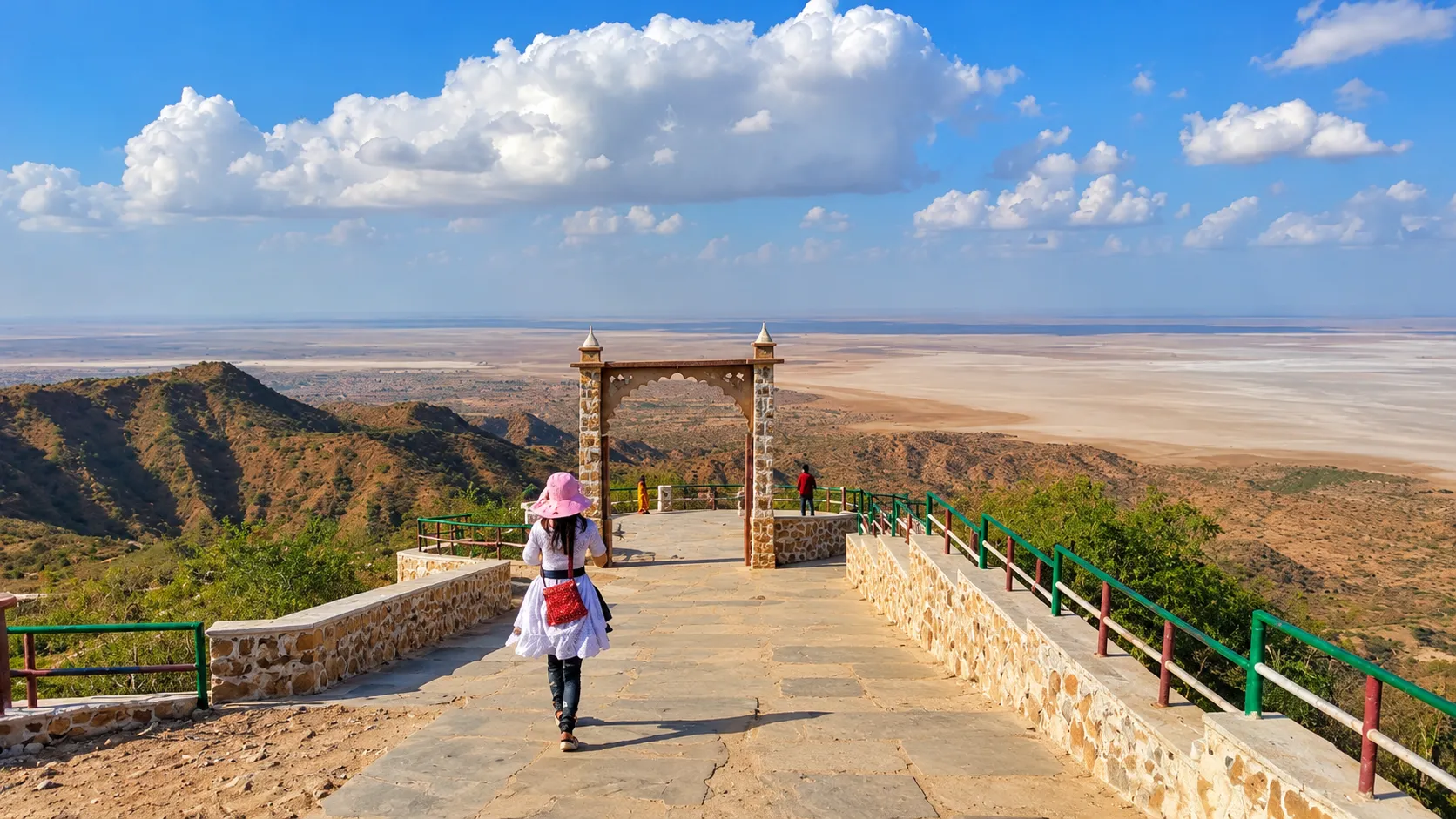
The Great Rann lies close to the international border, so entry to the white desert is permit-controlled. As reported by a 2026 travel-planning source, Tent City guests have their permit arranged through the booking, while independent day visitors apply through the Gujarat government’s online Rann permit portal and carry photo ID. Neither the official site nor the other sources consulted gave a current fee or a foreign-national procedure, so confirm requirements with the organiser or the district authorities before you travel. Rules and timings change, and a missed permit can mean a wasted journey.
The official site lists six accommodation categories: Non-AC Swiss Cottage, AC Swiss Cottage, Premium Tents, Super Premium Tents, Rajwadi Suite and Darbari Suite. Packages generally cover meals, scheduled transfers from Bhuj, and the cultural programme, with sightseeing depending on the package.
The Tent City offers a wide range of accommodation categories—from Non-AC Swiss Cottages and AC Swiss Cottages to Premium Tents, Super Premium Tents, and Rajwadi or Darbari Suites. Packages generally include meals, scheduled transfers from Bhuj, and cultural programmes. Because rates vary depending on the tent category, duration of stay, and season (such as festive weeks or full-moon nights), it is best to check the current tariffs according to your preferred category.
For 2026-27, Evoke Experiences is adding 35 seasonal tents next to Evoke Dholavira, which gives travellers a stay closer to the UNESCO site, reached via the 30-km “Road to Heaven” highway across the Rann.
The salt flats are the reason to come. Late afternoon into dusk is the best-lit period, and full-moon nights add a second, entirely different visit. Mornings and evenings are the comfortable hours; midday glare on salt is hard on the eyes, so sunglasses matter more than most people expect.
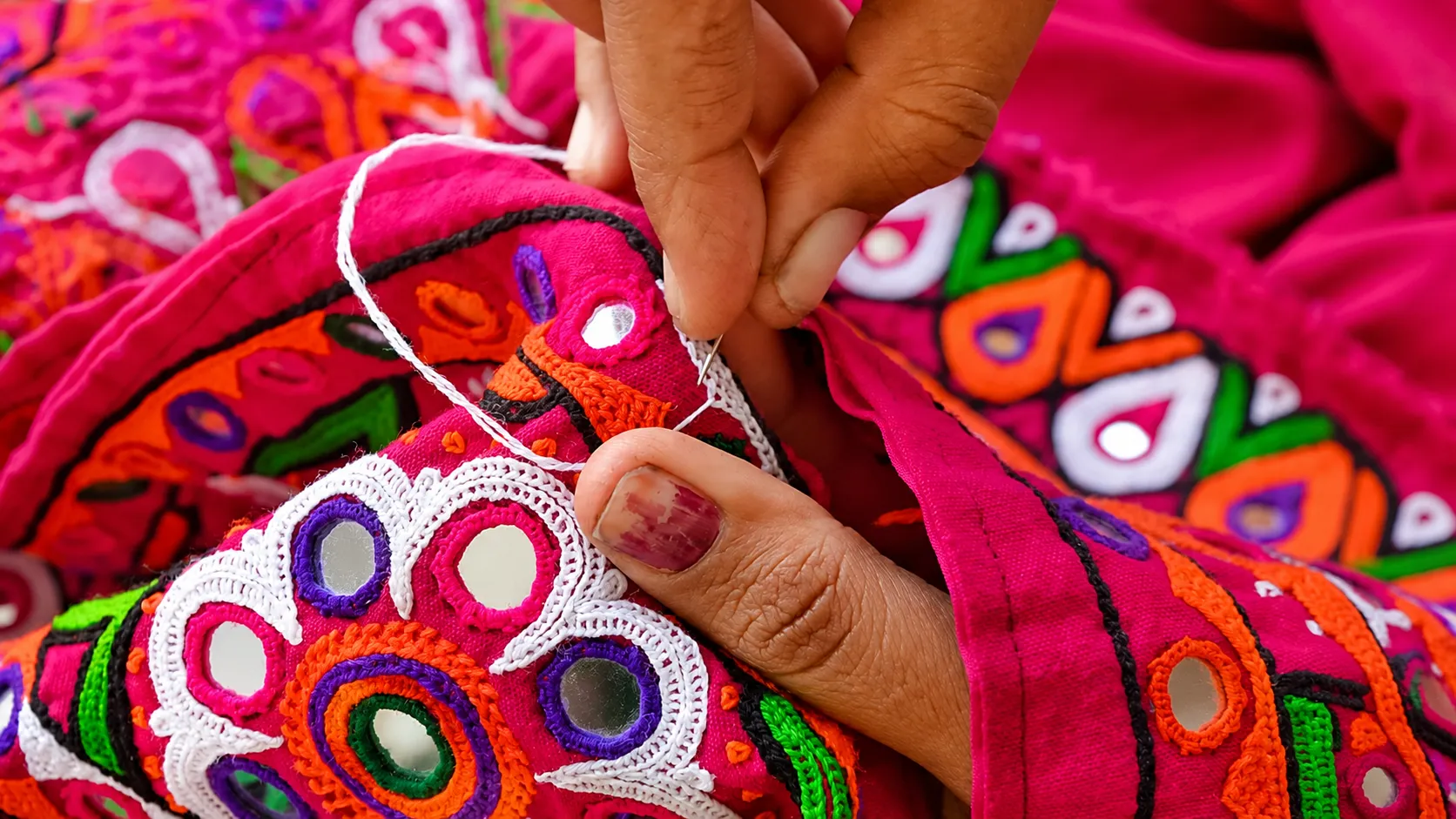
The on-site craft market sells Ajrakh block prints, Bandhani, mirror work, embroidery, traditional jewellery and Lippan mirror-clay art. This is where Kutch’s textile and craft tradition becomes tangible. If you want to see how the work is made, not just buy it, add a day for Ajrakhpur and the artisan villages near Bhuj.
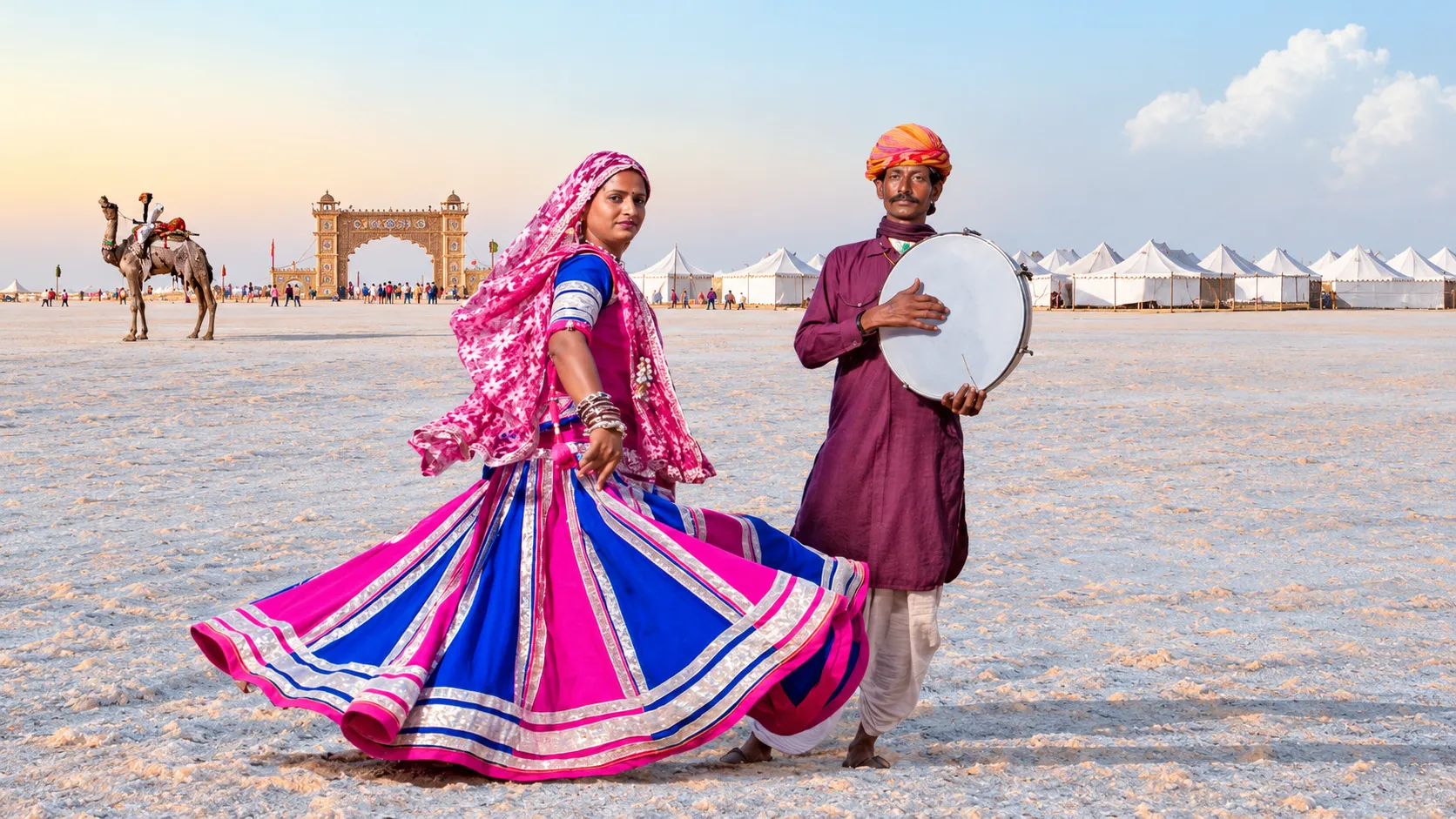
Evenings centre on folk music and dance. This season’s programme is reported to include Kutchi instrument performances and music by the Siddi community, a group with East African roots whose Dhamal tradition is distinctive in Gujarat. Listings change, so check the camp’s nightly schedule when you arrive.
Some operators describe camel rides, ATV rides and paramotoring as typically available, along with stargazing. Availability depends on the season and conditions, so check which are running during your dates before you decide to pay for a package on the strength of them. If a dune-and-camel experience is a priority and you are flexible, the sunset camel rides over the Sam dunes near Jaisalmer offer a sand-dune version of the same idea.
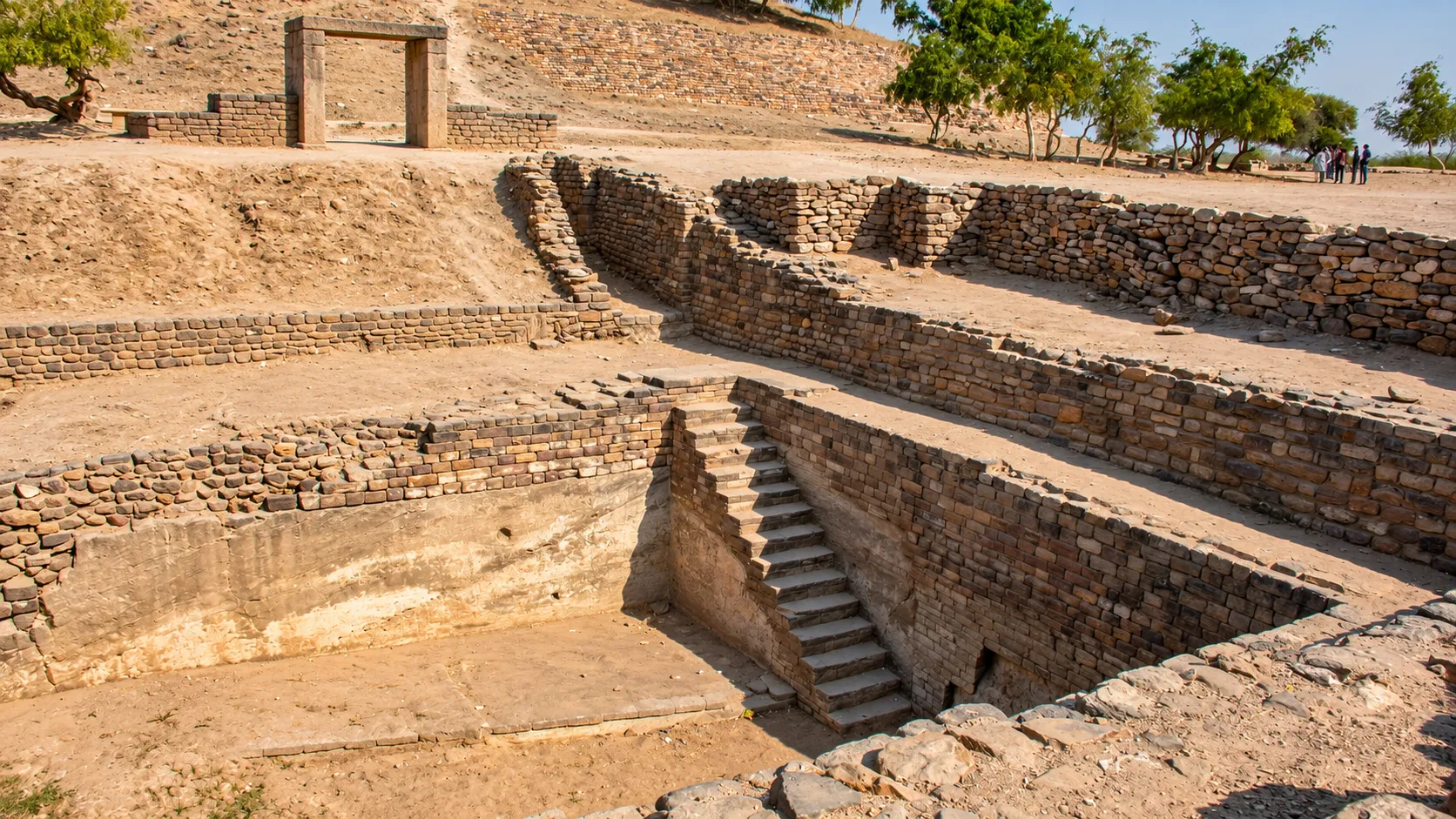
This is planning advice rather than an official itinerary. Two nights at the Tent City is the practical minimum, because the travel in and out eats a full day. Three nights lets you see the white desert at both sunset and sunrise or moonrise, visit the craft villages and still have a slow day. If you want Dholavira, Kalo Dungar and Bhuj, think of a five- to six-day Kutch loop instead, with the Tent City as the centrepiece rather than the whole trip.
Respectful behaviour is part of the experience. Keep to designated routes, carry out litter, do not disturb wildlife or restricted areas, buy directly from artisans where you can, and ask before photographing people or their work.
Most visitors treat Kutch as a short, self-contained trip. Travellers coming from overseas tend to prefer folding it into a longer winter journey, since the Tent City season overlaps with the best time for much of north and west India. A route through Rajasthan is the most natural pairing; our Royal Rajasthan Tours itinerary covers Udaipur, Jaisalmer, Jodhpur and Jaipur over 11 nights, and the same winter window suits luxury train journeys in India if you prefer to travel by rail. For rail-based luxury travel, those itineraries are a separate product and do not include Kutch.
Idyllic India Tours does not currently list a dedicated Kutch or Rann Utsav journey. If you want Kutch built into a wider trip, the team can say whether that is possible, so send an enquiry with your dates and interests.
If festivals are the reason you travel, our guides to the Rajasthan International Folk Festival, the Marwar Festival in Jodhpur and Navratri in India, whose Gujarat celebrations are well known, sit alongside this one, and more are filed under festivals on our travel blog.
If festivals are the reason you travel, our guides to the Rajasthan International Folk Festival, the Marwar Festival in Jodhpur and Navratri in India, whose Gujarat celebrations are well known, sit alongside this one, and more are filed under festivals on our travel blog.
Watch a day pass over the salt, see how the moon changes each month, flip through Kutch's crafts and test what you've picked up.
Drag the slider. The Rann looks completely different depending on the hour and the moon.
Full moon lights up the salt. Dark moon hands the sky to the stars. Pick a view, then tap a month.
The Tent City's craft market sells these traditions. Tap a card to flip it.
Etiquette: buy directly from artisans where you can, and ask before photographing people or their work.
Four quick questions, all answered somewhere in this widget or the guide above it.
The official website and announced season dates give 1 November 2026 to 7 March 2027. A few third-party sites list different dates, so check the official booking page before paying for anything non-refundable.
Full-moon windows (23–25 November, 22–24 December, 21–23 January and 19–21 February, per Outlook Traveller) are the most sought-after, while dark-moon nights suit stargazing. Peak holiday weeks sell out and cost more.
Entry to the White Rann is permit-controlled. Tent City guests reportedly have the permit arranged through their booking, while independent visitors apply through the state’s online permit portal. Check current requirements with the organiser, as rules change.
Roughly 80–85 km. Reported drive times range from about two to three hours, so allow generously for transfers.
The official site lists starting prices of ₹6,300 (1 night), ₹12,600 (2 nights) and ₹18,900 (3 nights), plus 18% tax, with higher prices for premium categories and peak dates. The final price depends on tent type and date.
Two nights is the working minimum and three nights is more comfortable. Add two to three days if you want Dholavira, Kalo Dungar and Bhuj.
Chat on WhatsApp