
5 Pillars of Tourism: Complete Guide with India Examples
The 5 Pillars of Tourism: A Complete Guide with India Examples Updated July 2026 — curated by the Idyllic India...
Read More →
Updated July 2026 — curated by the Idyllic India Tours travel team
Navratri means “nine nights”. It is a Hindu festival devoted to the goddess Durga, and it ends on a tenth day, Vijayadashami, better known as Dussehra. The big autumn festival, Sharad Navratri, falls in September or October, just after the monsoon. A quieter spring version, Chaitra Navratri, arrives in March or April.
For a traveller, the important thing to understand is that there is no single Navratri experience. In Gujarat it is nine nights of circle dancing. In Kolkata the same days become Durga Puja, a city-wide display of idols and hand-built pavilions. Mysuru lights up its palace, Varanasi stages the Ramayana in the open air, and Kullu hosts a week-long gathering of village gods. Where you stand decides what you see, so this guide is organised around that choice.
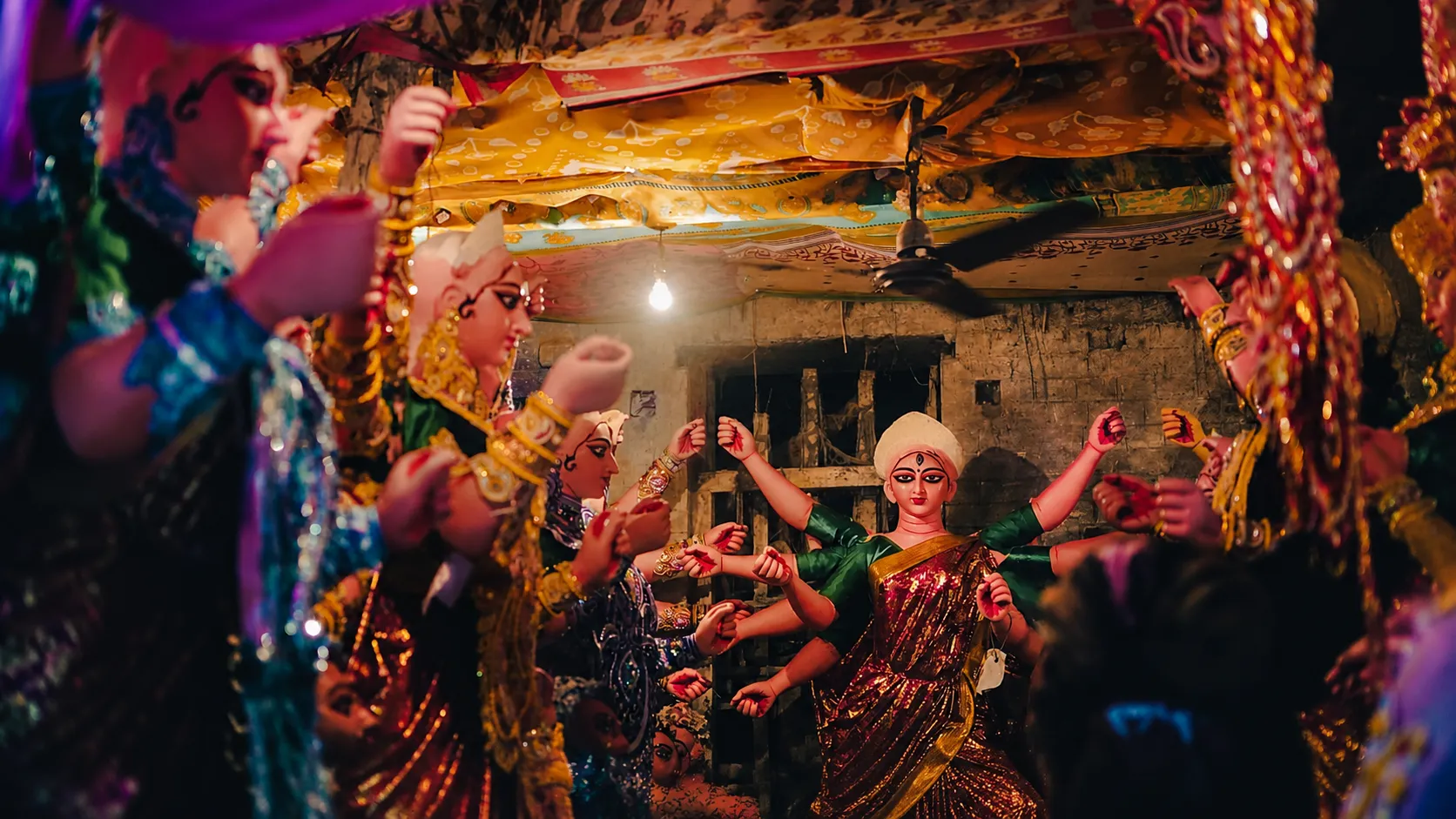
Each of the nine nights belongs to one form of the goddess, together called the Navadurga. The most widely told story is that the buffalo demon Mahishasura could not be beaten by any god, so the gods’ combined energy took the form of Durga, who fought him for nine nights and won on the tenth day.
Across much of northern India the tenth day carries a second meaning: Rama’s defeat of the ten-headed king Ravana. That version is performed as Ramlila theatre and ends with the burning of giant Ravana effigies. The two stories do not compete. Plenty of families hold both, and both say that good outlasts evil. Many families also divide the nine nights into three groups of three, for Durga (strength), Lakshmi (prosperity) and Saraswati (knowledge), though practice varies by region and household.
Navratri follows the lunar calendar, so it does not fall on the same Gregorian date each year. A lunar year is roughly eleven days shorter than a solar one, which is why the festival drifts earlier year on year until the calendar adds a corrective month and it jumps later again. Sharad Navratri always begins on the first day of the bright fortnight of the month of Ashwin, and Vijayadashami falls on Ashwin Shukla Dashami. Chaitra Navratri begins in the month of Chaitra and ends on Rama Navami.
Festival | Begins | Final day |
Sharad Navratri 2026 | 11 October 2026 | Dussehra, 20 October 2026 |
Chaitra Navratri 2027 | 7 April 2027 | Rama Navami, 15 April 2027 |
Sharad Navratri 2027 | 30 September 2027 | Dussehra, 9 October 2027 |
These dates follow the New Delhi panchang (the Hindu almanac). Regional calendars can differ by a day, and at least one 2027 calendar lists the start as 1 October, so confirm the date for your destination before booking flights. Sometimes a tithi (lunar day) is shortened or stretched, so two of the festival days may share a date.
If you can only be there for part of the festival, aim for Ashtami, Navami and Dashami, the last three days. They are the peak almost everywhere. For most travellers, Sharad Navratri is the one to plan around: the weather is kinder, and the public celebrations, from garba grounds and pandals to Ramlila stages and royal processions, are concentrated in these weeks. Chaitra Navratri stays closer to homes and temples.
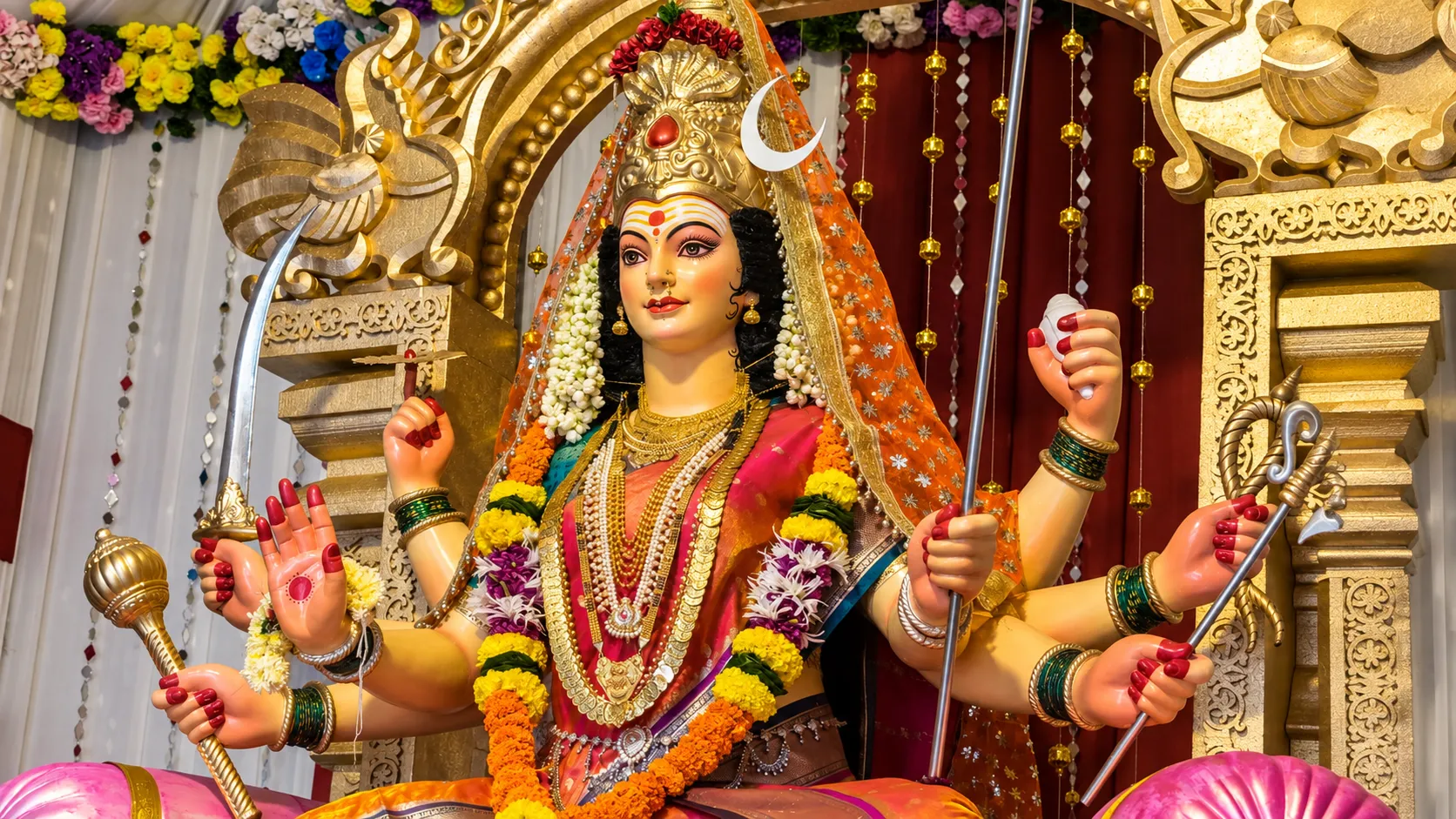
The order below is the common one. Regional practice varies, so read “what you may see” as a guide rather than a rule.
Night | Form of Durga | Represents | What you may see |
1 | Shailaputri | Daughter of the mountains | Homes install a sacred pot and sow barley; fasting begins for many |
2 | Brahmacharini | Devotion and discipline | Quiet temple queues, vrat (fasting) menus in restaurants |
3 | Chandraghanta | Courage with grace | Evening events pick up pace |
4 | Kushmanda | The creative smile behind the cosmos | Pandal builders racing to finish in Kolkata |
5 | Skandamata | Mother of Skanda (Kartikeya) | Ramlila plays well under way in northern cities |
6 | Katyayani | The warrior form | Bengal’s community pujas begin around Shashthi |
7 | Kalaratri | The fiercest form, remover of fear | Pandals fully lit and open late |
8 | Mahagauri | Purity and calm | Ashtami rituals, Kanya Pujan in many homes |
9 | Siddhidatri | Fulfilment | Maha Navami; Ayudha Puja in the south |
10 | Vijayadashami | Victory | Ravana burnings, Mysuru’s procession, Sindoor Khela and idol immersions in Bengal |
You will also hear about a colour for each day. In Maharashtra and Gujarat especially, women dress in the day’s shade. The colours follow the weekday, which is why the list changes from year to year. Don’t treat any single list as fixed.
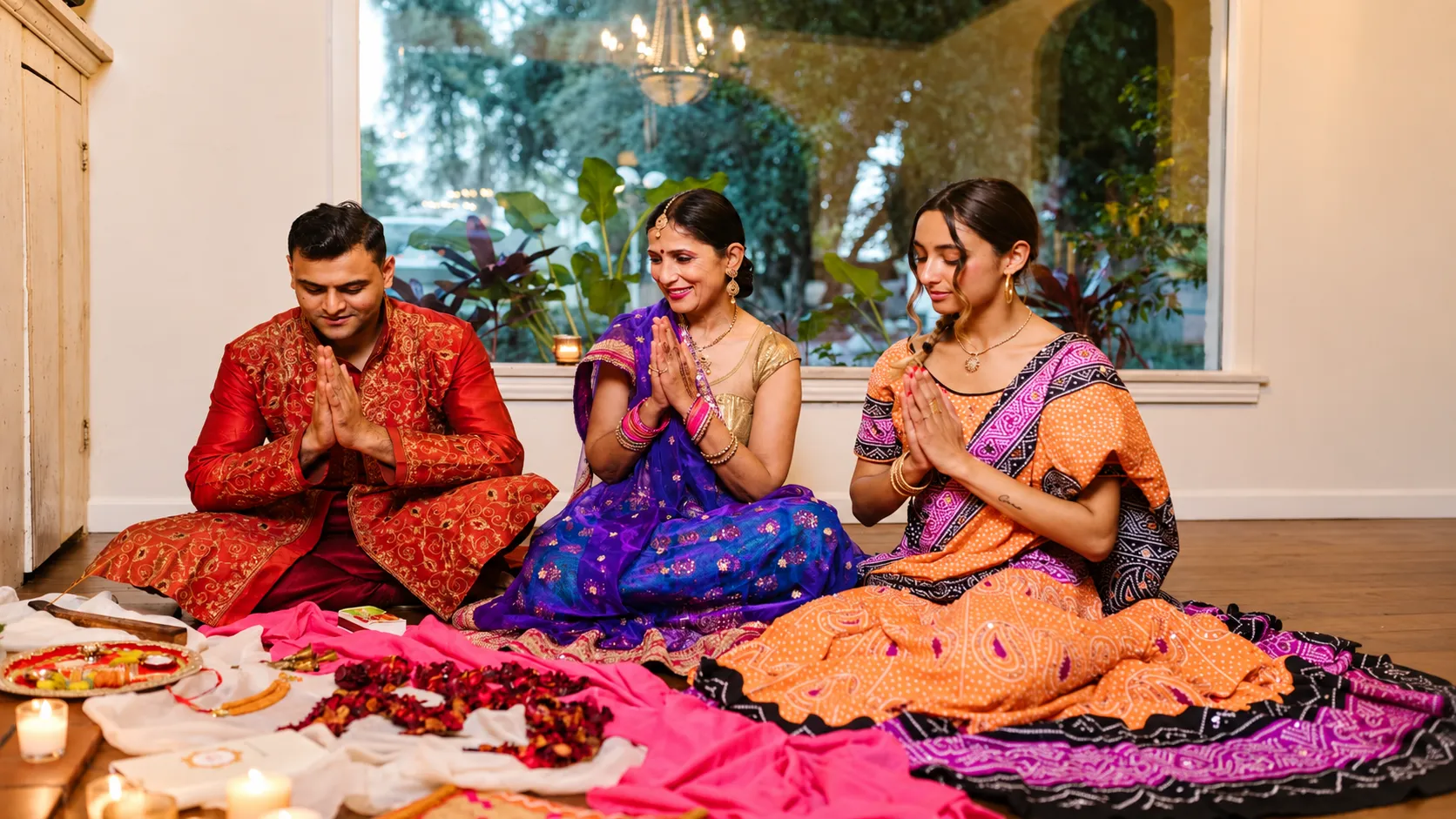
The five main experiences below are very different from one another, so choose by what you enjoy rather than by which is most famous.
Place | What you do | Peak | Ease of planning |
Gujarat (Ahmedabad, Vadodara) | Dance garba and dandiya raas | Weekend nights | Rewarding if you like joining in |
Kolkata | Walk, look, eat | Roughly Saptami to Navami | Easy to enjoy, hard on logistics |
Mysuru | Palace illuminations, elephant procession | Vijayadashami | Easiest to plan |
Varanasi and Delhi | Ramlila theatre, Ravana Dahan | The full run, ending Dussehra | Needs patience |
Kullu | A gathering of village deities | Opening day and the week after | Adventurous; hill roads |
Gujarat is where Navratri becomes a dance festival. Each evening, in villages, housing colonies and large organised grounds, people move in widening circles around a lamp or shrine to the goddess. Garba comes first, with clapping and stepping in rhythm, then dandiya raas with decorated sticks. UNESCO added Garba of Gujarat to its Representative List of the Intangible Cultural Heritage of Humanity in December 2023.
Ahmedabad and Vadodara host the biggest organised events. Large ticketed grounds usually sell passes in advance, and weekends go first, so ask about entry rules early. Everyone is expected to dance, visitors included, and beginners are usually pulled into the circle. Learn one basic step before you arrive. Chaniya choli or kediyu are expected at many venues, and nights run late, so plan slow mornings.
This is the best fit for people who would rather take part than watch.
In West Bengal the festival is Durga Puja. The run-up traditionally begins at Mahalaya, when the artists of Kumartuli finish the idols by painting the eyes. Community pujas start around Shashthi and run to Dashami. UNESCO inscribed Durga Puja in Kolkata on its Representative List in December 2021.
The centrepiece is the pandal, a temporary pavilion that houses the idol. Themes range from replica temples and palaces to entirely imagined worlds, and the city turns into a walk-through gallery. The busiest window is roughly Saptami to Navami, when pandals stay open late and the crowds match. Panchami and Shashthi evenings are calmer if you want to see the craftsmanship without the crush.
Many pandals serve a free midday bhog (typically khichuri with side dishes), and phuchka and kathi rolls fill the gaps. On Dashami, married women play Sindoor Khela, smearing each other with vermilion as they bid the goddess farewell, and the idols are carried to the river for immersion. October afternoons can be hot and humid, so most visitors go out in the morning and evening and rest in between. It suits people who want spectacle without needing to participate: photographers, art lovers and food-focused travellers.
Mysuru’s Dasara is the state festival of Karnataka, known as Nada Habba, and lasts ten days: nine nights of Navratri worship, then Vijayadashami. It grew from the royal Mahanavami celebrations of the Vijayanagara era and was formalised by the Wodeyar rulers, traditionally dated to 1610 at Srirangapatna.
Each evening the palace is lit and cultural programmes run across the city. The finale is the Jamboo Savari on Vijayadashami, in which an idol of the goddess Chamundeshwari rides in a golden howdah on a decorated elephant from the palace towards Bannimantap, followed by a torchlight parade that evening.
With one fixed nightly spectacle and one major procession, Mysuru is the easiest festival here to plan around. Some viewing areas are ticketed, so check the official arrangements as the dates approach. It fits naturally into a wider southern journey and suits heritage lovers, families and anyone who likes a clear schedule.
Ramlila, “Rama’s play”, is the staged retelling of the Ramayana, performed across northern India in this season. UNESCO inscribed Ramlila on the Representative List in 2008. Most Ramlilas run for about ten days and end on Dussehra evening, when giant Ravana effigies are burned in open grounds.
Ramnagar, on the opposite bank of the Ganges from Varanasi‘s ghats, is the exception. Its Ramlila stretches across roughly a month, is staged across the town in the open air, and has been patronised by the former royal family of Kashi for more than two centuries. It is slow, devotional theatre, not a two-hour show, and it is much better with a guide who can explain the scene in front of you.
Delhi is where many international journeys begin, so it is also where many visitors meet their first Ramlila. Neighbourhood committees stage the story nightly, and Dussehra evening ends in fire and fireworks. This is a good choice for people drawn to storytelling and spirituality, and for first-time visitors who want a cultural anchor for a Golden Triangle trip.
Kullu breaks the pattern. In most of India, Dussehra is one day. In Kullu, Vijayadashami is the first day of a seven-day festival at the Dhalpur Maidan. The idol of Lord Raghunath is pulled across the grounds on a wooden chariot, and hundreds of village deities arrive in palanquins, some after days of travel. There is no towering Ravana effigy, and the closing Lanka Dahan beside the Beas is symbolic. The tradition dates to the seventeenth century.
You do not need all seven days. Plan around the opening procession and one day in the middle of the week. Hotels across the valley fill early, and evenings are cold, so pack warm layers. It suits travellers who want a festival with mountains around it.
Some of the best Navratri moments happen in living rooms. In Tamil Nadu, Karnataka and Andhra Pradesh, families arrange dolls on tiered steps, known as golu or kolu, and neighbours visit to view them. In Telangana, women build towers of seasonal flowers for Bathukamma. In Kerala, children traditionally begin their first writing lessons on Vijayadashami (Vidyarambham). None of this needs a ticket, but all of it needs an invitation or a knowledgeable guide, which makes it a good fit for slower, more personal travel.
One more to know about: Bastar in Chhattisgarh holds one of the country’s longest Dussehra celebrations, reported to last around 75 days and centred on a local goddess rather than the Ramayana. It is remote and needs serious planning.
Vijayadashami is when the festival resolves, and it is celebrated very differently by region. In the north, effigies of Ravana, Kumbhakarna and Meghnad are set alight. In Bengal, idols are immersed in rivers and lakes. In Karnataka, the Mysuru procession takes over the streets. In much of the south the day is considered auspicious for starting new learning. It is the clearest single day for seeing how differently India reads the same festival.
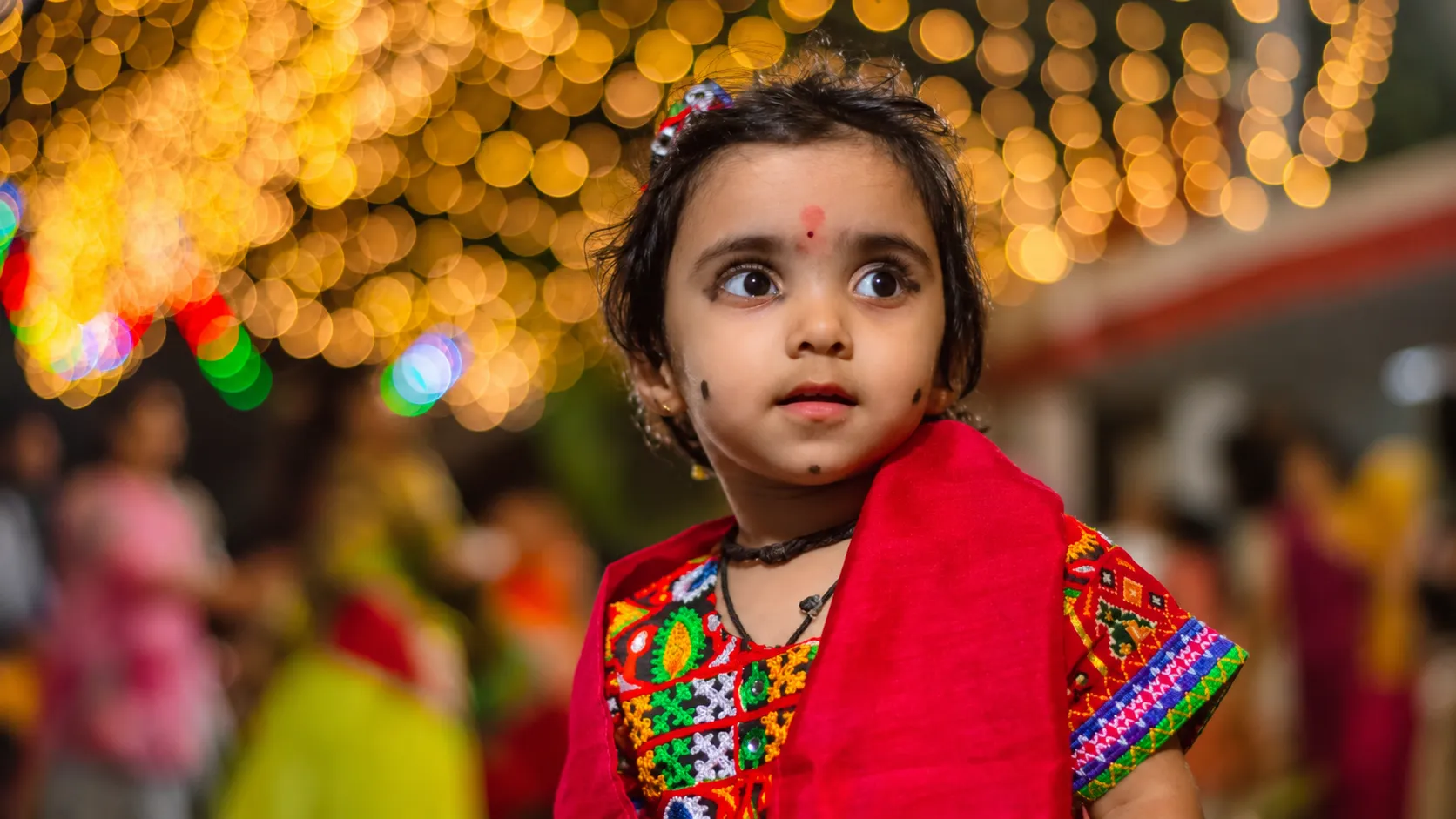
Remove shoes where asked, cover shoulders and knees at temples and pandals, and ask before photographing people at prayer or the inner areas. At garba venues, traditional dress is part of the fun, so ask your hotel which events enforce a dress code.
Many people fast or avoid meat, onion and garlic during the nine days, and some restaurants and temple towns go fully vegetarian, so check with your hotel before planning a particular dinner. You are welcome at most public events and not expected to fast or worship. If a ritual such as Sindoor Khela looks closed to outsiders, wait to be invited. In crowds, keep valuables close and agree a meeting point with your group.
Yes, with a caveat. The weather is generally comfortable after the monsoon, the cultural calendar is at its fullest, and it is a rare chance to see local life at its most social. The trade-offs are crowds, road closures, tighter hotel availability and, in Kolkata, humidity. Travellers who want a quiet, queue-free trip are better off in another month.
The most common mistake is trying to cover too much. The second is booking late: hotels near the biggest events sell out well before the dates are widely discussed.
Festival trips depend on timing, and that is where planning matters most: room availability, transfers between events, guides who can explain what you are watching. Idyllic India Tours designs private, tailor-made journeys around a traveller’s own interests, so a garba week in Gujarat, Durga Puja in Kolkata or Mysuru Dasara can be built as its own itinerary or folded into a longer route.
Feel the nine nights
Tap a lamp to light the nights up to that day.
Every journey we build is private and tailor-made. Tell us the festival and we will shape the route around it.
A nine-night Hindu festival honouring the goddess Durga in nine forms. It ends with Vijayadashami (Dussehra), which marks Durga’s victory over Mahishasura and, in northern India, Rama’s victory over Ravana.
Nine nights, followed by a tenth day. Some regions run longer: Mysuru’s Dasara lasts ten days, Kullu’s festival begins on Vijayadashami and continues for about a week, and Ramnagar’s Ramlila stretches across roughly a month.
Sharad Navratri falls in September or October, and Chaitra Navratri in March or April. Dates shift each year with the lunar calendar. See the dates table above, and confirm with a local panchang for your destination.
Navratri is the nine-night festival across India. Durga Puja is how Bengal and neighbouring regions mark the same period, centred on the last five days. Dussehra (Vijayadashami) is the tenth day, when the festival concludes.
It depends on what you enjoy. Gujarat for dancing, Kolkata for art and food, Mysuru for royal pageantry and easy planning, Varanasi and Delhi for Ramlila, and Kullu for a mountain festival of village gods.
Generally, yes. Most public garba events welcome visitors, and beginners are usually pulled into the circle. Check entry rules and ticketing in advance, and wear traditional clothes if the venue asks for them.
Chat on WhatsApp