
5 Pillars of Tourism: Complete Guide with India Examples
The 5 Pillars of Tourism: A Complete Guide with India Examples Updated July 2026 — curated by the Idyllic India...
Read More →
Updated July 2026 — curated by the Idyllic India Tours travel team
Durga Puja, one of the most vibrant Hindu festivals, celebrates the triumph of good over evil. Dedicated to Goddess Durga, it honors her victory over the shape-shifting demon Mahishasura. Revered as the embodiment of Shakti (divine feminine power), her worship brings communities together in a magnificent display of devotion, art, and culture.
The festival typically falls in the Hindu month of Ashwin (September or October) and spans ten days, though the main celebrations occur over five days—from Shashthi to Vijayadashami.
In 2026, the main five days are expected to fall in mid-to-late October (approximately 16–21 October), though exact tithi-based dates can shift by a day depending on the panchang used — worth reconfirming closer to the season, especially if you’re booking flights or hotels around it.
While the public festivities peak over five days, Durga Puja unfolds across a ten-day arc rooted in ritual. The season unofficially begins with Mahalaya, the day artisans paint the eyes onto the finished clay idol in a ritual known as chokkhu daan (“donation of sight”), said to awaken the Goddess’s presence within the image. From there, the five core days follow a set rhythm:
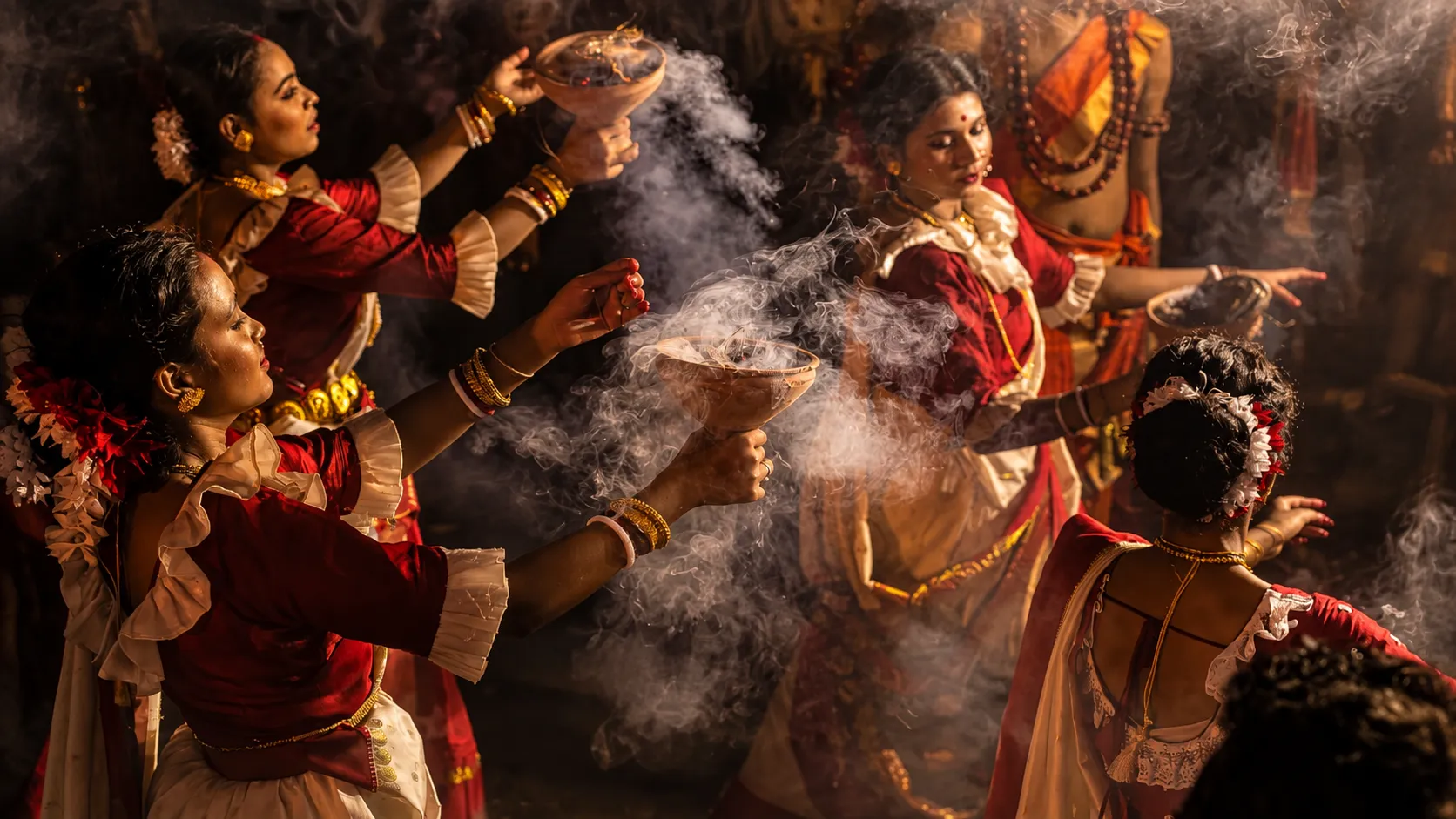
Months in advance, skilled artisans craft exquisite clay idols of the Goddess along with her four children: Lakshmi, Saraswati, Ganesha, and Kartik. These idols are placed in elaborately decorated, themed temporary structures called pandals.
During the festival, cities—especially Kolkata—transform into open-air art galleries. People engage in “pandal hopping,” traveling from one vibrant neighborhood to another to admire the artistic lighting and grand idol designs. The evenings come alive with the rhythmic dhunuchi dance—where devotees dance with earthen pots filled with burning coconut husks—and the resonant beats of traditional dhak drums. Rituals like the anjali (floral offerings) and the grand sandhi puja performed at the transition of the eighth and ninth lunar days highlight the deep spiritual essence of the event.
Kolkata’s status as the festival’s spiritual and cultural capital is now formally recognised: in 2021, UNESCO inscribed “Durga Puja in Kolkata” on its Representative List of the Intangible Cultural Heritage of Humanity — the first festival from Asia to receive the honour. Pandal hopping has a different character by area: North Kolkata’s narrow lanes are known for older, tradition-rooted pandals, while South Kolkata, Salt Lake and New Town tend to host larger, contemporary art installations. Because the city is at its busiest during this week, it’s worth booking flights and accommodation well ahead, and using the Kolkata Metro or walking for the most congested stretches rather than relying on road transport.
Beyond the religious ceremonies, the occasion is a grand social and cultural gathering. Families and friends reunite, wear new traditional attire, and enjoy a variety of delicious festive delicacies and sweets. It is a time when cultural boundaries blur, and people from all walks of life partake in the celebrations, fostering unity and harmony.
Food is central to the experience. Many pandals serve community bhog — a simple, vegetarian meal of khichuri, labra (mixed vegetables) and chutney — while the streets fill with stalls selling phuchka and kathi rolls. No celebration is complete without Bengal’s famous sweets, particularly rosogolla, sandesh and mishti doi.
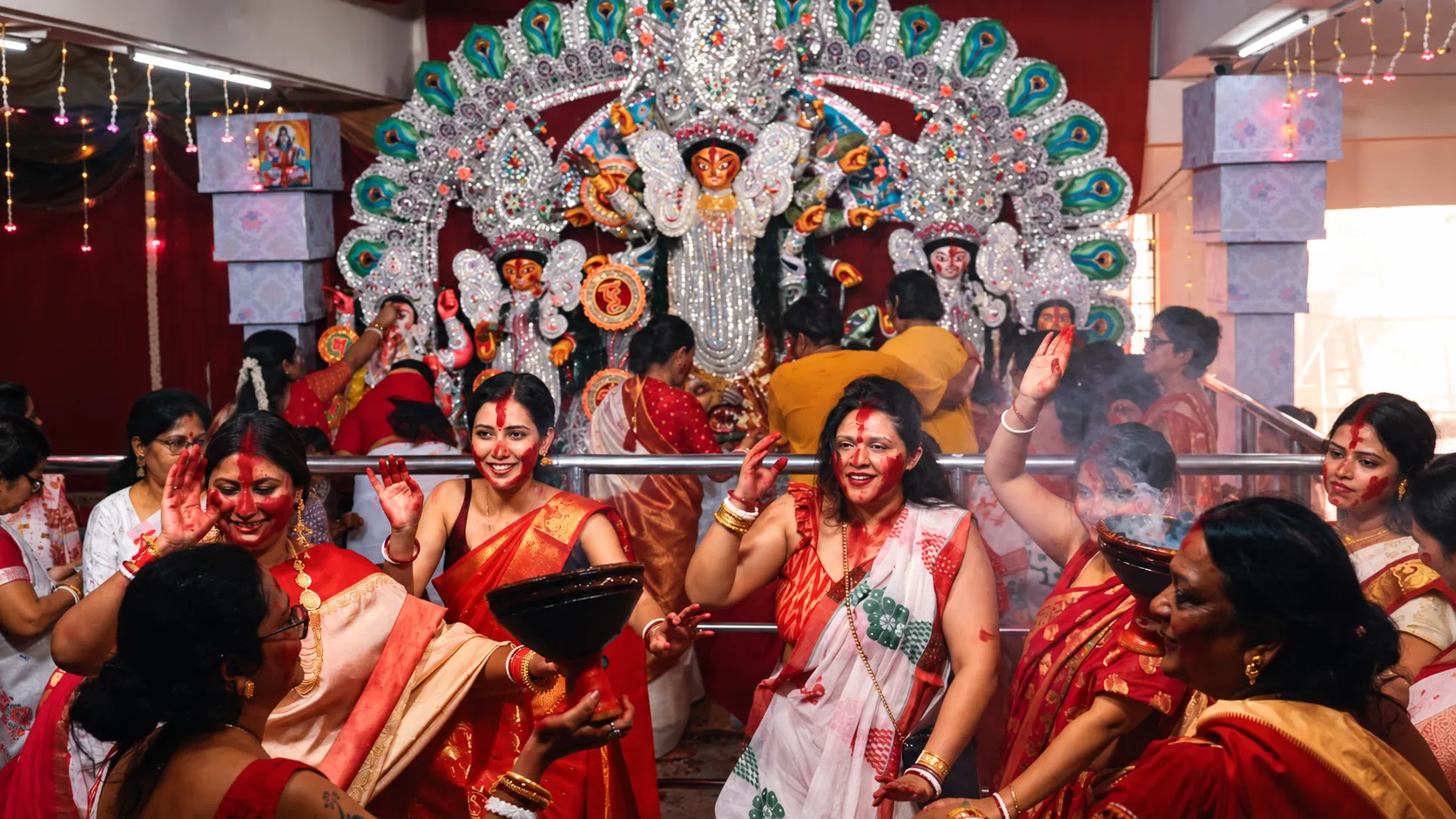
The festival culminates on Vijayadashami, a day that symbolizes the ultimate victory of truth and righteousness. On this day, married women participate in sindoor khela (smearing vermilion on the Goddess and each other) before the idols are taken in grand, emotional processions for visarjan (immersion in water). As the idols submerge amid chants of “Bolo Durga Mai ki Jai” (Hail Mother Durga), devotees bid farewell to the Goddess, praying for her return the following year. Ultimately, Durga Puja leaves an enduring legacy of courage, hope, and the joyous spirit of togetherness.
For travellers, Durga Puja is as much a logistical experience as a cultural one:
Because so much of Durga Puja happens on the street, in real time, and without a fixed script, knowing which neighbourhoods to visit and when makes a real difference to how much of it you’re able to see and understand.
An interactive guide to Durga Puja 2026
until Maha Shashthi*
The season begins as artisans paint the eyes onto the finished clay idol, a ritual called chokkhu daan, believed to awaken the Goddess within the image.
*Durga Puja follows the Hindu lunisolar calendar, so exact dates can shift by a day depending on the panchang used. This countdown targets 16 October 2026 (IST) — reconfirm nearer the season.
Durga Puja is one of several major festivals that shape India’s travel calendar. If you’re planning a trip around the festive season, you might also enjoy our guides to Ganesh Chaturthi in India, Eid al-Fitr and Eid al-Adha in India and Independence Day celebrations in India. For more seasonal and cultural guides, browse more Indian festival guides or explore our other travel guides and stories.
Ready to build a trip around it? Explore our India journeys or get in touch for a custom Ganesh Chaturthi itinerary — we’ll plan the festival experience, hotels, and transfers around your dates.
It falls in the Hindu month of Ashwin (September–October). In 2026, the main days are expected around 16–21 October, though exact dates shift each year — reconfirm closer to the season.
It celebrates Goddess Durga’s victory over the demon Mahishasura, symbolising the triumph of good over evil and the power of Shakti, divine feminine energy.
Shashthi, Saptami, Ashtami, Navami and Vijayadashami — bookended by Mahalaya (the prelude) and visarjan (the farewell).
A highly auspicious ritual performed at the exact junction of Ashtami and Navami, considered one of the most sacred moments of the festival.
Kolkata, West Bengal — recognised by UNESCO as the home of “Durga Puja in Kolkata,” an Intangible Cultural Heritage of Humanity.
Community bhog (khichuri and vegetables), street snacks like phuchka and kathi rolls, and Bengali sweets such as rosogolla, sandesh and mishti doi.
Chat on WhatsApp