

Marwar Festival Jodhpur 2026: Dates, Events & Planning
Marwar Festival in Jodhpur: What It Is, When It Happens and How to Plan Updated July 2026 — curated by...
Read More →
Updated July 2026 — curated by the Idyllic India Tours travel team
Once a year, around the brightest full moon of the north Indian autumn, Jodhpur’s Mehrangarh Fort stops being only a monument and becomes a concert hall. The Rajasthan International Folk Festival, known to most people as Jodhpur RIFF, brings Rajasthan’s hereditary folk musicians together with artists from around the world. The 2026 edition runs from 22 to 26 October.
If you are deciding whether to build a trip around it, the useful questions are practical ones. What does a festival day actually involve? How do the passes work? How early do you need to book a room? And how does Jodhpur fit with the rest of a Rajasthan itinerary? This guide covers those, with the details that were confirmed at the time of writing and a clear note where you should check again.
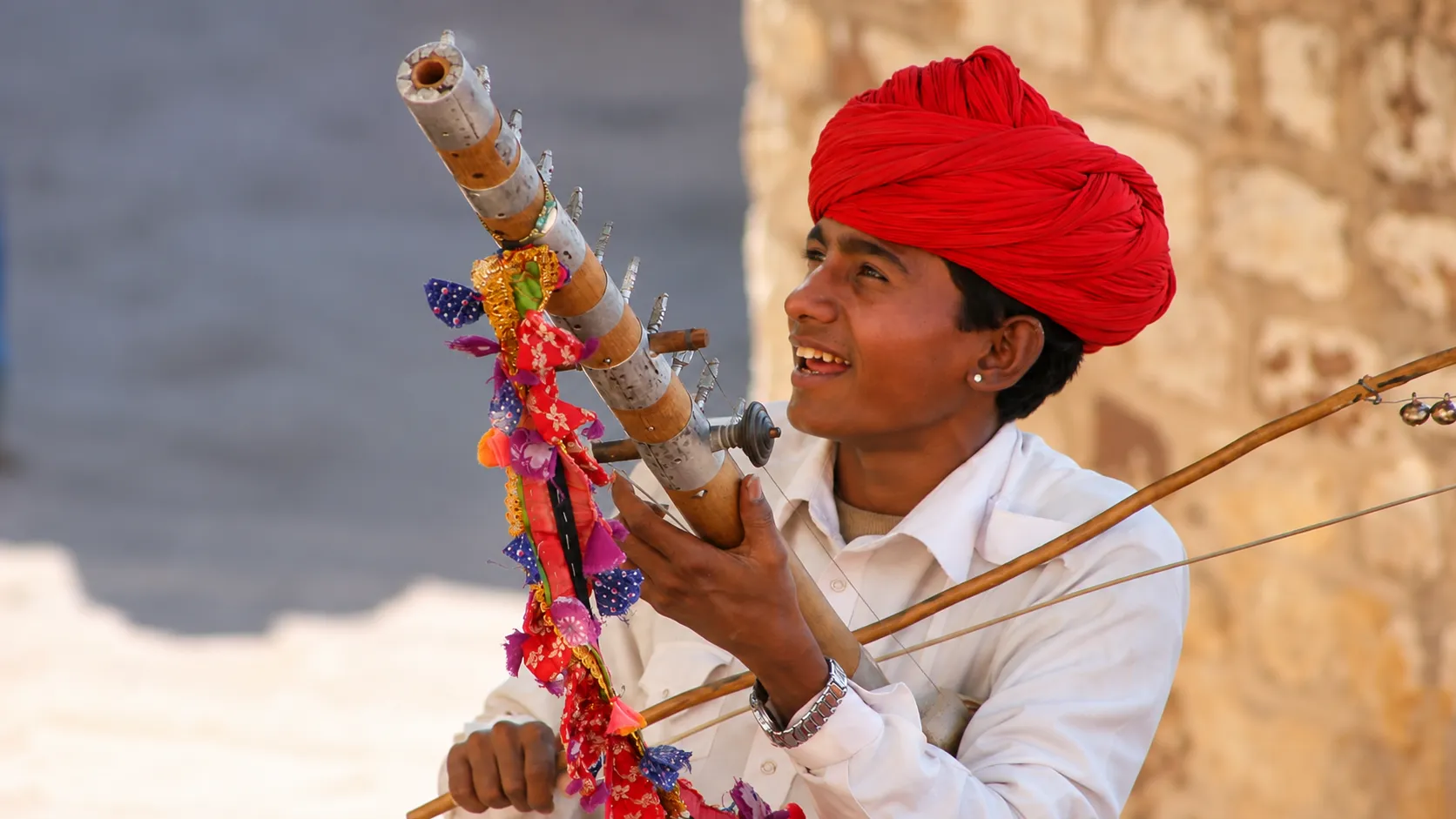
RIFF began in 2007 as a roots-music festival at Mehrangarh Fort, and it is run on a not-for-profit basis by the Mehrangarh Museum Trust. HH Gaj Singh II of Marwar-Jodhpur is its Chief Patron, and Mick Jagger is listed as its International Patron on the official site.
The festival’s timing is deliberate. It is scheduled around Sharad Purnima, the autumn full moon described as the brightest of the year in northern India, so moonrise and the fort walls are part of the stage design rather than a backdrop.
The heart of the programme is Rajasthan’s community musicians. Many of them belong to families who have performed for generations, and the festival gives them a platform alongside visiting international artists. That mix of local tradition and cross-cultural collaboration is what distinguishes RIFF from a standard concert weekend.
The 2026 festival is the 20th edition and runs from 22 to 26 October 2026 at Mehrangarh Fort. The opening evening on 22 October, from 7:30 pm, was listed as free to enter. From 23 October the programme starts at 5:30 am each day and a pass is needed.
Passes were listed as follows when this guide was prepared. Treat the prices as a snapshot and confirm them on the festival’s official site before you book, since passes can change or sell out.
Pass | Listed price | What it covers |
Opening night, 22 Oct | Free | Entry from 7:30 pm |
Day pass | ₹7,300 | One day, listed for 23, 24 and 25 Oct; museum access included |
Full Festival Pass | ₹17,800 | 23 to 26 Oct; museum access included |
A few other details were listed with the tickets: children under 12 enter free, and the venue is described as partly wheelchair accessible. Separate dawn and moonrise passes for specific concerts were also mentioned, sold at the venue. If access is important to you, ask the organizers directly, because a fort on a rocky outcrop will always involve some climbing and uneven surfaces.
Bookings were available through the festival’s official website and through the Live Your City by Fever platform. The official site also offers donor passes and a downloadable programme with performance times.
RIFF is built around the time of day as much as the line-up. Based on the 2026 programme announcements, the rhythm runs like this:
Other parts of the Mehrangarh estate are also used. The Rao Jodha Desert Rock Park, a landscaped area of native desert vegetation beside the fort, and the Veer Durga Das Memorial Park have appeared on festival programmes in the past. Exact timings and venues shift between editions, so use the official programme PDF for the final plan.
One practical consequence: a festival day is long. A 5:30 am start and a late finish suit travelers who treat the five days as the whole trip. If you are fitting RIFF into a busier itinerary, choose one or two sessions you care most about rather than trying to attend everything.
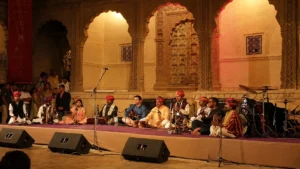
The 2026 announcements describe more than 250 folk musicians from Rajasthan’s performing communities, including the Manganiyar, Langa, Bhopa, Kalbelia, Meghwal, Meena and Bhil traditions. The Manganiyar and Langa are hereditary musicians of the Thar region in western Rajasthan, and Kalbelia is best known for its dance. Hearing these traditions in a fort setting, rather than a conventional concert hall, is a large part of the festival’s appeal.
International artists come from around a dozen countries, with Chile, Poland, Cabo Verde, Scotland, Colombia and Estonia named in coverage. Acts mentioned for 2026 include the Latin-American folk duo Camila y Silvio, the Cabo Verdean guitarist Guitare Voginha, the American roots duo Martha Redbone and Aaron Whitby, and the UK flute and pipe player Michael McGoldrick. Indian classical performers such as Ashwini Bhide-Deshpande and Jasleen Kaur Monga were also listed.
Two additions stand out this year. The festival’s first spoken-theatre production, Brhannala by Adishakti Theatre, is on the programme. And young Langa and Manganiyar artists trained through the Mehrangarh Museum Trust’s Folk Futures programme are scheduled to perform, a reminder that the festival also functions as a way of passing the tradition on.
Line-ups are announced in stages and can change, so treat the names above as a guide to the festival’s character, not a fixed schedule.
Getting to Jodhpur. Most international travelers arrive in Delhi. From there, Jodhpur is a domestic flight away, since the city has an airport with domestic connections (check current schedules), or a long day by road or rail. If you are coming overland from Jaipur, the drive is roughly 335 km and typically takes five to six hours.
Where to stay. Late October falls at the start of Rajasthan’s cool season, which is also its peak travel season, and RIFF adds its own demand. Good heritage hotels and drivers fill early, so reserve accommodation before you finalize flights. Location matters more than grandeur here. A fort-view hotel gives you a spectacular outlook but winding approach roads, while a haveli in the old town can put you within walking distance of the fort and the bazaars. With a 5:30 am start, being close is worth real money. For more on what to ask before booking a palace or haveli, browse the Virasat Heritage Restaurant, Jaipur section of Explore Together.
Weather. Days are generally comfortable at this time of year, but dawn sessions can be cool and mornings in the open air feel colder than the daytime forecast suggests. A light jacket or shawl is a sensible addition. These are general seasonal patterns, so check a current forecast for the week.
What to wear. Comfortable shoes matter more than anything else: the fort and the old-town lanes involve steps, slopes and uneven stone. Wear loose clothing that covers shoulders and knees, particularly for dawn sessions at a memorial such as Jaswant Thada and for any religious sites you add to the trip.
Etiquette. Many of the performers belong to families who have played for generations, and sessions are a working tradition, not a stage show for photographs. Keep phone use unobtrusive during performances, ask before photographing people up close, and stay for the whole piece before moving around.
Money and safety. Cards are widely accepted in hotels and larger shops, but carry some cash for small purchases and transport. Rajasthan is a well-established tourist destination, and standard precautions apply: keep valuables out of sight in crowds, use pre-booked or licensed transport, and agree fares in advance.
Because the dates are fixed, plan the rest of the route around the festival, not the other way round. Three shapes work well. The distances below are typical planning figures; confirm them with your driver or hotel.
Arrive in Jodhpur on 21 October, in time for the free opening evening on the 22nd, and stay through the final morning on the 26th. This gives you the full programme, a relaxed fort visit and time in the old town, with no long transfers in the middle. It suits travelers whose main reason for coming is the music.
Spend two nights in Jaipur first, which is the natural entry from Delhi (about 270 km, five to six hours by road). Drive to Jodhpur (about 335 km, five to six hours) for the festival, then continue to Jaisalmer (about 285 km, roughly five hours) for a night or two of fort and dune time once the music ends. Jaisalmer adds a long drive each way, so only add it if you have the days.
If lakes appeal more than dunes, continue from Jodhpur to Udaipur (about 250 km, five to six hours), breaking the journey at Ranakpur or Kumbhalgarh if time allows. A rest day at a heritage hotel after five early starts is a sensible idea.
If you would like this built around the festival dates, with hotels, and a driver-guide arranged together, our Royal Rajasthan Tours journey is the extended route, and the team can adjust it for your dates.
Jodhpur RIFF rewards a trip built around a few good sessions, not every slot. Fix the dates first, book the room second, and leave space for the fort and the old town in between. If you would like help shaping that route, you can enquire with our team and we will build a private itinerary around your dates and interests.
22–26 Oct 2026 · Mehrangarh Fort, Jodhpur · 20th edition
Four very different hours, one fort. Step through how a festival day actually unfolds.
From 5:30 am · Jaswant Thada
Concerts begin as early as 5:30 am. The 2026 dawn sessions are set at Jaswant Thada, the marble memorial beside the fort — early light on the sandstone is a large part of the appeal.
Explored 1 of 4
Venues shift between editions — the Rao Jodha Desert Rock Park and Veer Durga Das Memorial Park have also hosted sessions in past years. Check the official programme for the final plan.
Want this fitted into a private Rajasthan route?
Explore Royal Rajasthan ToursThe 20th edition runs from 22 to 26 October 2026 at Mehrangarh Fort in Jodhpur, as listed on the festival’s official site.
Mainly at Mehrangarh Fort in Jodhpur, with some sessions at nearby sites in the fort’s grounds, including Jaswant Thada for the 2026 dawn concerts.
It is timed to Sharad Purnima, the full moon the festival is built around. The date shifts each year with the lunar calendar.
The opening evening on 22 October was listed as free. From 23 October a day pass or full festival pass is needed. Confirm current prices on the official site.
The festival itself is five days. A focused trip is four to five nights in Jodhpur; if you want to add Jaipur or Jaisalmer, plan seven to ten days.
Independent planning works if you are comfortable managing hotels, drivers and passes in a busy week. A private route is more useful when you want hotels, transfers and a driver-guide arranged around fixed festival dates. The choice usually comes down to how much of your holiday you want to spend organizing it.
Chat on WhatsApp