
5 Pillars of Tourism: Complete Guide with India Examples
The 5 Pillars of Tourism: A Complete Guide with India Examples Updated July 2026 — curated by the Idyllic India...
Read More →
Updated July 2026 — curated by the Idyllic India Tours travel team
Udaipur is the one Rajasthan city that photographs itself. Built around a chain of man-made lakes and framed by the Aravalli hills, it has been the seat of the Mewar dynasty since Maharana Udai Singh II founded the city in 1559, and it still feels less like a museum piece than a living capital — palaces double as museums and wedding venues, havelis host nightly folk performances, and the royal family’s own foundation still runs much of what you’ll visit. White-marble palaces rise straight out of Lake Pichola, temple spires dominate the old city skyline, and the Aravallis roll away toward the Thar Desert on the horizon.
Most first-time visitors arrive with one image in mind — the lake, the floating palace — and leave having barely scratched the surface. Udaipur’s real character shows up in its contrasts: a 16th-century royal fort standing beside a 1930s Rolls-Royce garage, a temple older than the city itself, and a garden built purely so a group of ladies-in-waiting could enjoy the rain on demand. This guide walks through the eleven places that, together, give you that fuller picture — whether you’re building a couple of extra days here into a tailor-made India journey, or the longer private Rajasthan itinerary that carries Udaipur on to Jodhpur and Jaisalmer.
| Attraction | Category | Key Highlight | Best for |
|---|---|---|---|
| City Palace | Royal Palace & Museum | Largest palace complex in Rajasthan, with Mor Chowk, Sheesh Mahal, royal armoury and lake views | First-time visitors, history lovers, architecture & photography |
| Lake Pichola | Lake & Boat Experience | Scenic lake surrounded by City Palace, Jag Mandir, Lake Palace, ghats and temples | Sunset boat rides, photography, romantic experiences |
| Jag Mandir | Island Palace | Historic island palace with carved jharokhas, garden courtyard and stone elephants | Architecture lovers, history buffs, boat trips |
| Lake Palace (Jag Niwas) | Heritage Palace Hotel | Iconic white-marble palace appearing to float on Lake Pichola | Luxury travellers, photography, romantic getaways |
| Jagdish Temple | Hindu Temple | 17th-century Indo-Aryan temple with an ornate 80-foot spire and intricate stone carvings | Temple architecture, culture, spiritual experiences |
| Bagore Ki Haveli | Historic Haveli & Museum | Lakeside haveli with royal collections, costumes, puppets and the Dharohar folk dance show | Cultural experiences, evening entertainment, families |
| Saheliyon Ki Bari | Historic Garden | Marble fountains, lotus pools and gravity-fed water features created for the royal ladies | Relaxed walks, gardens, architecture, photography |
| Monsoon Palace (Sajjangarh) | Hilltop Palace & Viewpoint | Hilltop palace offering panoramic views over Udaipur’s lakes and the Aravalli hills | Sunset photography, panoramic views, couples |
| Eklingji Temple | Hindu Temple & Pilgrimage Site | Historic temple complex with a four-faced Shiva idol and around 108 shrines | Spiritual travellers, history & Mewar heritage |
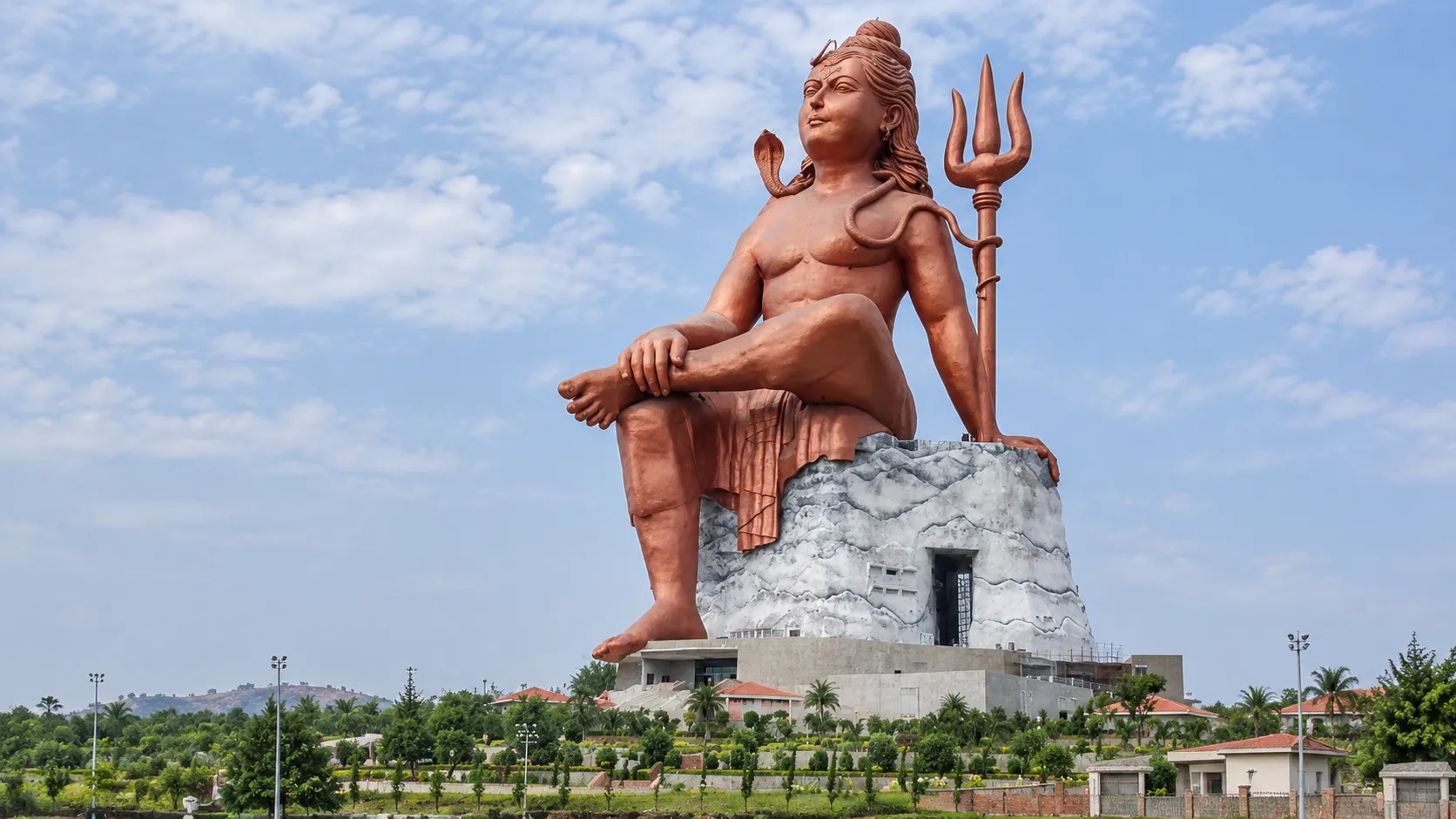
| Nathdwara | Pilgrimage Town & Cultural Landmark | Shrinathji Temple and the massive Statue of Belief | Religious tourism, devotional culture, architecture |
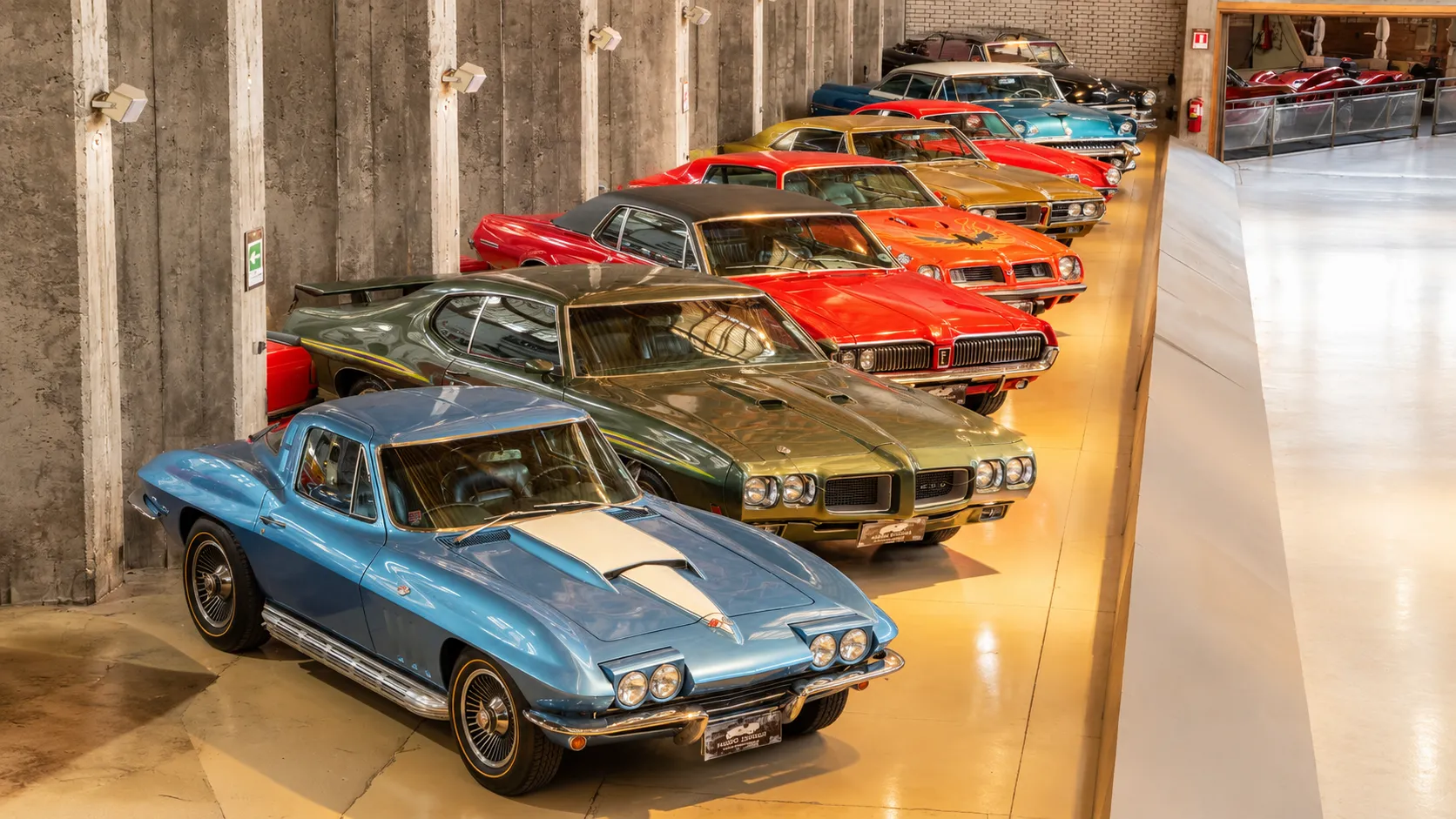
| Vintage & Classic Car Museum | Royal Car Museum | Collection of around 20 royal vehicles including Rolls-Royce and Cadillac automobiles | Car enthusiasts, families, royal-history lovers |
| Kumbhalgarh Fort | Hill Fort & UNESCO Heritage Site | Mewar hill fort famous for its exceptionally long defensive walls | History buffs, fort lovers, day trips |
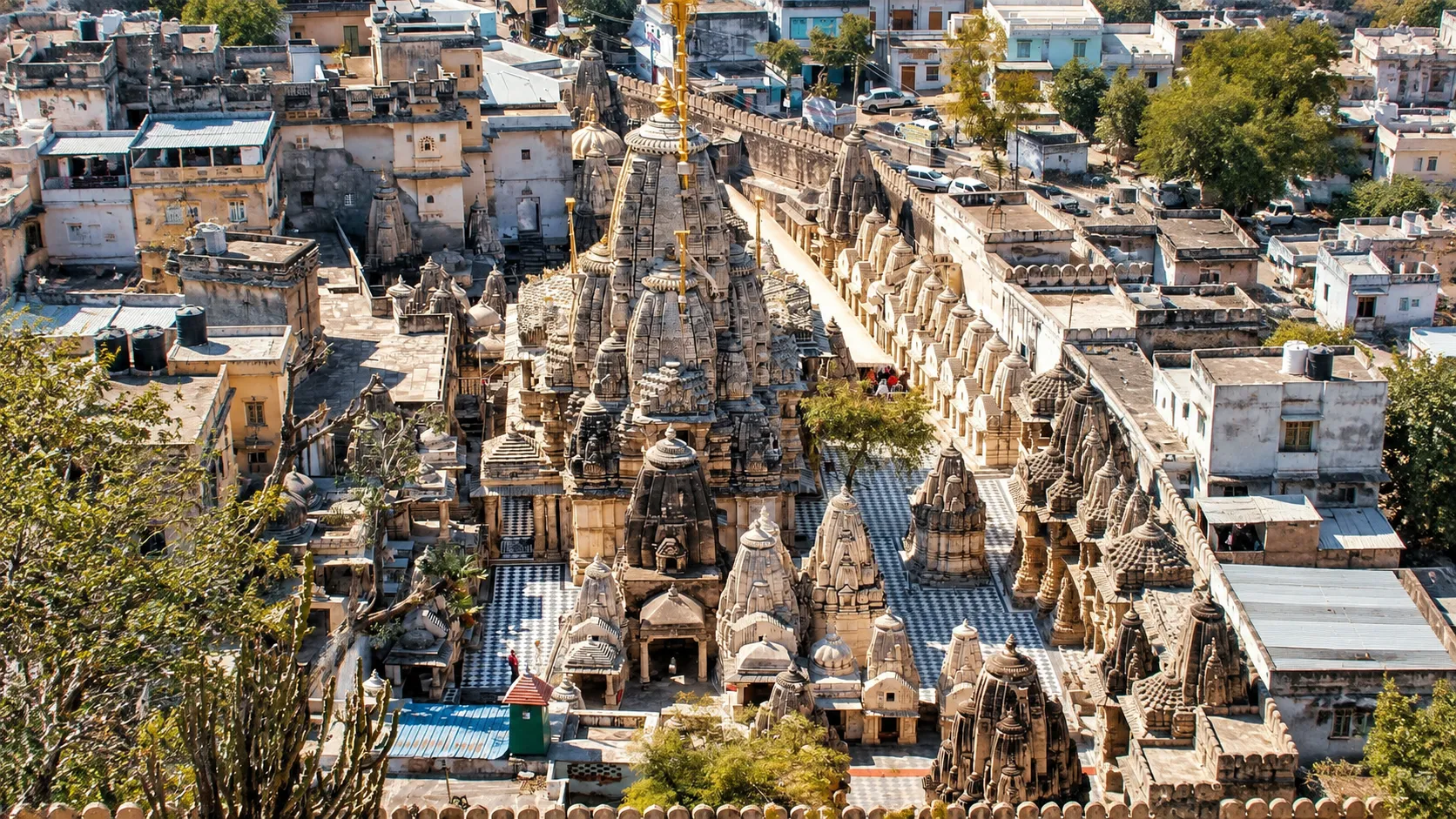
| Ranakpur | Jain Temple & Heritage Site | Elaborately carved Jain marble temple complex with intricate architecture | Architecture lovers, spiritual travellers, cultural day trips |
Start here — almost everything else in Udaipur is easier to understand once you have. The City Palace is the largest palace complex in Rajasthan, built up over roughly four centuries by a succession of Mewar rulers beginning with Udai Singh II himself, which is why it reads less as a single building than as a fused sequence of courtyards, apartments, and additions layered on top of one another in a mix of Rajasthani and Mughal styles.
The complex was formally opened to the public as the City Palace Museum in 1969, under Maharana Bhagwat Singh Mewar, and it’s still managed by the Mewar family’s charitable foundation. Inside, look for the Mor Chowk (Peacock Courtyard), where three glass-mosaic peacocks representing the seasons decorate the walls; the Sheesh Mahal, a chamber lined in mirrored glasswork; the armoury, with its collection of Rajput swords, katars, and crescent-tipped arrows; and the Crystal Gallery in the adjoining Fateh Prakash Palace, which holds an unusual hoard of crystal furniture originally ordered by Maharana Sajjan Singh in the 1870s. From the palace’s lakeside terraces you get the classic Udaipur view — Jag Mandir and the Lake Palace floating on Pichola, with the Aravallis behind.
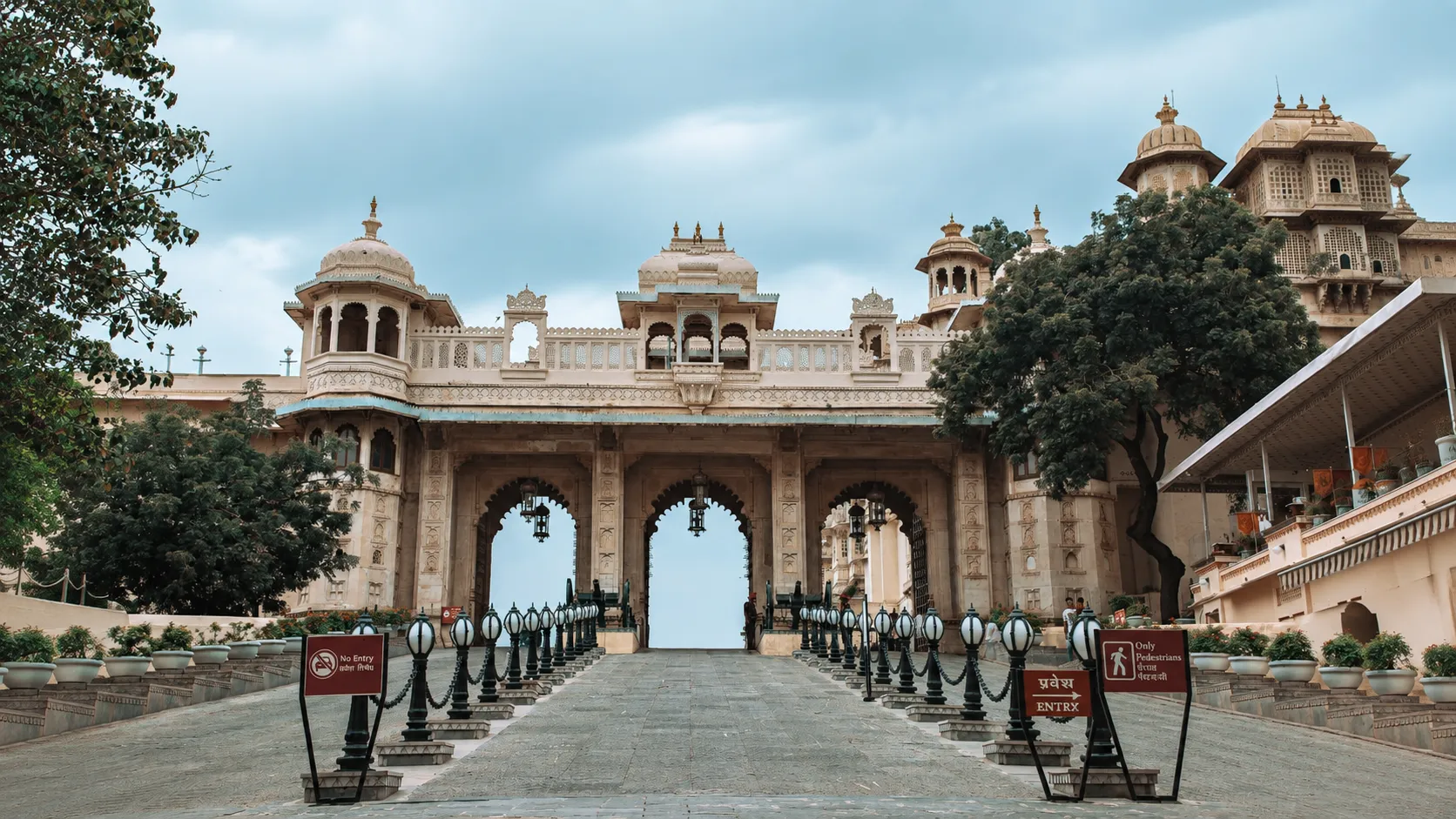
Lake Pichola isn’t natural — it was dammed and created in 1362, well before Udaipur itself existed, and later enlarged after Udai Singh II founded the city on its banks in 1559. That makes it older than almost everything you’ll see around it, and it’s the reason Udaipur earned its “City of Lakes” nickname in the first place.
What makes Pichola worth building a day around isn’t the water itself so much as what sits on and around it: the City Palace runs along its eastern shore, Bagore ki Haveli overlooks it from Gangaur Ghat, and two of its islands — Jag Mandir and Jag Niwas — carry the palaces covered in the next two sections. A boat ride here, ideally timed for the hour before sunset, is the single most efficient way to see Udaipur’s skyline of palaces, ghats, and temples reassemble itself from the water rather than the street. Early morning trips are quieter and cooler; evening trips trade the crowds for better light. Either way, this is less a standalone attraction than the connective thread running through most of the rest of the list.
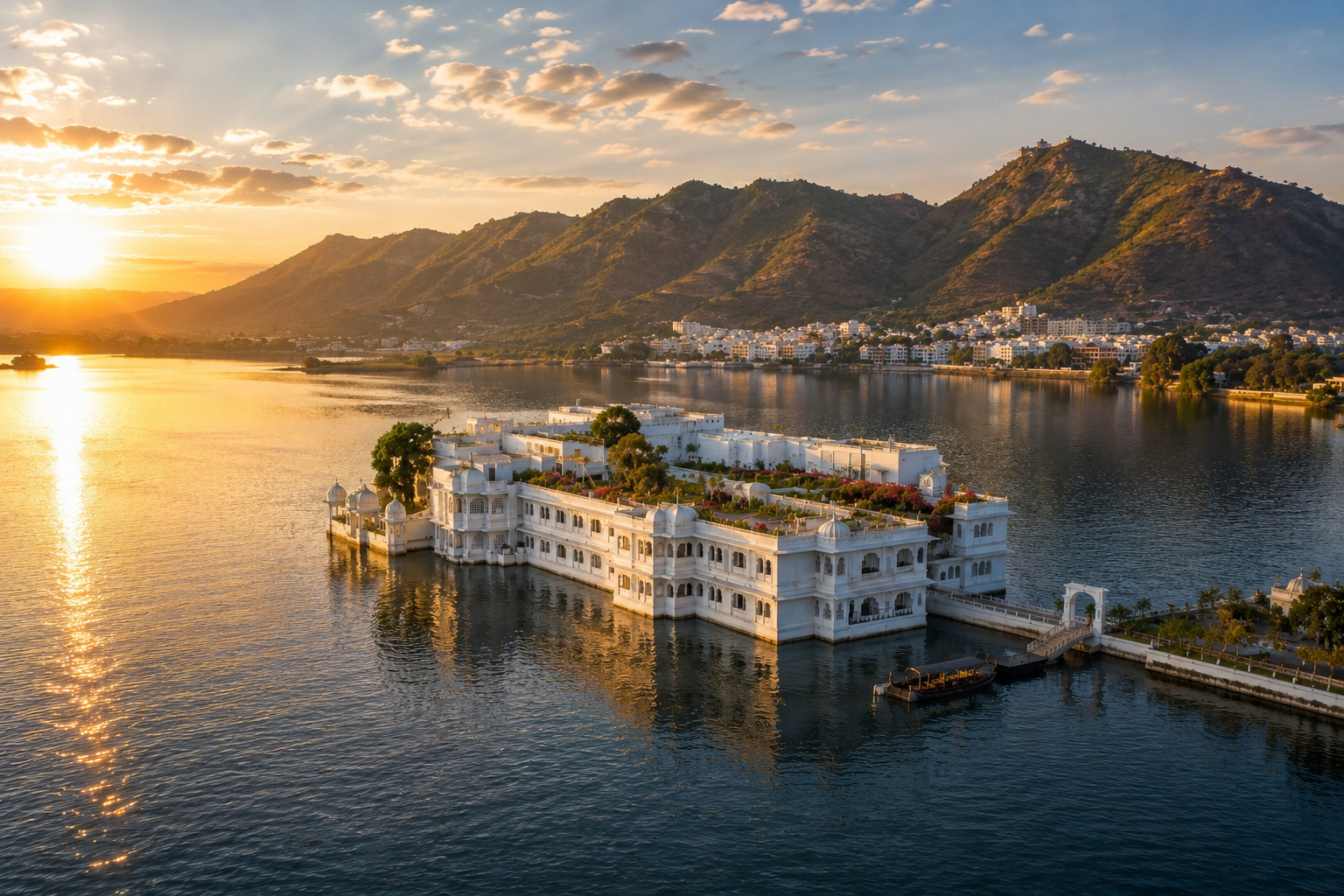
Jag Mandir sits on its own island in Lake Pichola and has a longer, stranger history than most visitors realise. Construction began under Maharana Karan Singh in the early 17th century and was completed by his successor, Jagat Singh I — and in between, the palace reportedly gave refuge to the young Mughal prince Khurram (the future Emperor Shah Jahan) during a rebellion against his father, Jahangir. Some accounts credit that stay with later influencing the design of the Taj Mahal, though that connection is more romantic legend than settled fact.
Today the palace functions partly as a heritage site and partly as an event venue, with a museum-like collection of royal artefacts and, most evenings, live folk music and dance performances staged in its courtyards. Architecturally it’s a study in Mewar craftsmanship — carved jharokha balconies, a garden courtyard, and stone elephants flanking the entrance jetty. It’s reached only by boat, usually as a stop on the same Lake Pichola cruise that takes in the Lake Palace, which makes it easy to combine with #2 above rather than plan as a separate outing.
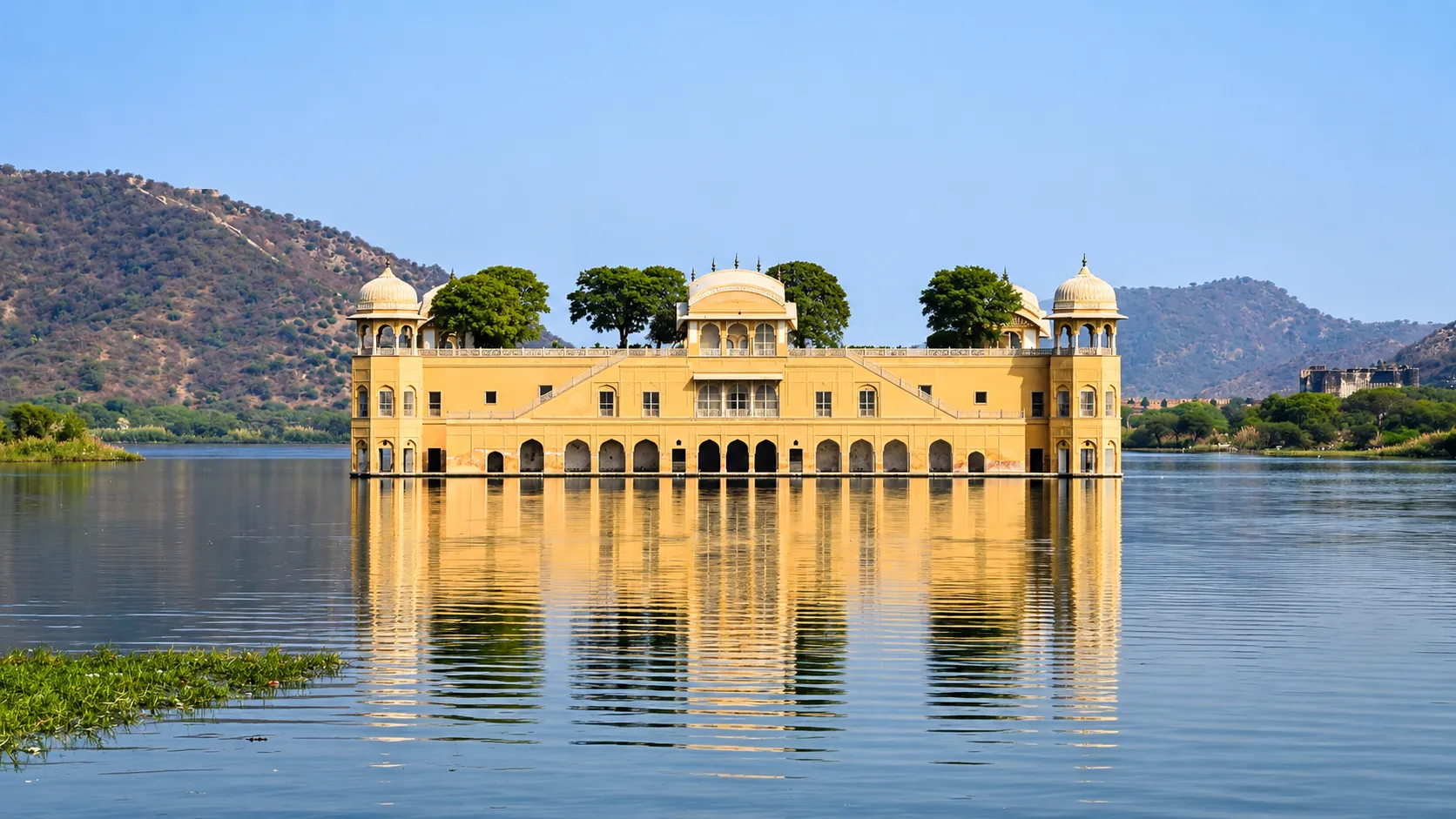
The Lake Palace — known locally as Jag Niwas — is the building most people picture when they think of Udaipur, and unlike the other ten entries on this list, you can no longer simply walk in. Built on its own island between 1743 and 1746 for Maharana Jagat Singh II, it served as a royal summer retreat for two centuries before Maharana Bhagwat Singh Mewar converted it into a heritage hotel in 1963. Taj Hotels took over its management in 1971, and it now operates as the Taj Lake Palace, with access largely restricted to overnight guests who arrive by private boat from a dedicated jetty near the City Palace.
That exclusivity is part of the appeal rather than a flaw. The palace’s all-white marble construction, on a foundation that all but disappears when the lake is full, gives it the “floating” silhouette that made it internationally famous — including as a filming location for the 1983 James Bond film Octopussy. Non-guests can still appreciate it fully from a Lake Pichola boat ride or from the City Palace terraces; a few upscale afternoon tea or dining experiences are occasionally available to non-residents, though these vary and are worth confirming directly with the hotel [VERIFY].
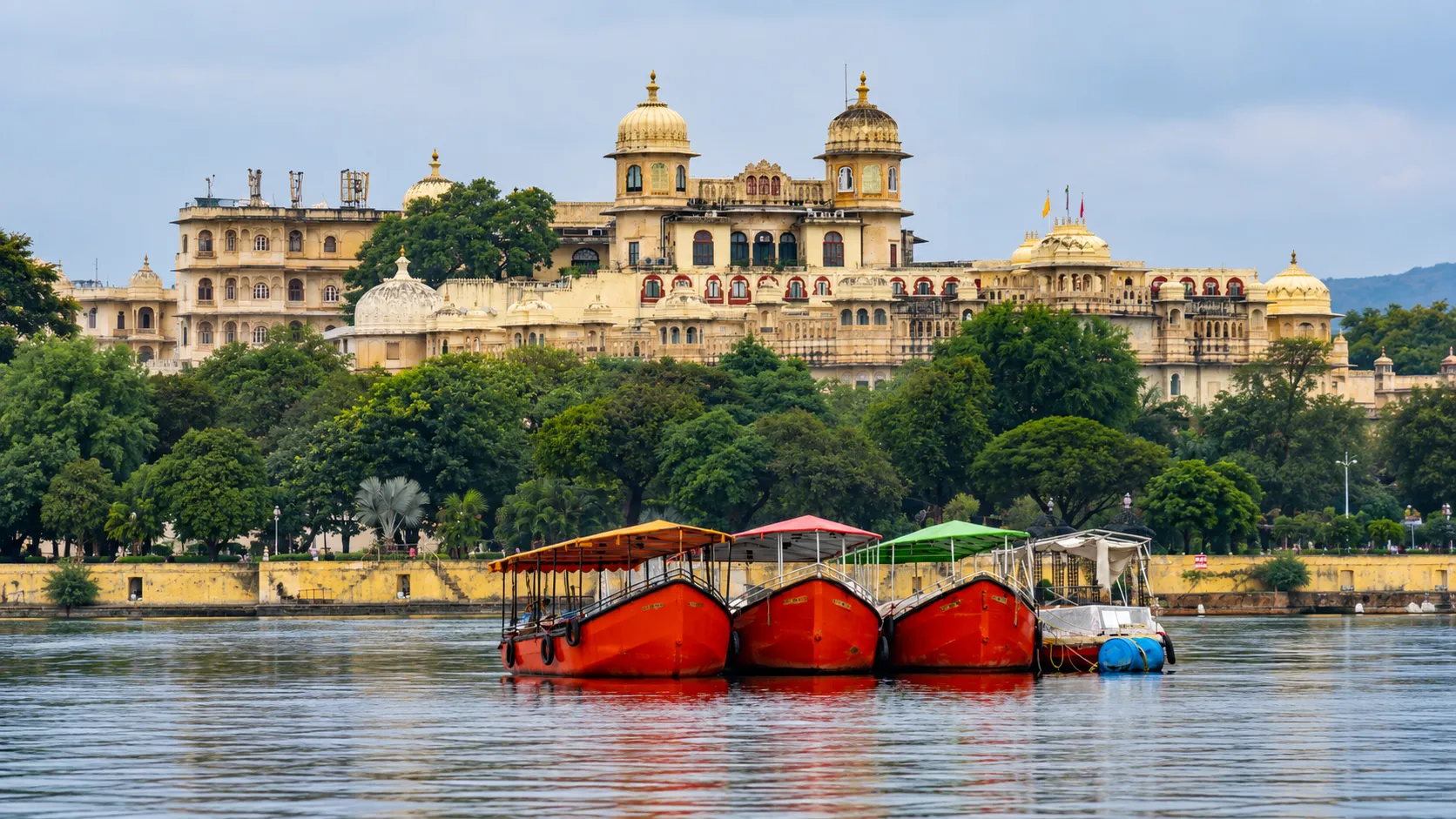
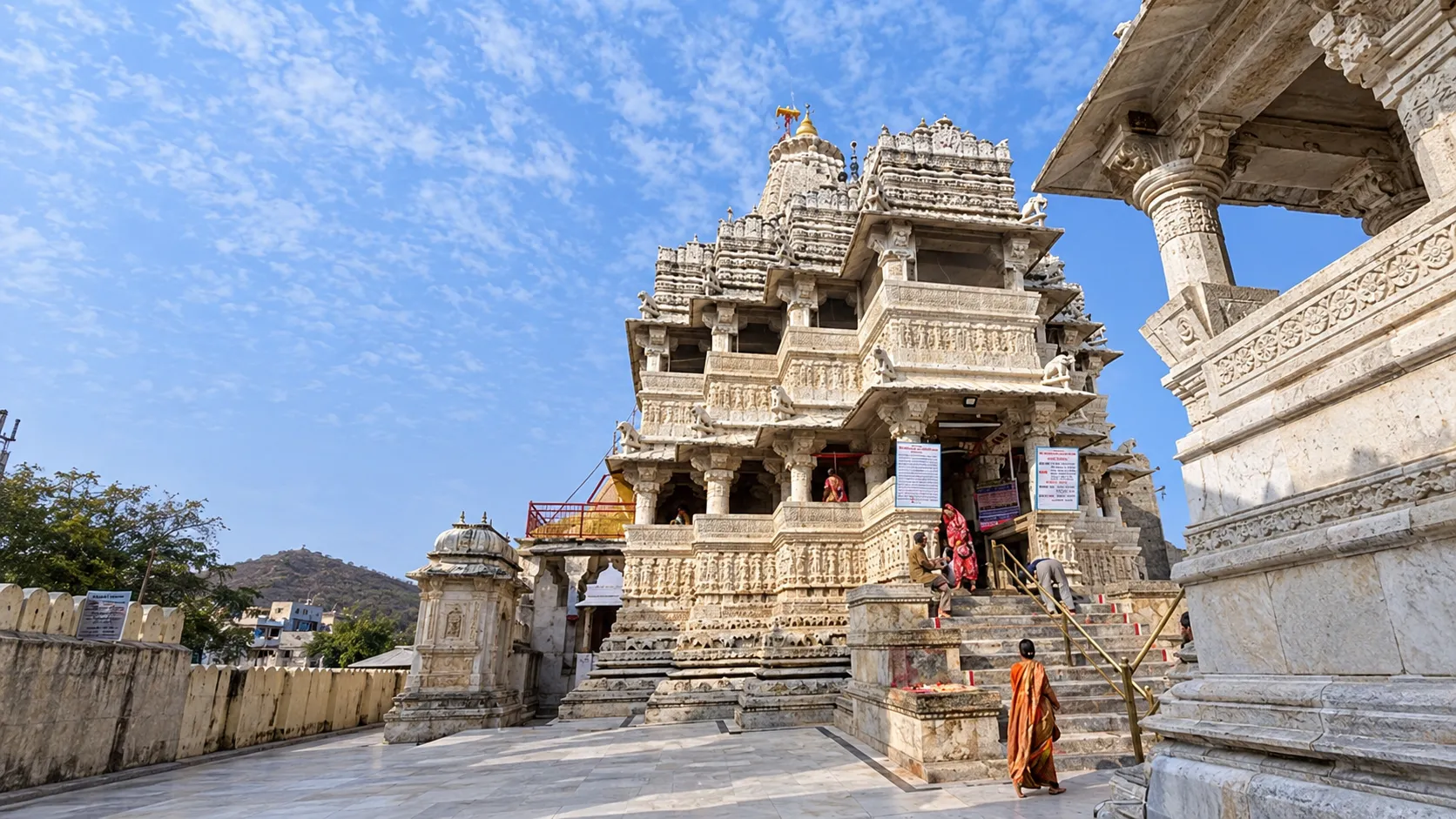
A short walk from the City Palace’s Bara Pol gate — about 150 metres — brings you to Jagdish Temple, the largest temple in Udaipur and one of its oldest surviving structures within the city itself. Maharana Jagat Singh I built it in 1651, dedicating it to Vishnu in his Jagannath form, and the temple has stood at the centre of city life ever since; the Mewar royal family have traditionally treated it as their own family temple.
The building is a good stop for anyone interested in temple architecture specifically, not just religious sites in general. It’s built in Indo-Aryan style across three storeys, fronted by a pair of stone elephants, and topped by a spire rising close to 80 feet that’s visible over much of the old city. Fifty carved pillars line each of the first two floors, and the main sanctum houses a black-stone image of Vishnu, guarded at the entrance by a brass Garuda figure. Smaller shrines to Ganesha, Shiva, Shakti, and Surya surround the main structure. Entry is free, and because it’s an active place of worship, modest dress is expected inside.
Bagore ki Haveli sits directly on Lake Pichola at Gangaur Ghat, a few minutes’ walk from Jagdish Temple, and it rewards an evening visit more than a daytime one. Amar Chand Badwa, a Mewar prime minister who served four successive Maharanas in the late 18th century, built the haveli as his residence; it was converted into a museum in 1986 and now holds more than a hundred rooms across five smaller collections — costumes and courtly life, puppetry, weaponry, wedding traditions, and one of India’s larger turban displays.
The building itself, with its mirror-work and painted doorways, is worth the museum ticket alone, but most visitors are really there for the Dharohar dance show, staged nightly in the haveli’s courtyard. It’s a fast-moving programme of Rajasthani folk forms — including the Ghoomar and the Bhavai “pot dance,” where performers balance stacks of brass pots on their heads — plus a short puppet segment, all set against the lit-up haveli and the lake behind it. Show tickets are separate from museum entry and tend to sell out shortly after they go on sale in the early evening, so it’s worth arriving in good time rather than assuming you can walk up [VERIFY] current showtimes and prices.
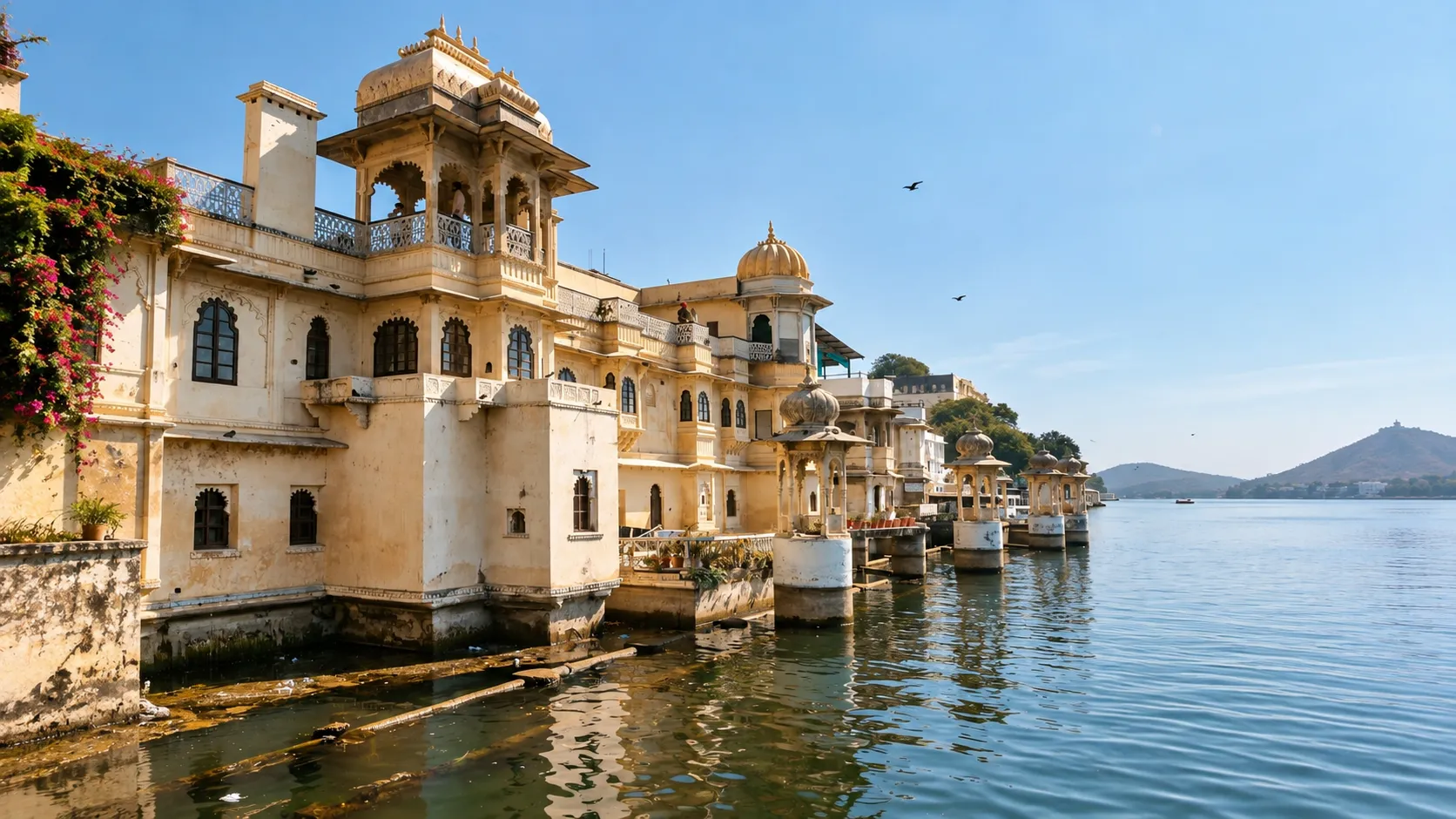
“Saheliyon ki Bari” translates roughly to “Garden of the Maidens,” and the name explains the place better than any description of its layout could. Maharana Sangram Singh II built it in the early 18th century on the edge of Fateh Sagar Lake, reportedly as a gift for his queen and the 48 attendants who had accompanied her at marriage — a private green space where the women of the royal household could relax away from court formality.
The garden’s real novelty is engineering rather than planting. Its fountains, lotus pools, and marble kiosks are all gravity-fed from the lake, running without any pump — a detail that’s easy to miss but genuinely impressive once pointed out. One fountain, nicknamed Bin Badal Barsaat (“rain without clouds”), was reportedly built to recreate the sound and sensation of rainfall for a princess who loved the monsoon but couldn’t rely on it arriving on cue. It’s a compact site — most visits run under an hour — and works well paired with Fateh Sagar Lake itself, which borders the garden.
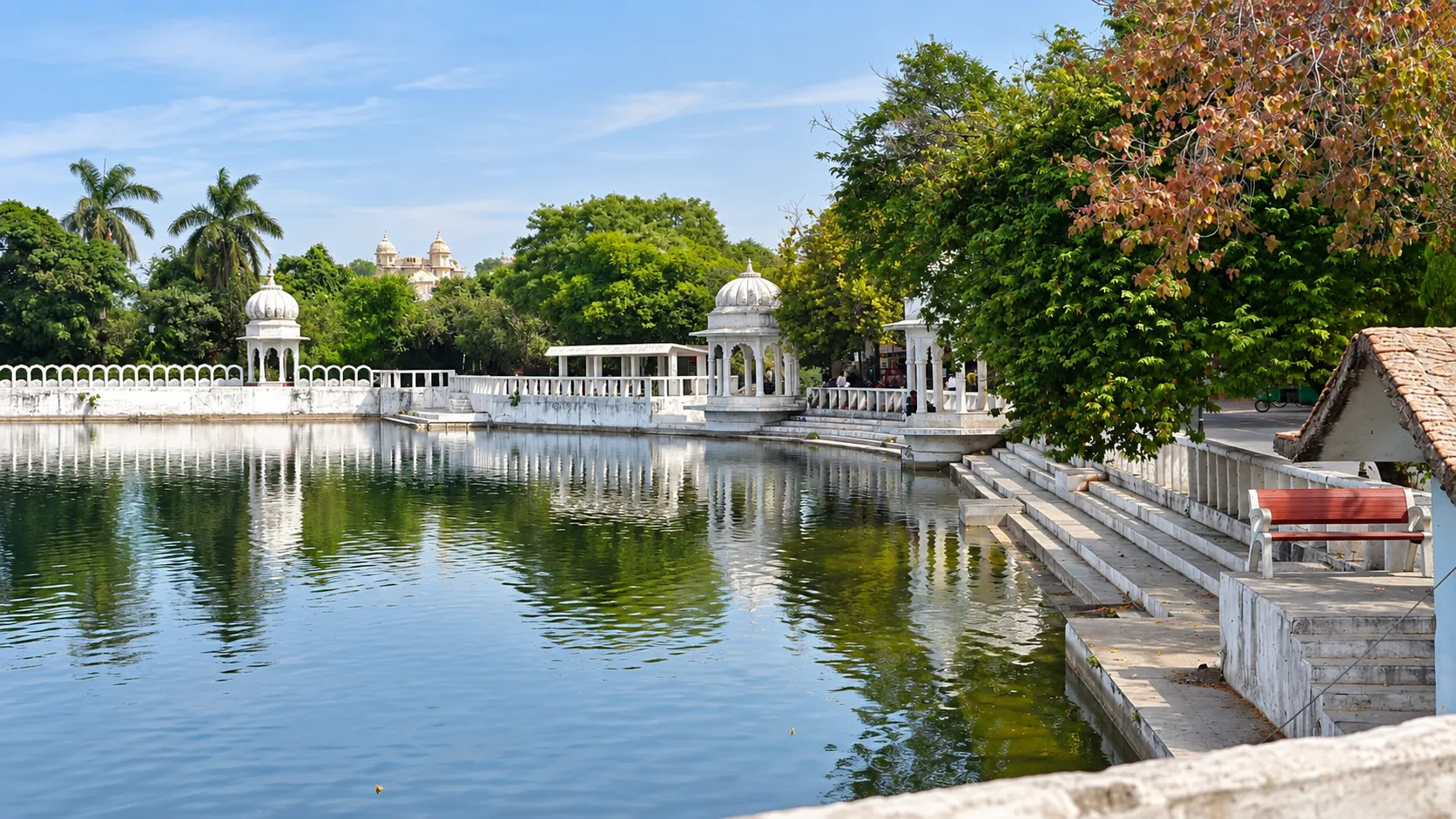
Perched on Bansdara Peak in the Aravalli hills above the city, Sajjangarh — universally known as the Monsoon Palace — was built in 1884 by Maharana Sajjan Singh. The original plan was more ambitious than what got built: an astronomical observatory intended to track the monsoon clouds rolling in from the west. Sajjan Singh’s early death cut the project short, and what remains functioned instead as a monsoon retreat and hunting lodge, now under government ownership and, in places, visibly weathered rather than restored to full grandeur.
None of that diminishes the reason people actually go, which is the view. From the hilltop you get an uninterrupted panorama over Udaipur’s lakes, the City Palace, and the Aravalli range beyond — reliably one of the best sunset spots in the city, and the palace’s white marble is genuinely striking when it catches the last light. At the base of the hill lies the Sajjan Garh Wildlife Sanctuary, which some visitors combine with the palace trip. Expect a short drive up (it’s roughly 9km from the old city by road) rather than a walk, and go with enough daylight left to see the descent safely; entry fees apply for both the palace and the sanctuary [VERIFY].
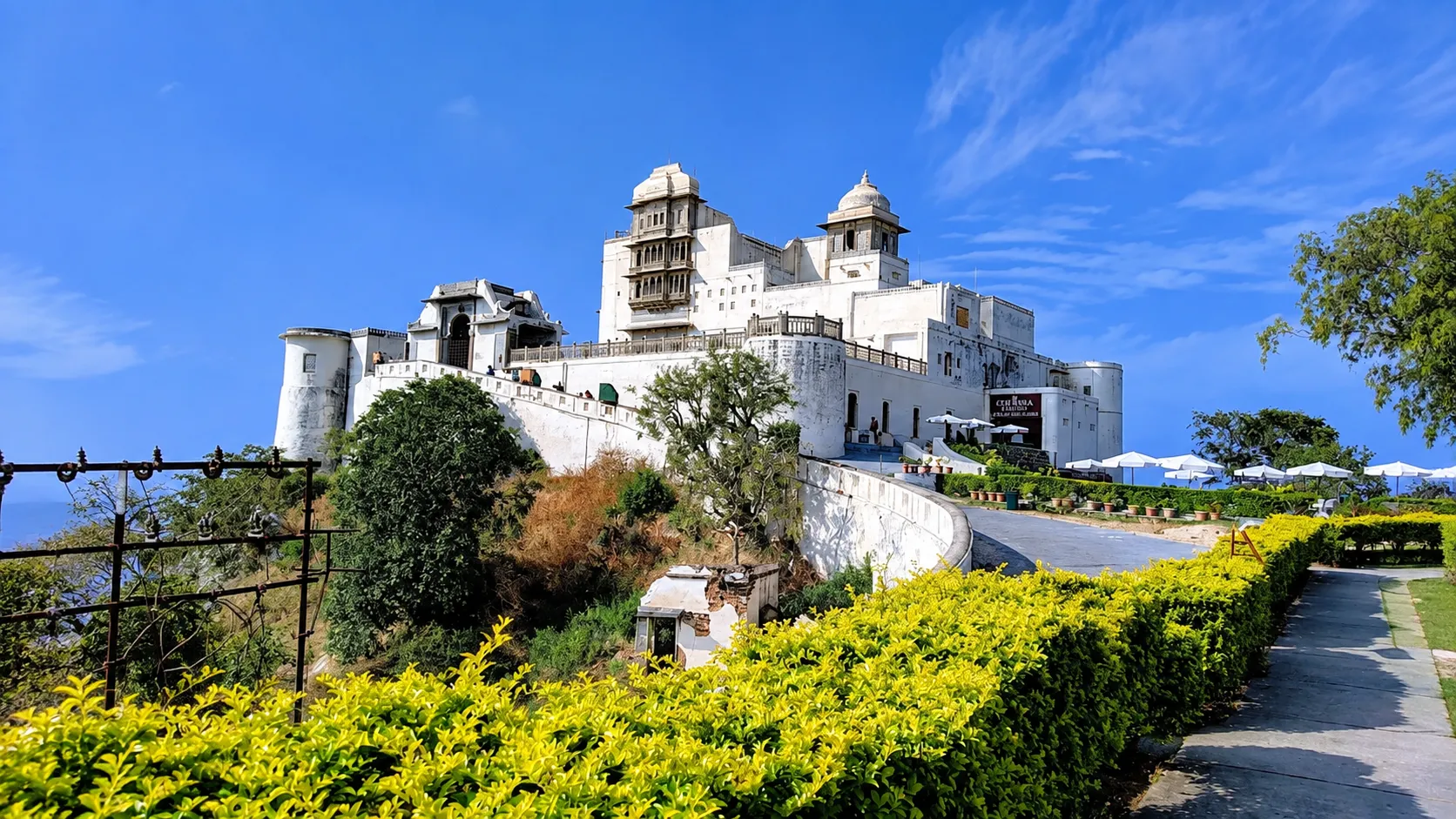
About 22 kilometres north of Udaipur, in the town that shares its name, Eklingji Temple is where you go to understand Mewar’s relationship with religion rather than just its architecture. The temple dates back to the 8th century, traditionally attributed to Bappa Rawal, founder of the Mewar dynasty, and its four-faced black marble Shiva idol has been treated as the ruling deity of Mewar for centuries — meaning the Maharanas themselves were historically considered custodians, or “Dewan,” acting on the deity’s behalf rather than as sovereign in their own right. It’s a genuinely unusual piece of political theology, and it explains why the royal family maintained such close, continuous ties to this specific site rather than a temple within the city itself.
The complex itself, rebuilt and expanded across several later centuries, holds around 108 individual shrines within its walls, built from marble and grey stone on the edge of a small lake. It’s an active pilgrimage site rather than a purely historical one, busiest around Maha Shivaratri, and best visited as a half-day excursion from Udaipur rather than squeezed in on the way to somewhere else.
Around 48 kilometres northeast of Udaipur, on the banks of the Banas River, Nathdwara is built entirely around a single shrine: the Shrinathji Temple, home to a black-stone image of Krishna in child form, established here in the 17th century after the idol was reportedly moved from the Mathura region to protect it during Aurangzeb’s reign. The temple remains one of the most visited Vaishnavite pilgrimage sites in western India, and the town’s name literally means “gateway to the Lord.”
Beyond the temple itself, Nathdwara has recently added a very different kind of landmark: the Statue of Belief, a roughly 351-foot Shiva statue completed in the 2020s that now ranks among the tallest statues in the world. Whether to build the temple visit or the statue into your day depends on your interests — the temple rewards those drawn to living devotional culture and historic pilgrimage traditions, while the statue is more of a modern engineering spectacle. Both can realistically be combined with Eklingji Temple as a single full-day trip from Udaipur, since all three sit roughly along the same northward route.
Tucked inside the City Palace grounds, in what used to be the Mewar state’s motor garage, the Vintage and Classic Car Museum is a smaller, quirkier stop than the rest of this list — and a welcome change of pace after a run of palaces and temples. It opened to the public in February 2000, inaugurated by Lord Montagu of Beaulieu (founder of Britain’s National Motor Museum), and holds around twenty vehicles once owned by the Mewar royal family, all kept in running order rather than displayed as static relics.
Highlights include a 1924 Rolls-Royce 20HP that has since won international concours awards, a 1934 Rolls-Royce Phantom II that appeared in Octopussy, a pair of 1938 Cadillacs used for state functions, and the convertible Cadillac used to escort Queen Elizabeth II during her 1961 visit to Udaipur. If you’re drawn to this kind of royal-era detail, it’s worth knowing that the Mewar family’s fascination with distinctive transport didn’t end with cars — Udaipur is also one of the storied stops on the Palace on Wheels, the heritage-styled luxury train whose route through Rajasthan includes a full day in the city.
Winter — roughly October through March — is the most comfortable stretch to explore Udaipur on foot, with mild days and cool evenings well suited to walking between the City Palace, Jagdish Temple, and Bagore ki Haveli. This is also peak season, so popular sights and the better heritage hotels book up further in advance.
Winter — roughly October through March — is the most comfortable stretch to explore Udaipur on foot, with mild days and cool evenings well suited to walking between the City Palace, Jagdish Temple, and Bagore ki Haveli. This is also peak season, so popular sights and the better heritage hotels book up further in advance.
Winter — roughly October through March — is the most comfortable stretch to explore Udaipur on foot, with mild days and cool evenings well suited to walking between the City Palace, Jagdish Temple, and Bagore ki Haveli. This is also peak season, so popular sights and the better heritage hotels book up further in advance.
Summer (April to June) turns hot enough that daytime sightseeing becomes genuinely tiring; if you’re travelling then, plan palace and temple visits for early morning or late afternoon and save the middle of the day for the hotel pool or a shaded café. Monsoon (July to September) is quieter and photographically rewarding — the lakes fill, the hills turn green, and Sajjangarh’s “monsoon” namesake finally makes sense — though some boat rides and outdoor plans may be interrupted by rain.
Tap a card to see what makes it worth your time, then build your own must-see list.
Select a few places above to see a rough time estimate for your visit.
Two full days is the realistic minimum to cover the City Palace, a Lake Pichola boat ride taking in Jag Mandir and the Lake Palace, Jagdish Temple, Bagore ki Haveli (ideally with the evening dance show), and Saheliyon ki Bari, without rushing any of them.
A third day gives you room for the half-day excursion to Eklingji Temple and Nathdwara together, plus a sunset run up to the Monsoon Palace — both of which are genuinely worth the extra time rather than being “filler” additions. If Udaipur is one stop on a longer trip rather than the whole itinerary, our team can help shape it into a fully tailor-made journey across India, built around how much time you actually have rather than a fixed template.
Beyond the two covered above, travellers with extra time sometimes extend north toward Kumbhalgarh, the Mewar hill fort known for its exceptionally long defensive walls, and Ranakpur, home to an elaborately carved Jain marble temple complex — both are commonly combined into a single long day trip together, though each adds meaningfully to an already full Udaipur itinerary rather than fitting neatly alongside it.
For travellers building a first visit to India around Udaipur, it’s also common to pair the city with a classic Golden Triangle tour of Delhi, Agra, and Jaipur before heading south into Rajasthan — and if Agra is part of that route, our guide to Agra’s must-see sights is a useful next stop.
Wear comfortable, easily removable footwear — several sites on this list, including Jagdish Temple and Eklingji, require shoes off before entering, and City Palace involves a fair amount of walking on stone floors. Modest clothing (shoulders and knees covered) is expected at all the temples on this list, not just the more obviously devotional ones.
Group the lakeside sights together on the same day: City Palace, the Lake Pichola boat ride, Jagdish Temple, and Bagore ki Haveli sit within easy walking or short auto-rickshaw distance of one another, while Saheliyon ki Bari, the Monsoon Palace, Eklingji, and Nathdwara are better treated as separate half- or full-day excursions rather than squeezed into the same afternoon. If you want the Dharohar dance show at Bagore ki Haveli, buy tickets earlier in the day rather than assuming you can walk in that evening — they’re known to sell out quickly. And because entry fees and opening hours across these sites change periodically, it’s worth confirming current details for whichever attractions you prioritise before you set out.
The City Palace, Lake Pichola (including Jag Mandir and the Lake Palace), Jagdish Temple, and Bagore ki Haveli form the core of most visits, with Saheliyon ki Bari and the Monsoon Palace as strong additions if you have a second day.
Two full days cover the essential sights comfortably. A third day allows time for Eklingji Temple, Nathdwara, and the Monsoon Palace without rushing.
Udaipur is known as the “City of Lakes” for its chain of man-made lakes, its Mewar-era palaces and havelis, and the Lake Palace — one of the most photographed hotels in India.
The City Palace and a Lake Pichola boat ride are the two must-do experiences for a first visit, followed by Jagdish Temple and an evening at Bagore ki Haveli.
Yes — as the largest palace complex in Rajasthan and the seat of the Mewar dynasty for centuries, it’s the single most historically layered site in the city and a natural starting point for everything else on this list.
Yes. Even though the Lake Palace itself is only accessible to hotel guests, a boat ride on the lake is the best way to see it, Jag Mandir, and the City Palace’s lakeside facade together.
Chat on WhatsApp