The Luxury Guide to the Hornbill Festival: Culture, Comfort and Colour
Updated July 2026 — curated by the Idyllic India Tours travel team
Every December, Nagaland’s tribes gather on a hillside south of Kohima and show what their cultures look like when they stop being a museum exhibit. The Hornbill Festival 2026 runs from 1 to 10 December at the Naga Heritage Village in Kisama, about 12 km from Kohima. The Government of Nagaland organises it through its tourism and art and culture departments. The dates are the same every year, which makes planning easier than for most Indian festivals.
It is also not an easy trip. There is one airport, rooms in Kohima disappear months ahead, evenings are cold, and permits are required. This guide covers the festival itself and the part most guides skip: how to see it comfortably.
What the Hornbill Festival actually is
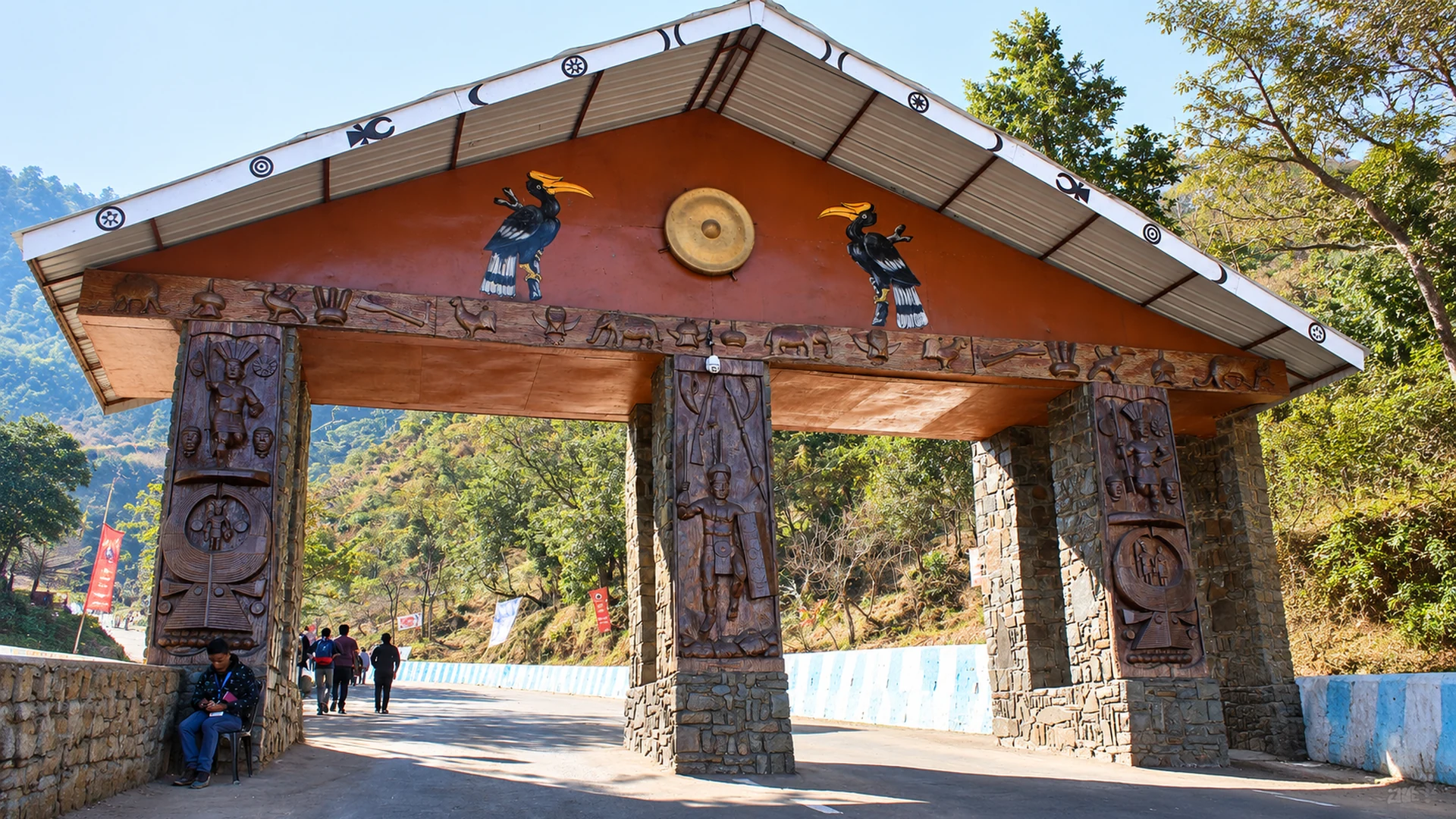
The government launched the festival in 2000 to bring Nagaland’s tribes together and promote their heritage, and it is often called the “Festival of Festivals.” The name comes from the hornbill, a bird that features prominently in Naga folklore and tribal dress.
The venue is a purpose-built heritage village. Its name, Kisama, combines the names of two neighbouring villages, Kigwema and Phesama, which gave land for the project. The complex also holds a World War II museum and a bamboo heritage hall.
The morungs: where to spend your time
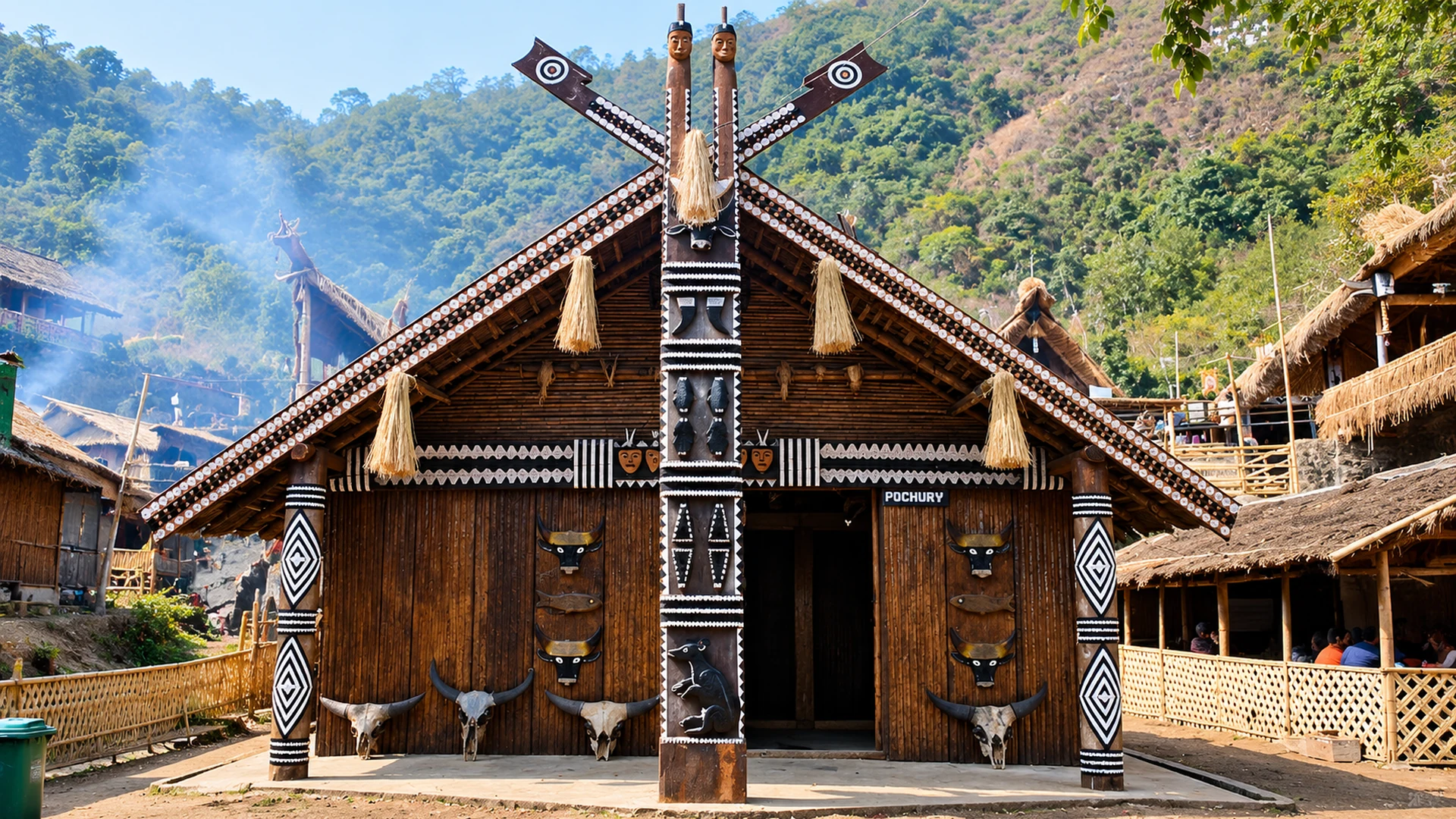
Each major tribe builds its own morung at Kisama. Traditionally a morung was a youth dormitory and training house, where young men learned history, songs, crafts and the responsibilities of village life. At the festival, morungs work as open houses. You find carved posts, tools, textiles, a hearth and usually a kitchen serving that community’s food.
The designs differ from tribe to tribe, and so does the menu. That variety is the point. Eat at several rather than one.
Why a guide matters here. Morungs are open to every visitor, so a private guide does not buy you access. What a good local guide does is explain what you are looking at: why a carved figure faces a certain way, what the dress colours signal, how one tribe’s dance differs from its neighbour’s. Without that, a morung walk is pleasant. With it, you understand what you saw. Ask for a guide who knows the tribes and not just the route.
The colour and the programme
The arena programme has tribal song and dance, indigenous games and wrestling, craft stalls and food. Evenings bring concerts in Kohima as part of the wider festival. The 2026 day-by-day programme had not been officially released at the time of writing, so check the official festival website before locking in plans.
On food: Naga cuisine leans heavily on smoked pork, fermented bamboo shoot and fiery king chilli. Vegetarian travellers should say so early to whoever is planning, as options exist but are narrower.
Permits: sort these first
- Indian visitors from outside Nagaland need an Inner Line Permit (ILP), which can be applied for online on the state’s official ILP portal. Apply at least a couple of weeks before travel.
- Foreign nationals need a Protected Area Permit (PAP), compulsory since December 2024. For the 2025 festival the Centre relaxed the PAP regime for the festival window at the state’s request. Whether the same relaxation applies in 2026 had not been confirmed when this was written, so verify it before booking flights.
Getting there
Kohima has no airport. The nearest is Dimapur (DMU), about 74 km away and roughly 2.5–3 hours by road. It is the state’s only airport and railhead. It has flights to Kolkata, Guwahati and Imphal, and reports indicate there is no nonstop from Delhi, so most travellers connect via Kolkata or Guwahati. Festival-week fares rise sharply, so book early.
For the Dimapur–Kohima leg, a private car with a driver is the comfortable choice. A helicopter service linked Dimapur, Kohima and Kigwema during the 2025 festival, offering short hops and aerial views of the Dzükou Valley. Confirm whether it runs in 2026.
Where to stay: the real constraint
Luxury hospitality in Nagaland is limited. Kohima hotels fill months before the festival, so the best rooms go early.
- Kohima hotels. The most practical base, with the widest choice of restaurants and the best road access. Book as early as possible.
- Village homestays near Kisama. Kigwema is the nearest village and within walking distance of the venue. Jakhama is a little further. A homestay gives you a family kitchen and a view of village life, though comfort levels vary.
- Camps and glamping. Past editions have had campsites around Kigwema and Zakhama, and at least one small luxury canvas camp with heated tents, hot showers and attached bathrooms, about 20 minutes from the venue. Availability and operators change every year, so treat this as an option to confirm and not a guarantee.
December nights are cold. Whatever you choose, insist on confirmed heating and hot water.
What “VIP” realistically means
We could not find an official VIP pass for the festival. Entry is by ticket, sold at the gate according to several guides, and published prices conflict from source to source, so check the current rate locally. What privacy and budget actually buy at Hornbill is:
- A private driver, so you are not hunting for taxis between Kisama and Kohima.
- A guide who explains the morungs and the performances.
- A base close to the venue.
- A schedule built around the crowds.
That last point matters most. Opening day and weekends are likely to be the busiest, and December 2026 weekends fall on the 5th–6th. Midweek mornings should be calmer.
A comfortable 5-day shape
Day | Plan |
1 | Arrive Dimapur, drive to Kohima, early night |
2 | Full day at Kisama: morungs in the morning, performances after lunch |
3 | Village day at Khonoma or Kigwema, back to Kisama for the evening |
4 | Second Kisama visit for what you missed, plus a Kohima concert |
5 | Depart via Dimapur |
Allow at least two days at Kisama. One day is too little to see the morungs properly.
Hornbill versus Ziro
Travellers often compare Hornbill with the Ziro Festival. They are different events in different states. Hornbill is a state-run tribal cultural showcase in Nagaland, held in early December. Ziro is a music festival in Arunachal Pradesh, usually held in September. Hornbill is not celebrated in Arunachal Pradesh.
Etiquette and packing
- Ask before photographing people, especially in full dress.
- Treat morungs as community spaces, not props.
- Pack layers, a proper jacket for evenings, comfortable shoes for uneven ground, and a power bank.
- Carry your permit and ID.
Planning for 2026 or 2027
With the festival about five weeks away, 2026 availability will be tight. If rooms are gone, planning ahead for 1–10 December 2027 and booking by mid-year gives you far better choice. If you would like a trip designed around your pace, dates and comfort, tell our travel designers what you have in mind. Nagaland is not one of our listed packages, so any journey would be built bespoke.
Combining Nagaland with other journeys
The festival works well as part of a longer Himalayan-and-eastern itinerary. Travellers who like this kind of cultural travel might also look at Bhutan tour packages or our other festival guides, such as the Rann Utsav tent city guide. Our Journeys page lists the private tours currently available.
Frequently Asked Questions