
5 Pillars of Tourism: Complete Guide with India Examples
The 5 Pillars of Tourism: A Complete Guide with India Examples Updated July 2026 — curated by the Idyllic India...
Read More →
Updated July 2026 — curated by the Idyllic India Tours travel team
A carpet that takes the better part of a year to finish is hard to picture in a world of fast production. In Jaipur, that pace is still normal. Families of weavers sit at upright looms and tie wool or silk onto cotton threads one knot at a time, building a pattern from the bottom up. The best-known pieces carry more than a million of those knots.
This guide explains how handmade carpet weaving in Jaipur works, where the tradition comes from, what the technical terms mean, where a visitor can see the craft, and how to buy a rug that is genuinely hand-knotted. It is written for travellers adding Jaipur to a Rajasthan itinerary, and for anyone who wants to understand what they are paying for before they pay for it.
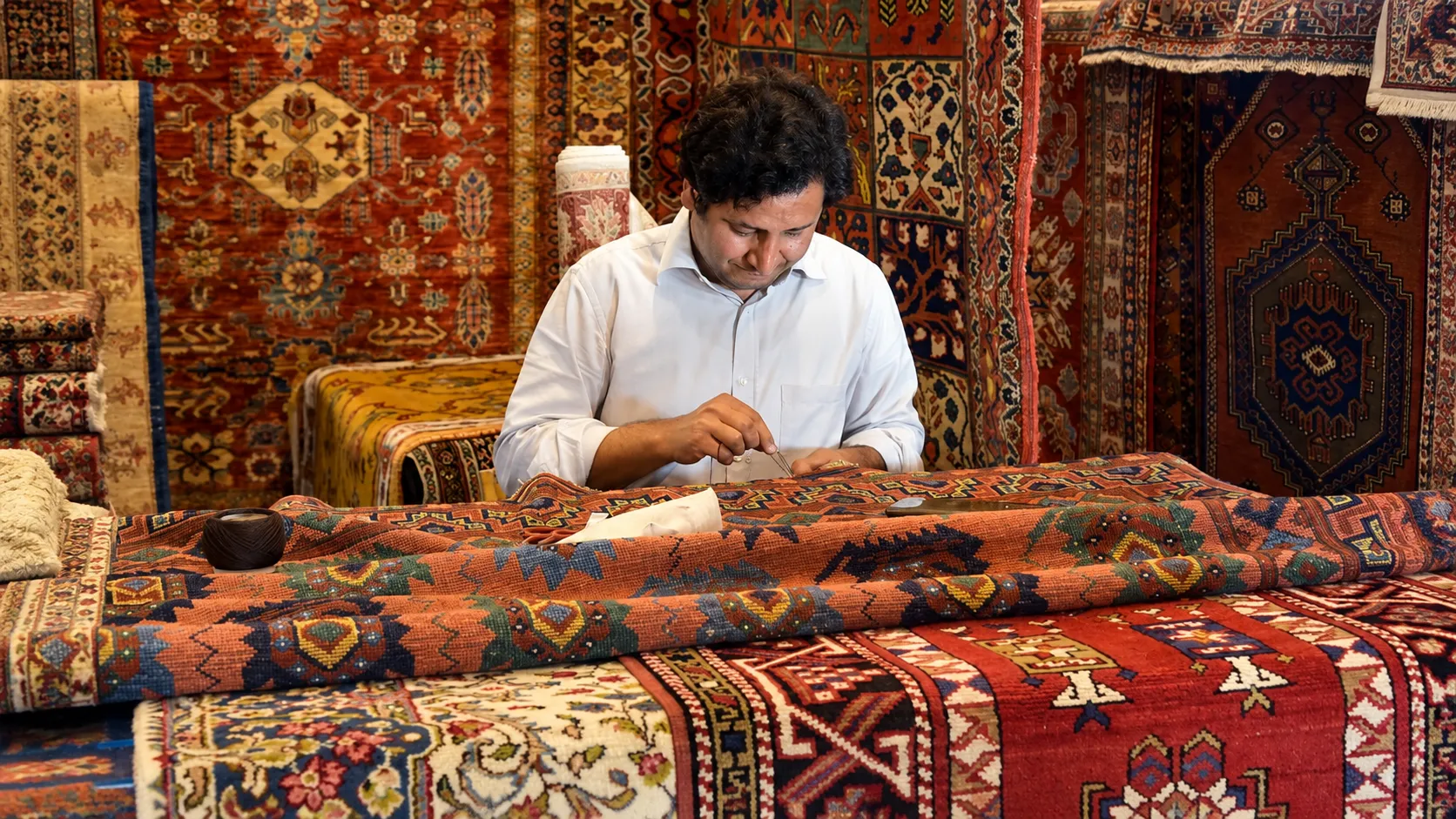
Workshops differ in detail, but the sequence below follows the process described by Jaipur Rugs, one of the city’s large producers, and matches the general description of hand-knotting given by other makers.
National Geographic’s account of a west Jaipur workshop adds a human detail: in the family it describes, a master weaver sings while working, and the song helps guide the knotting rhythm. Each family has its own melodies.
Knot density is the number people quote most, and also the one most often misunderstood. It describes how many knots sit in a square inch (or, in some trade references, a square decimetre). A higher count means more knots, more weaving time and finer detail, which is why finer carpets cost more. It does not automatically mean a better carpet for your room.
Published figures give a sense of scale. Jaipur Rugs says its Indian knot counts range from about 25 to 194 or more per square inch. At the very top of the historical range, Craftsmanship Magazine reports Mughal silk carpets under Shah Jahan woven at up to 2,000 knots per square inch.
Not every carpet sold as “handmade” is hand-knotted. The terms are used loosely, so it helps to know the main constructions, as defined by Jaipur Living in its rug guide:
| Type | How it is made | What to expect |
|---|---|---|
| Hand-knotted | Knots tied one row at a time on a vertical loom | Slowest to make; usually wool, or wool blended with silk or viscose; built to last for generations with good care |
| Hand-tufted | Yarn punched through pre-woven fabric with a tufting tool | Plush pile and detailed designs; backed with fabric, so it is a different product from a knotted rug |
| Hand-woven / hand-loomed | Made on hand-operated looms | Wide range of fibres, from wool to viscose and natural fibres |
| Flat-woven (dhurries, kilims) | Warp and weft threads interlace without a knotted pile | Flat, often reversible and easier to care for; usually wool or cotton |
If you only visit one museum to understand Jaipur’s carpet history, make it the Albert Hall Museum in Ram Niwas Garden, outside the walled Old City. The building, designed by Samuel Swinton Jacob in Indo-Saracenic style, opened to the public in 1887, and its collections include carpets alongside paintings, jewellery and sculpture.
The star is a Persian garden carpet, often called the Jaipur Garden Carpet. Hali magazine reports that it was found in 1937 in a locked storeroom of the abandoned palace of the Maharajas of Jaipur at Amber Fort. It is roughly 8.5 metres long and nearly 4 metres wide, with a chahar bagh (four-garden) layout showing a central pavilion in a pool, fish and waterfowl. The earliest inscription on its lining is dated 29 August 1632, which tells us it existed by then, though not necessarily when it was woven. Hali attributes it to Kerman, in south Persia, on the basis of technique and style rather than a weaving record, and notes that a source cited in the article says Mirza Raja Jai Singh bought it in Lahore for Amber in 1632, a claim the author does not independently confirm.
The carpet is a useful reference point. After seeing 17th-century work, modern Jaipur weaving is easier to place: the technique is related, but the designs and economics have changed. Check current opening hours and ticket prices on the museum’s official channels before you go, as they can change.
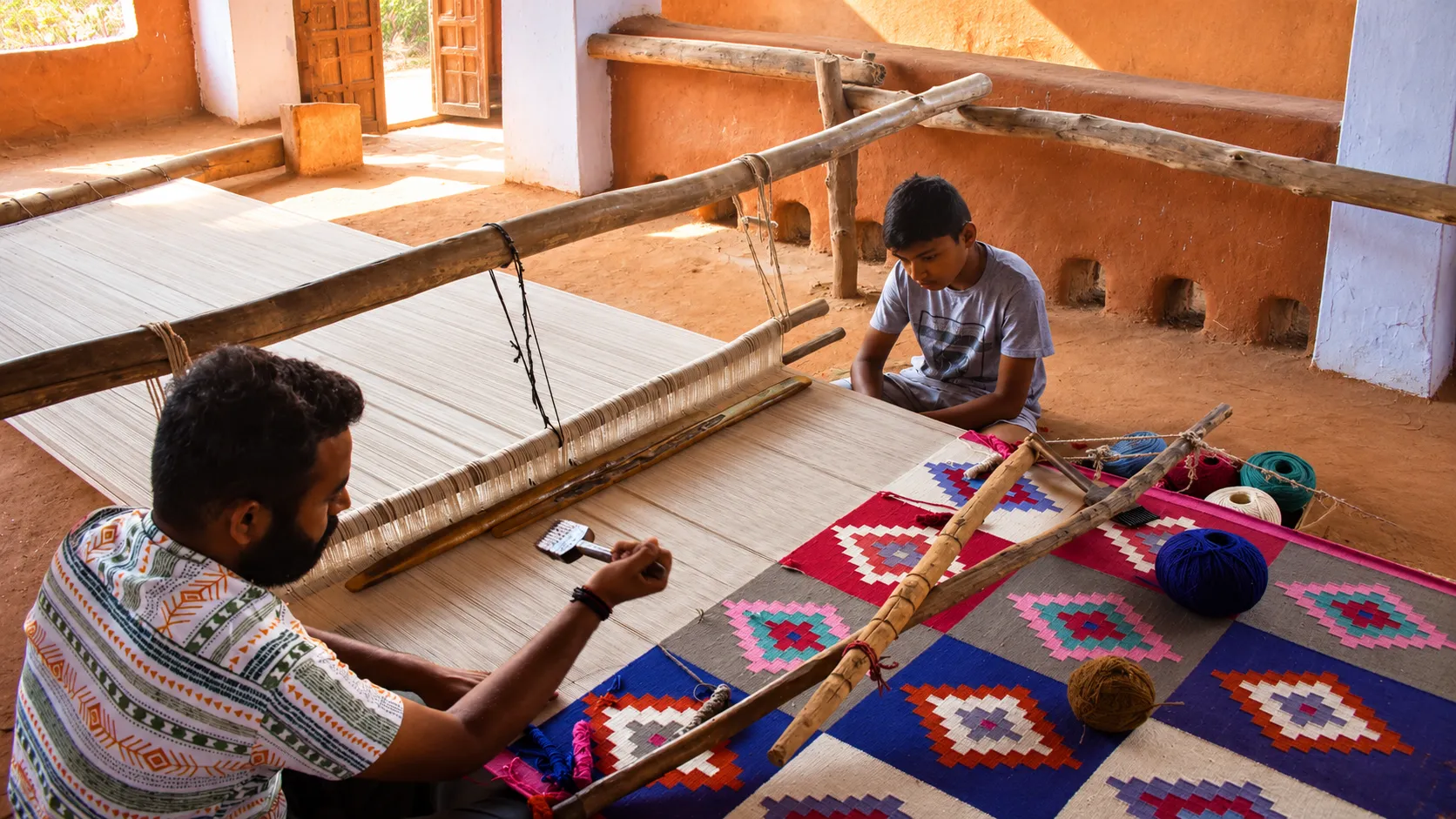
Weaving is hard to understand from a showroom alone. These are the realistic ways to see it:
If you are already planning to see Jaipur’s food heritage, a stop at Virasat Heritage Restaurant in Jaipur sits comfortably in the same day.
The following checks are standard trade guidance rather than anything specific to one shop. Use them as questions to ask, not as a guarantee of quality.
Carpet weaving in South Asia has a long-standing child-labour problem, and buyers have a legitimate interest in asking where a rug comes from. GoodWeave, a non-profit that works to end child labour in global supply chains, operates in India’s carpet-weaving communities, among other regions, and its label is aimed at buyers who want some assurance. Look for it, and ask whether a producer is certified, but treat a label as one piece of evidence and verify certification through GoodWeave directly.
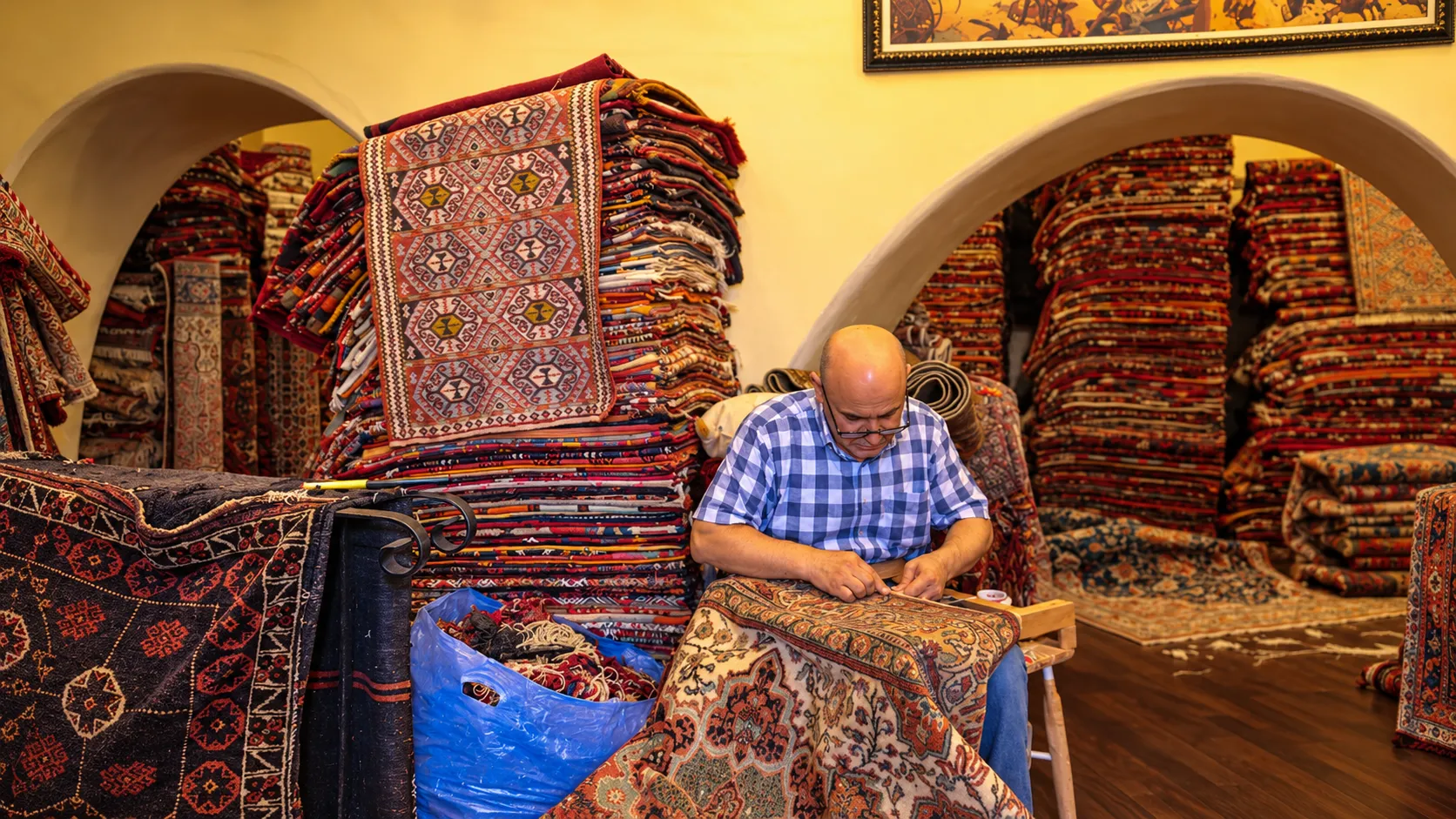
A workshop visit and museum stop fit into half a day, so they work well as part of a longer route rather than a trip of their own. Jaipur is the Rajasthan stop on the Delhi–Agra–Jaipur circuit, which is how most first-time visitors encounter it. Idyllic India Tours’ Golden Triangle tours cover that route, while the longer Royal Rajasthan tours allow more time in Jaipur and beyond. If a craft focus matters to you, you can enquire about a private, customised itinerary and ask whether a workshop visit can be included. Availability would need to be confirmed with the team.
The cooler months, roughly November to February, are generally the most comfortable for walking around Jaipur, though you should check seasonal conditions closer to your dates.
Handmade carpet weaving in Jaipur is a trade shaped by Mughal court taste, a long history of artisan patronage, a mid-20th-century decline and a gradual rebuilding. Seeing it at a loom, and seeing a 17th-century carpet at Albert Hall, makes a price tag easier to interpret. Ask how a carpet was made, check the back, and take your time over the decision.
Weavers in Jaipur build carpets one knot at a time. Try it yourself, then test what you've learned.
Pick a dye colour, then tap squares to tie knots. Turn on mirror mode and the pattern builds symmetrically, the way many traditional carpet designs do.
The sequence below follows the process described by Jaipur Rugs, a large Jaipur producer. Details vary between workshops.
Knot density is the number of knots in a square inch. Drag the slider to compare the range quoted for Indian carpets.
Jaipur is better known for jewellery, block printing and architecture, but it has an established hand-knotted carpet trade, and the city has been a magnet for artisans since at least the 18th century. Carpet weaving is one of several crafts in the city rather than its single claim to fame.
It depends on size and knot density. Published estimates from Jaipur producers range from about 240 days for a typical hand-knotted rug to up to a year for larger or finer pieces.
A dhurrie is flat-woven, with no knotted pile, and is often reversible. A hand-knotted carpet has a pile made by tying individual knots onto a warp, which is slower to make and usually costs more.
Yes, through workshop visits, particularly around Chokdi Gangapol and in family workshops, but access varies. Arrange it in advance, ideally through a guide or your tour operator.
Chat on WhatsApp