
5 Pillars of Tourism: Complete Guide with India Examples
The 5 Pillars of Tourism: A Complete Guide with India Examples Updated July 2026 — curated by the Idyllic India...
Read More →
Updated July 2026 — curated by the Idyllic India Tours travel team
Agra’s must-see list splits into two halves: the three UNESCO World Heritage Sites that put the city on every traveller’s map, and the quieter monuments most visitors never make time for. The Taj Mahal is obviously first — no introduction needed — but Agra Fort and Fatehpur Sikri hold their own as genuine architectural highlights rather than add-ons. Beyond the headline sites, a handful of smaller tombs, gardens and one very different wildlife sanctuary reward the travellers who slow down. Below are the ten places worth building your Agra itinerary around, from the marble mausoleum everyone comes for to a tiled tomb almost no one does.
Planning the wider trip? Agra is one stop on our Golden Triangle Tours through Delhi, Jaipur and Agra, or you can see the Taj Mahal and Agra Fort on a same-day visit with The White Marble Dream. Already sorted your sightseeing? Pair this list with our guide to Agra’s top luxury hotels for where to stay.
The reason everyone comes to Agra, and it still manages to exceed expectations in person. Built by Emperor Shah Jahan between 1632 and 1653 as a mausoleum for his wife Mumtaz Mahal, the white marble monument took an estimated 20,000 artisans over two decades to complete. Its real craft reveals itself up close: the entire surface is inlaid with semi-precious stones — carnelian, lapis lazuli, malachite and more — set into the marble in intricate floral patterns, a technique called pietra dura. Entry is ₹50 for Indian nationals and ₹1,100 for foreign tourists, with an optional ₹200 add-on to step inside the marble mausoleum itself; the monument is closed to general visitors every Friday. Arrive at sunrise, when the ticket queues are shortest and the marble takes on a soft pink-gold tone before turning ivory-white as the sun climbs.
Best for: first-time visitors, sunrise photography, and anyone who wants the view they’ve seen in photos their whole life.
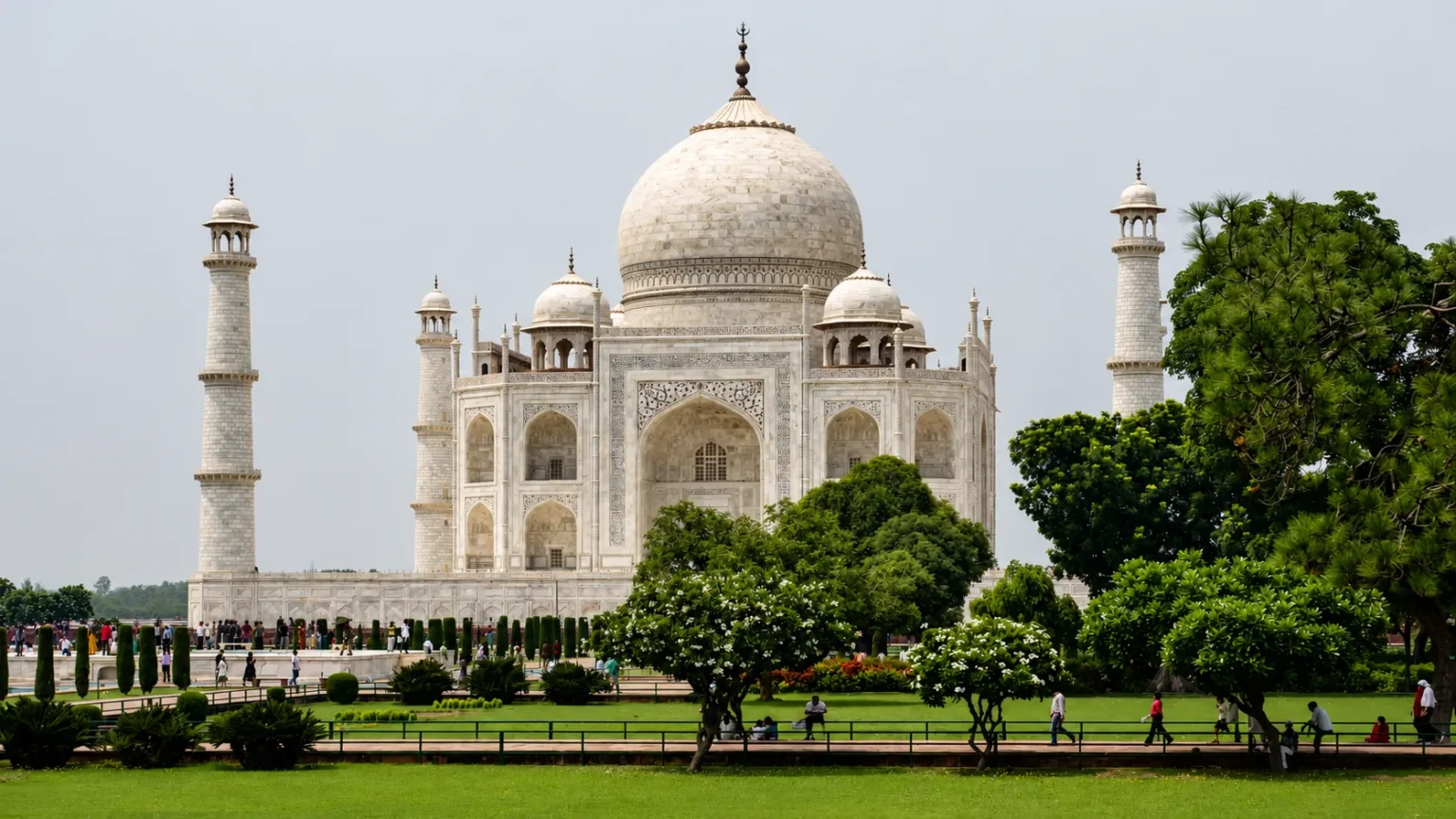
Before the Taj Mahal existed, this was the seat of Mughal power. A UNESCO World Heritage Site about 2.5 km from the Taj, Agra Fort is less a single building than a walled city of red sandstone palaces, courtyards and audience halls, built up over the reigns of Akbar, Jahangir and Shah Jahan. The most poignant stop inside is Musamman Burj, the octagonal tower where Shah Jahan spent his final years under house arrest, gazing out at the monument he’d built — the view from that window is one of the best free vantage points of the Taj Mahal in the city. Entry is ₹50 for Indian nationals and ₹650 for foreign tourists, and the fort is open daily from 6 AM to 6 PM (last entry 5 PM), with no weekly closure. An evening light-and-sound show narrates the fort’s history against its own walls.
Best for: history buffs, Mughal architecture, and pairing with a Moti Masjid visit since both sit inside the same complex.
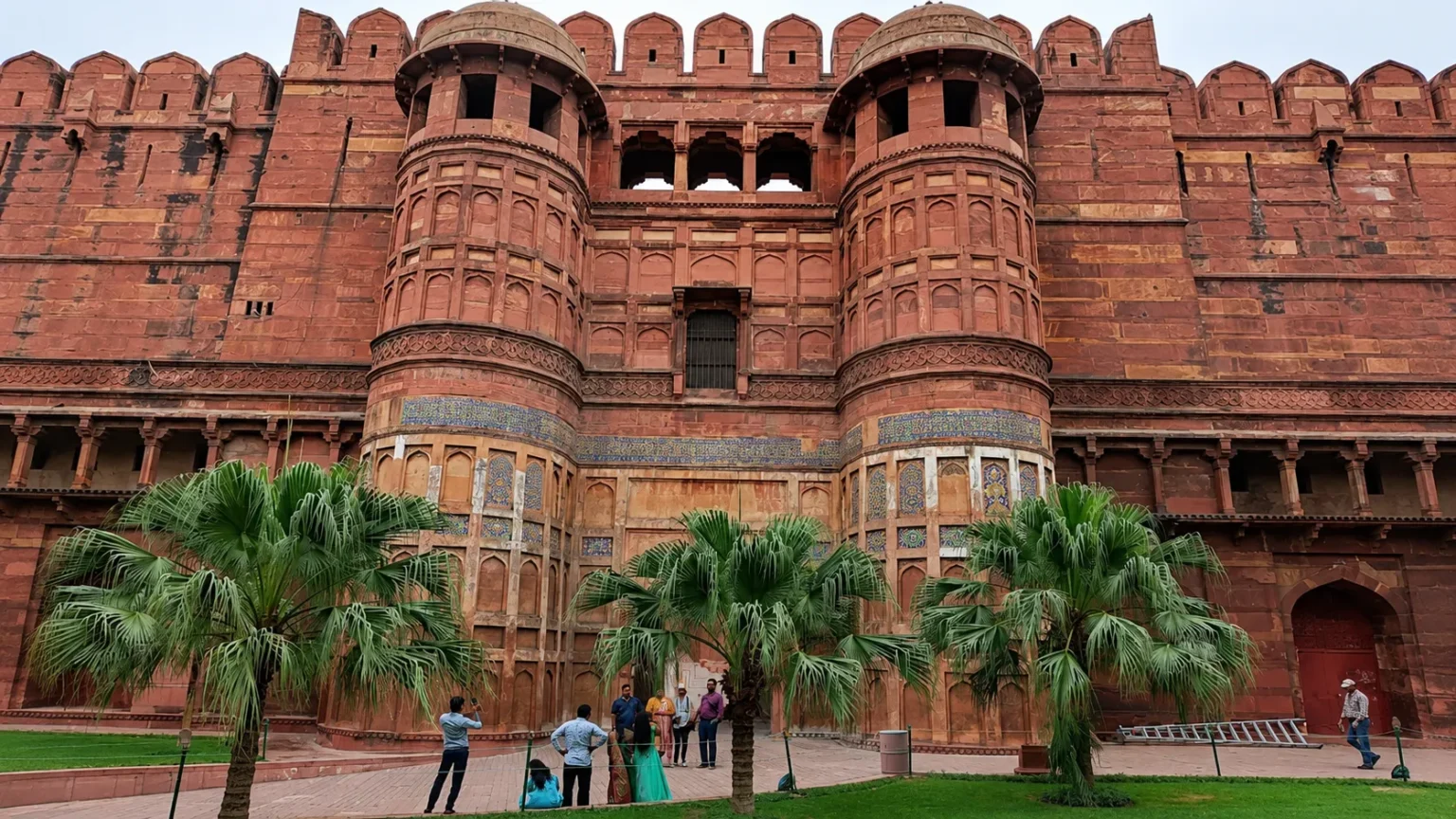
A UNESCO World Heritage Site about 37 km west of Agra, Fatehpur Sikri is the closest thing India has to a perfectly preserved ghost city. Emperor Akbar built it as his new capital in 1571, only for the entire court to abandon it roughly fifteen years later, most likely because the site couldn’t sustain a reliable water supply. What’s left is a red sandstone complex of palaces, courtyards and the Jama Masjid mosque, entered through Buland Darwaza — at over 54 metres, one of the tallest gateways in the world, built to commemorate Akbar’s victory in Gujarat. Budget half a day including the drive; the site rewards an unhurried walk through Jodha Bai’s Palace, the five-tiered Panch Mahal, and the white marble tomb of the Sufi saint Salim Chishti.
Best for: a half-day excursion from Agra and travellers who want Mughal history without the Taj Mahal crowds.
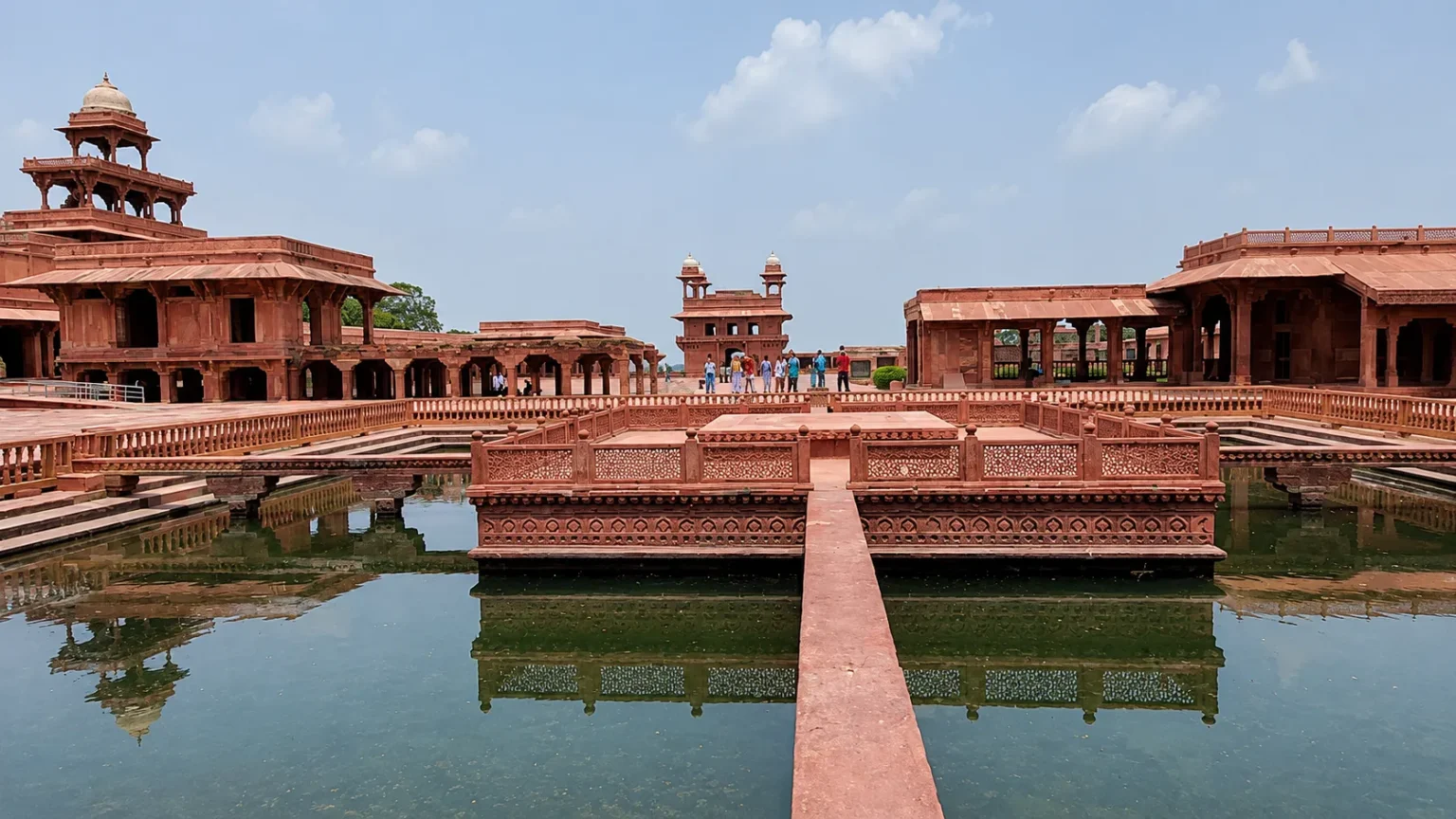
Directly across the Yamuna River from the Taj Mahal sits this Charbagh-style garden, believed to have been laid out by Emperor Babur and later used by Shah Jahan as the spot from which to admire his masterpiece from a distance. Today it’s the single best place in Agra to photograph the Taj Mahal in full, symmetrical profile without fighting for space at the monument’s own gates — particularly at sunset, when the marble catches the last light and the garden empties out. It’s a modest, unhurried site: paved walkways, fountain channels, and open lawns rather than an elaborate monument in its own right, which is exactly its appeal after a morning of dense sightseeing.
Best for: sunset photography and a quiet, uncrowded pause in the itinerary.
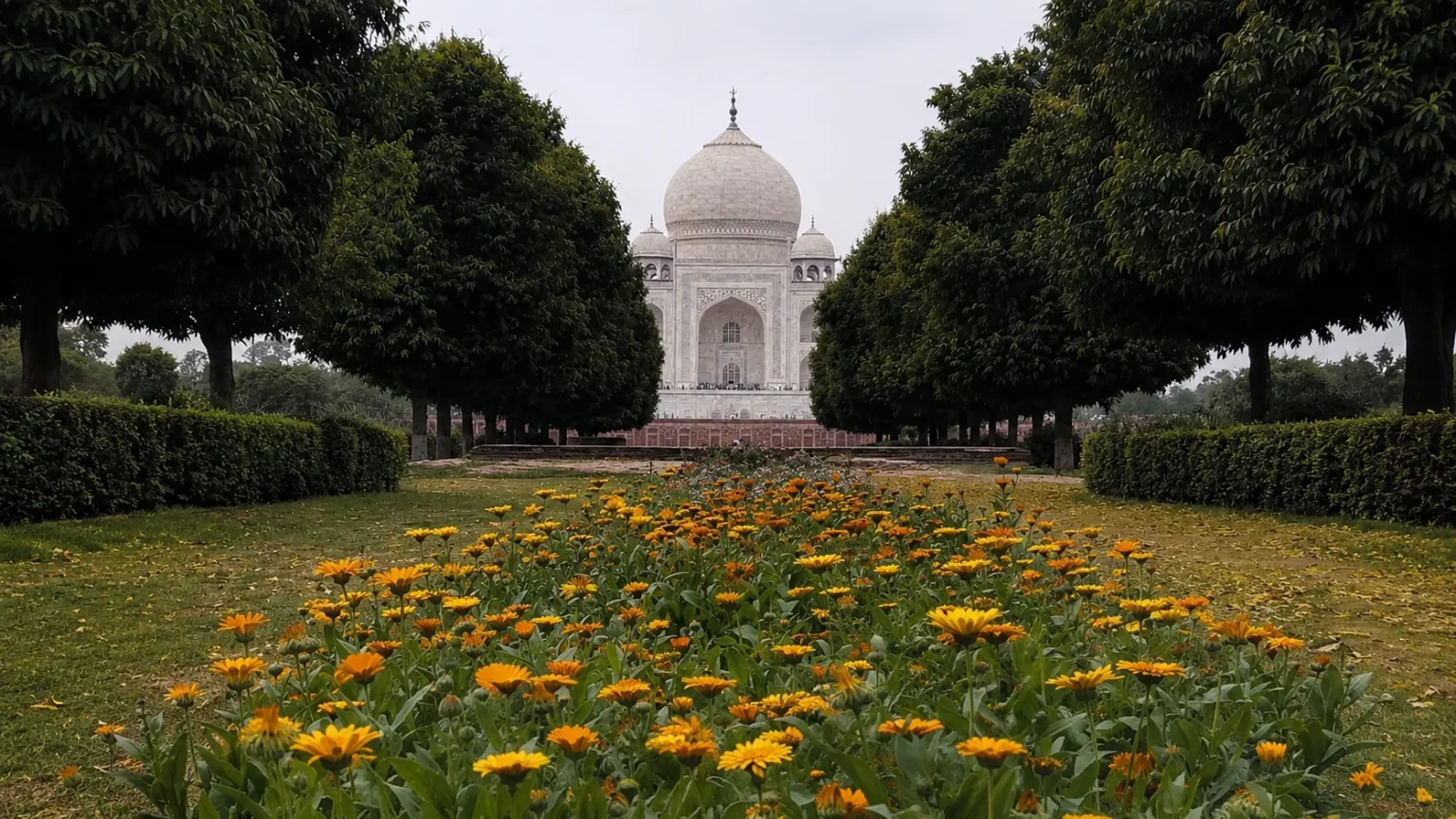
Built between 1622 and 1628, a full generation before the Taj Mahal, this riverside tomb was commissioned by Empress Nur Jahan for her father, Mirza Ghiyas Beg, a Persian nobleman who rose to become treasurer of Emperor Jahangir’s court. It has the distinction of being the first Mughal structure built entirely in white marble, and many historians consider it a direct architectural precursor to the Taj — the same delicate pietra dura inlay work, the same Charbagh garden layout, at a fraction of the scale and the crowds. Set in the Moti Bagh area about 6 km from the Taj Mahal on the way to Mehtab Bagh, it’s an easy add-on to an afternoon itinerary and rarely feels busy even in peak season.
Best for: architecture lovers who want the Taj Mahal’s craftsmanship without the queues.
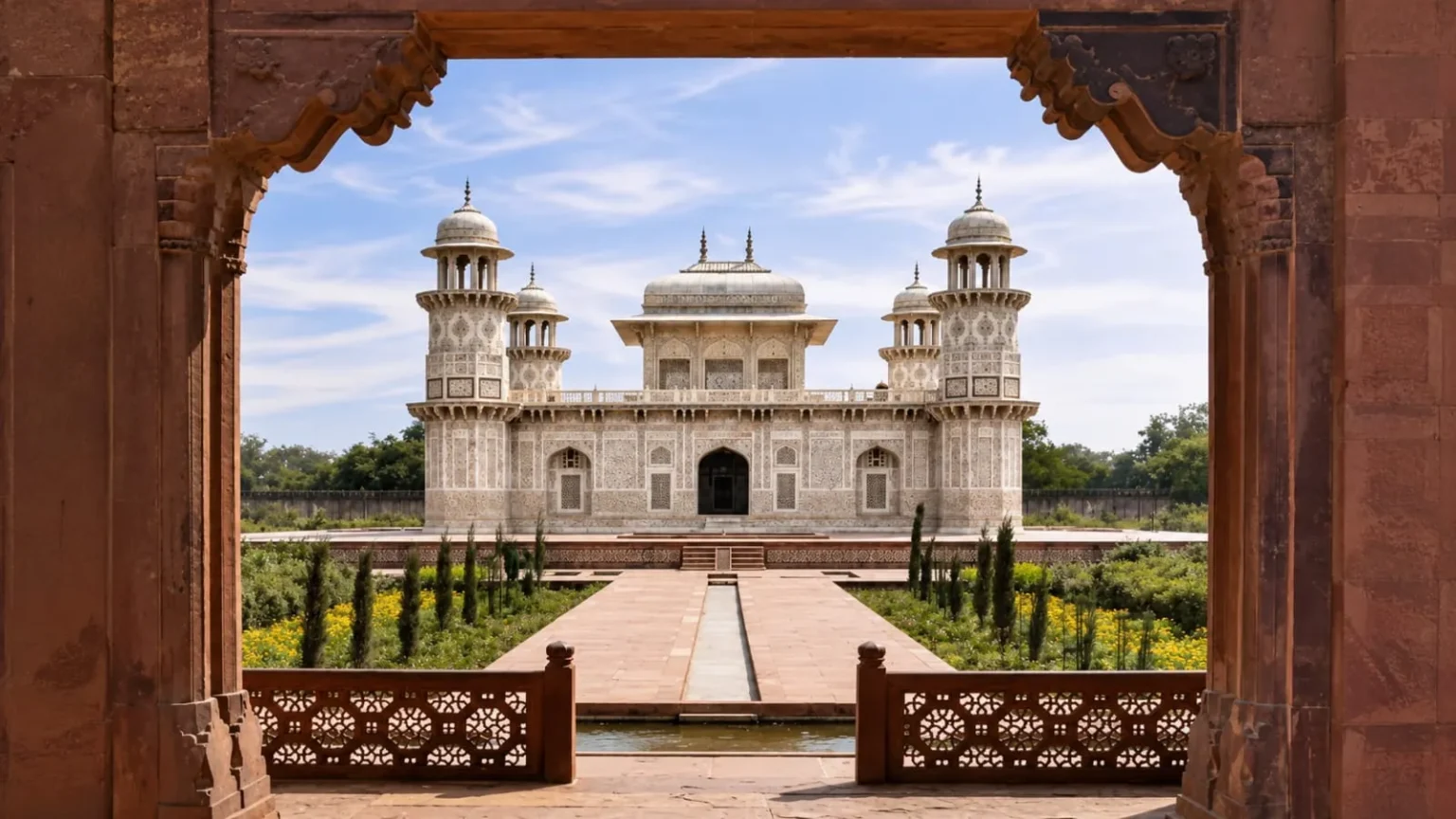
On the northern outskirts of Agra, about 10 km from the city centre, this is the final resting place of Akbar, widely regarded as the greatest of the Mughal emperors. Akbar began designing his own mausoleum before his death in 1605, and his son Jahangir completed it in 1613 — deliberately blending Hindu, Islamic, Christian and Jain architectural motifs to reflect Akbar’s famously secular religious policy. The tomb sits inside a 119-acre Charbagh garden enclosed by a red sandstone wall, and it’s genuinely peaceful; spotted deer and langurs roam the grounds, and the crowds thin out considerably compared to the Taj and Agra Fort.
Best for: travellers who want a slower, more reflective history stop away from the main circuit.
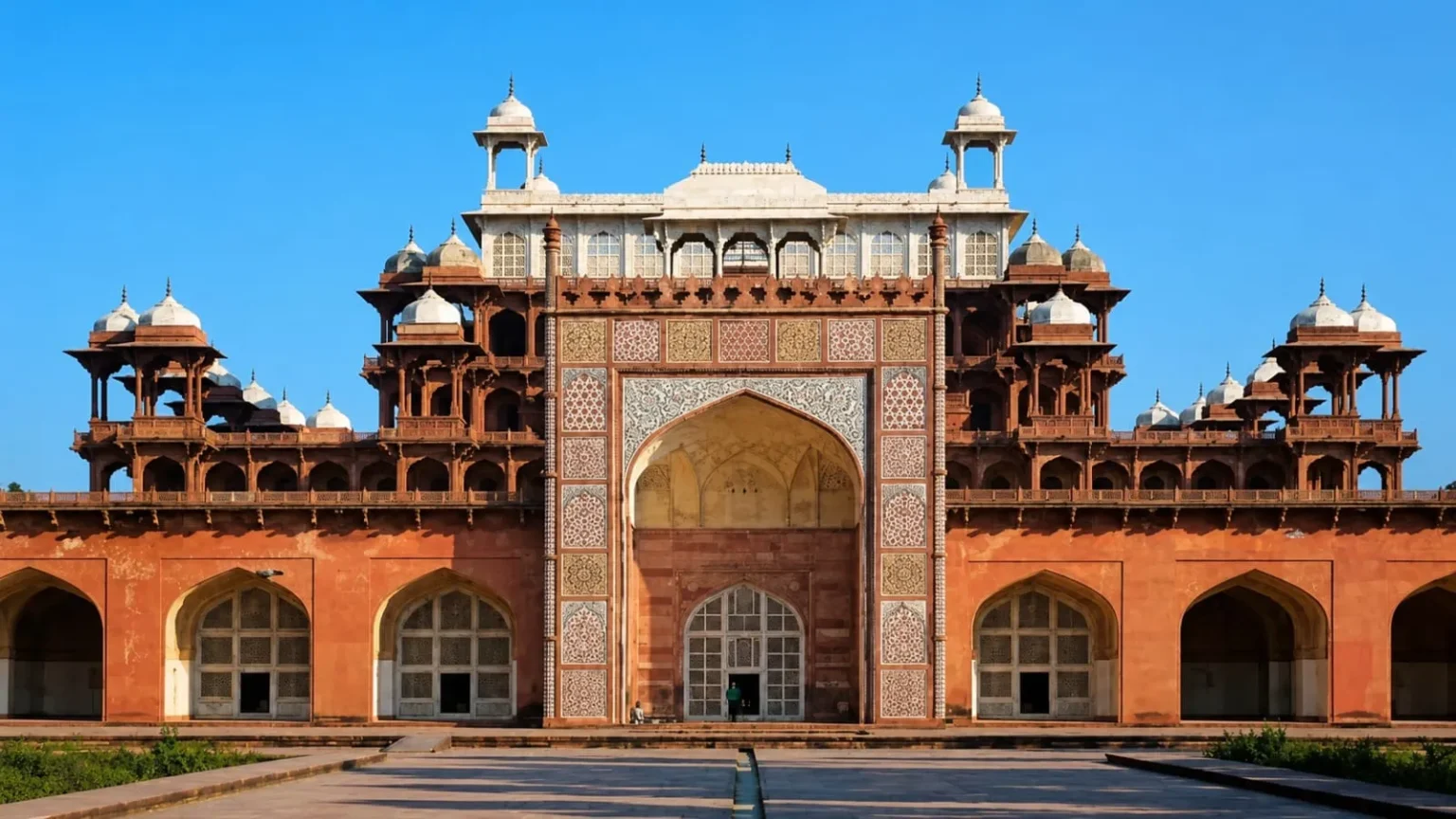
Not to be confused with Delhi’s better-known mosque of the same name, Agra’s Jama Masjid sits near Agra Fort in the middle of the old city’s Kinari Bazaar. Emperor Shah Jahan’s eldest daughter, Jahanara Begum, commissioned it in 1648, and it’s still an active place of worship today — a red sandstone structure with distinctive marble-striped zigzag patterns across its domes, unlike anything else on this list. Because it’s woven into the working, bustling fabric of Old Agra rather than roped off as a monument, a visit here doubles as a walk through the spice, leather-goods and jewellery stalls of Kinari Bazaar itself.
Best for: experiencing local life and Old Agra’s street energy alongside the architecture.
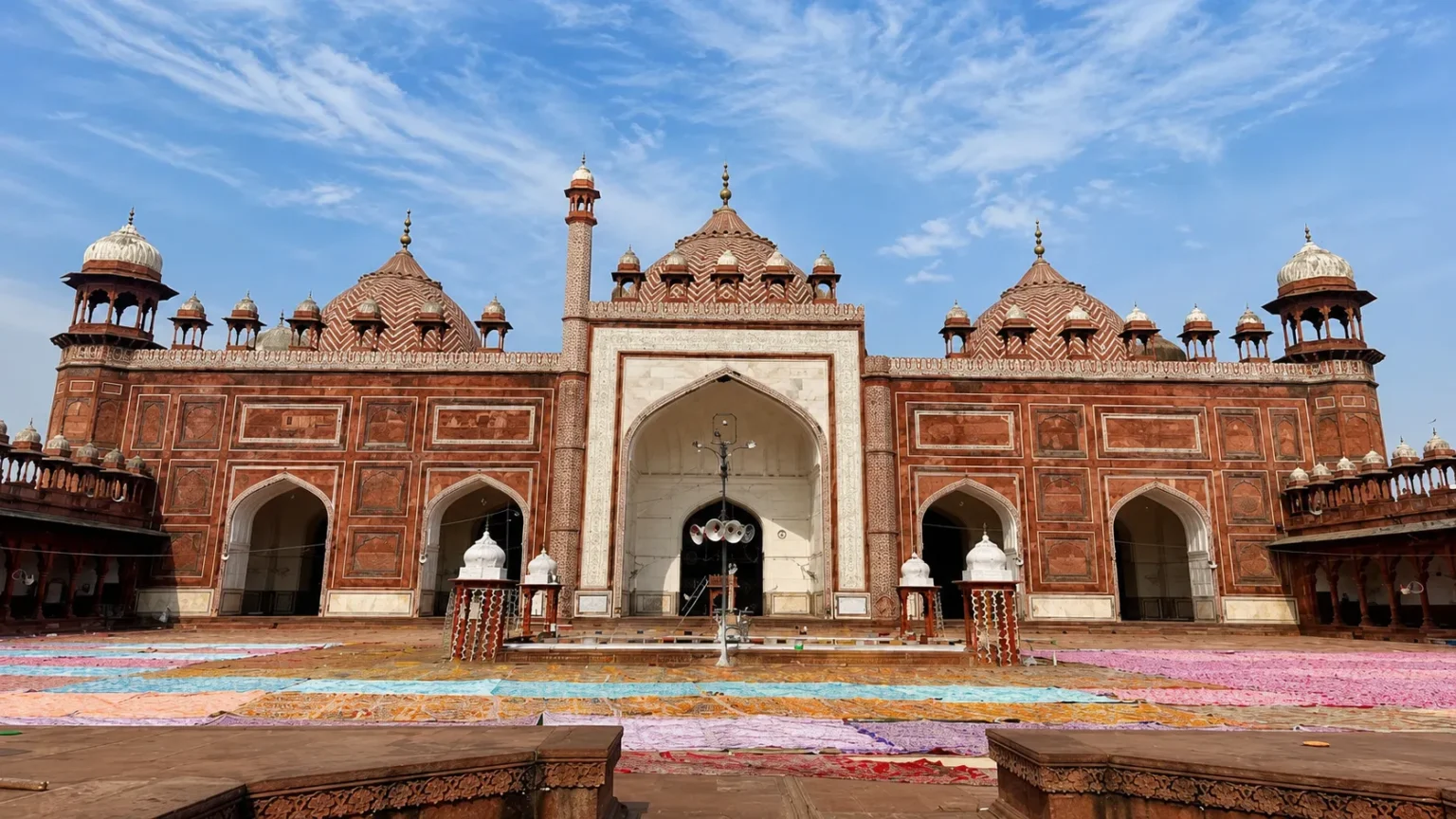
Agra’s most overlooked monument, and arguably its most unusual. This Persian-style tomb on the eastern bank of the Yamuna, near Itmad-ud-Daulah’s Tomb, was built for Afzal Khan Mullah Shukrullah Shirazi, a Persian poet and scholar who served as Shah Jahan’s chief minister. What sets it apart is its facade: glazed, coloured tilework in the Persian tradition, a technique used almost nowhere else in Mughal India. Centuries of exposure have worn much of the tiling away, which is part of its quiet appeal — visitors are rare, there’s no queue, and the faded blue-and-gold patterns still visible on parts of the exterior are worth the short detour.
Best for: travellers chasing hidden gems who’ve already covered the headline monuments.
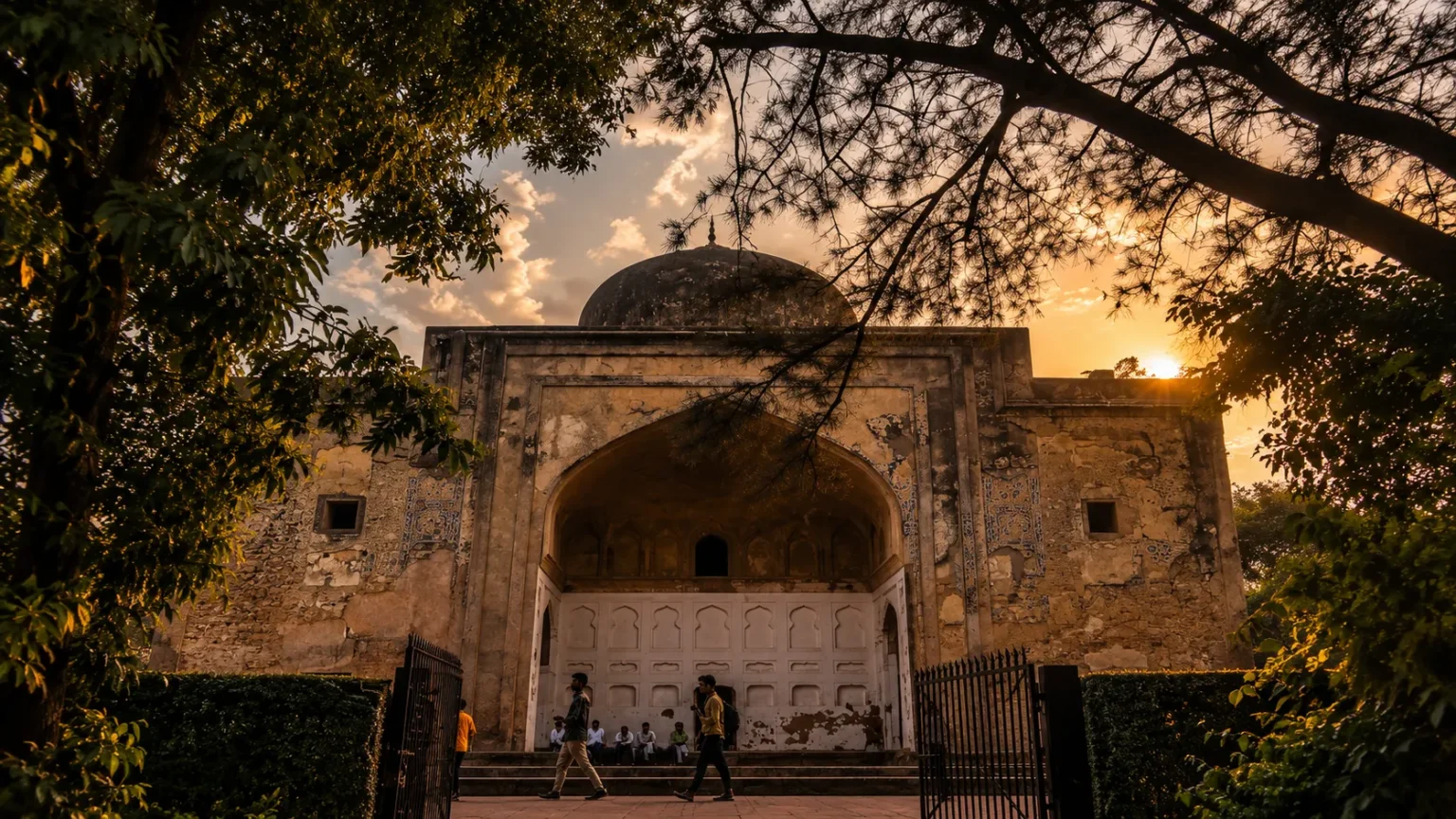
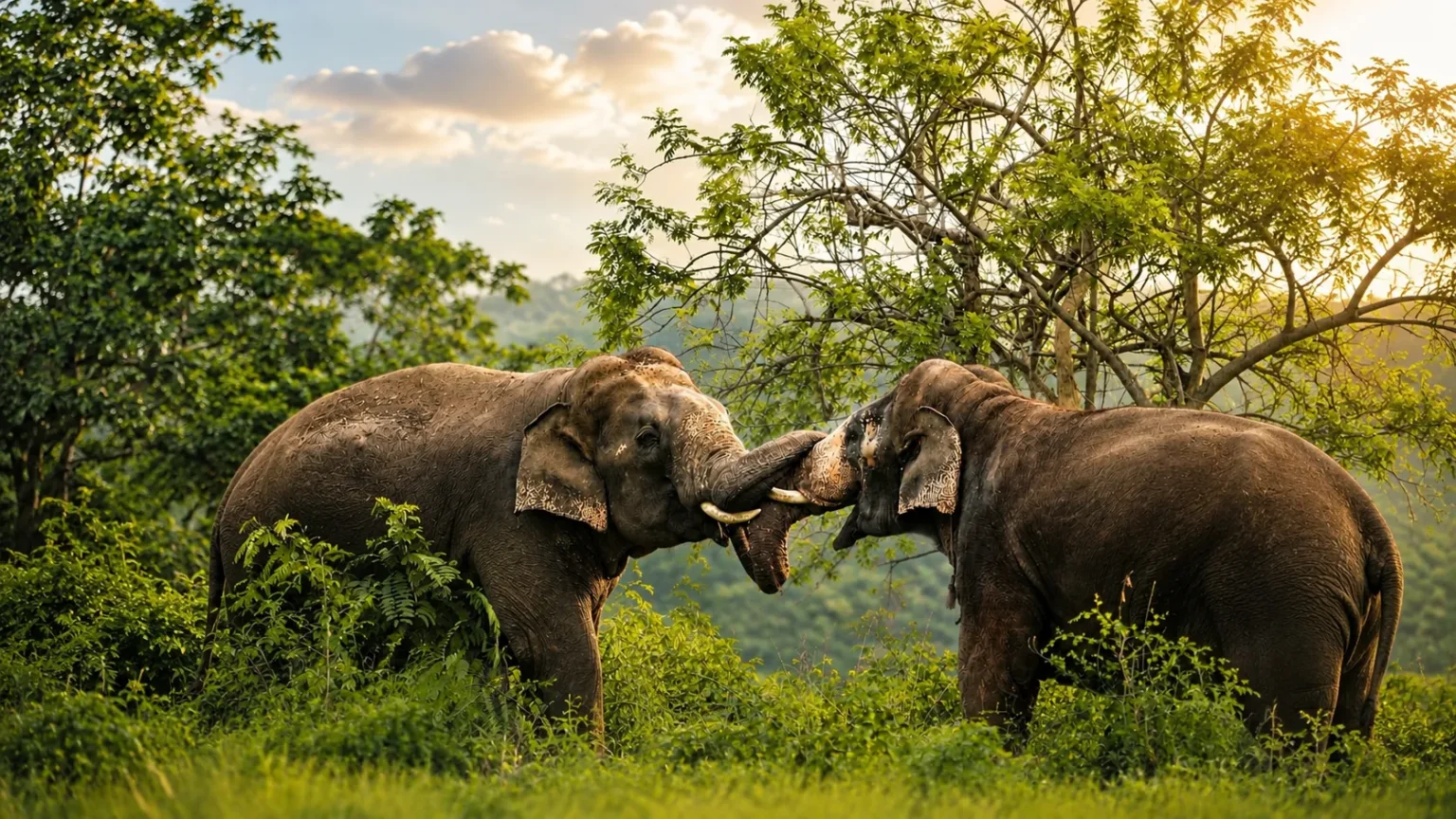
Tucked inside the Agra Fort complex and easy to miss if you’re not looking for it, the Moti Masjid — literally “Pearl Mosque” — was built by Shah Jahan as a private mosque for the royal household. Constructed entirely in white marble with none of the inlay ornamentation found at the Taj Mahal or Baby Taj, its beauty is in its restraint: clean domes, a vast open courtyard, and a sense of stillness that contrasts sharply with the red sandstone grandeur of the rest of the fort. Because it sits within Agra Fort’s ticketed complex, there’s no separate entry fee — it’s simply a matter of knowing to seek it out once you’re inside.
Best for: pairing with your Agra Fort visit rather than a standalone trip.
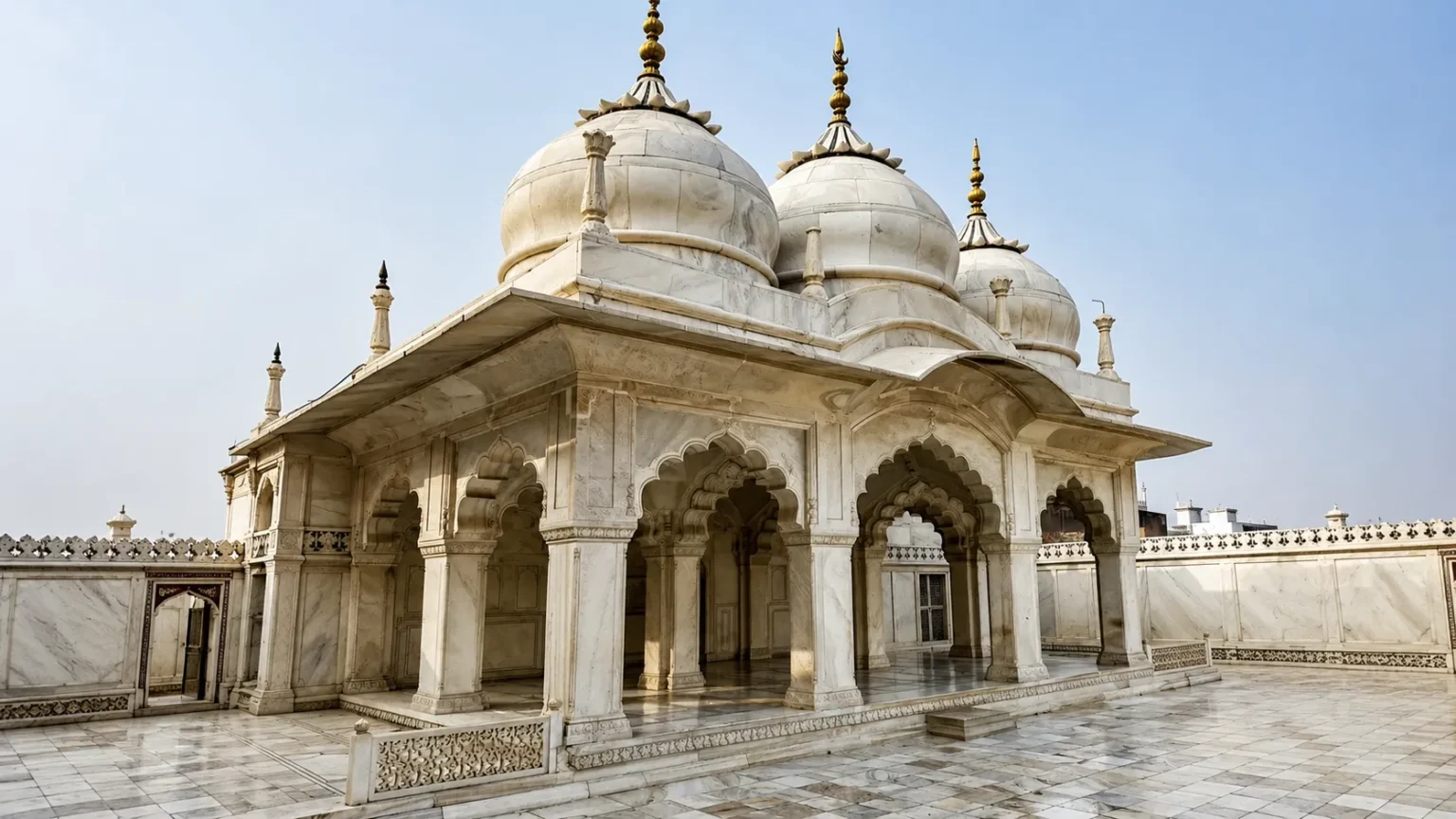
A genuine change of pace from the monument circuit. Run by the conservation charity Wildlife SOS, this centre on the Agra-Mathura road rescues elephants from decades of abuse in temple tourism, street begging and the logging trade, giving them open enclosures, veterinary care and, for many, their first mud bath and proper diet in years. Visits are ethical and no-ride — you walk the grounds with a guide, hear each elephant’s rescue story, and watch them behave the way elephants actually do when they’re not chained. Slots are limited and fill up, so visits need to be booked in advance rather than shown up to.
Best for: families, animal lovers, and travellers who want one day in Agra that isn’t about Mughal history.
Attraction | Category | Key Highlight | Best for |
Taj Mahal | UNESCO World Heritage Site | White marble mausoleum, gemstone inlay work | First-time visitors, sunrise photography |
Agra Fort | UNESCO World Heritage Site | Red sandstone fort, Taj Mahal view from captivity | History buffs, Mughal architecture |
Fatehpur Sikri | UNESCO World Heritage Site | Abandoned Mughal capital, Buland Darwaza gateway | Half-day excursion, architecture lovers |
Mehtab Bagh | Charbagh Garden | Symmetrical Taj Mahal views across the Yamuna | Sunset photography, quiet walks |
Itmad-ud-Daulah’s Tomb (Baby Taj) | Mughal Tomb | First all-marble Mughal structure in India | Architecture lovers, fewer crowds |
Akbar’s Tomb, Sikandra | Mughal Mausoleum | Sandstone-and-marble tomb, Charbagh gardens with deer | A peaceful history stop |
Jama Masjid, Agra | Historic Mosque | Built by Jahanara Begum, striped marble domes | Local colour, Old Agra street life |
Chini Ka Rauza | Persian-Style Tomb | Rare glazed-tile facade, almost no crowds | Hidden-gem seekers |
Moti Masjid | Mosque (inside Agra Fort) | “Pearl Mosque,” pure white marble courtyard | Pairing with an Agra Fort visit |
Wildlife SOS Elephant Conservation and Care Center | Wildlife Sanctuary | Ethical, no-ride elephant rescue centre | Families, animal lovers, a change of pace |
Interactive · Agra Trip Planner
Ten places, one city, and not enough hours to see all of them at once. Pick how much time you have and what matters most to you, and we'll suggest a route built from the attractions above.
How much time do you have in Agra?
What matters most to you?
Timings assume a private guide and driver, which Idyllic India Tours arranges for every Agra stop — so you're never the one figuring out tickets or traffic.
Start planning your trip →Agra rewards travelers who go beyond a rushed same-day dash from Delhi. Whether you want an early, uncrowded sunrise at the Taj Mahal, a private guide who can walk you through the symbolism at Akbar’s Tomb, or a quiet afternoon at the Wildlife SOS sanctuary, our travel specialists design the pacing around what matters to you.
We arrange stays at Agra’s finest heritage and luxury properties, coordinate private transfers between monuments, and connect you with local guides who bring the Mughal era to life beyond what a guidebook can offer. Whether Agra is a focused one-day visit or part of a longer Golden Triangle journey, we handle the logistics so you can stay present in the experience.
Ready to experience Agra your way? Get in touch with Idyllic India Tours to start crafting your bespoke Agra itinerary.
One full day is enough to see the Taj Mahal and Agra Fort comfortably. Two days allow time to add Fatehpur Sikri, Itmad-ud-Daulah, and the Wildlife SOS Elephant Conservation and Care Center without rushing.
Sunrise, at the first entry slot, offers the softest light, the smallest crowds, and cooler temperatures, particularly between March and October.
No. The Taj Mahal is closed to tourists every Friday for prayers.
Yes, for travelers with a spare half day. It’s about 40 kilometers from Agra city and offers a well-preserved look at a 16th-century Mughal capital that most first-time visitors miss.
No, and that’s intentional. The center is a rescue and rehabilitation sanctuary, not a riding attraction — all visits are observation and care-based only.
Chat on WhatsApp