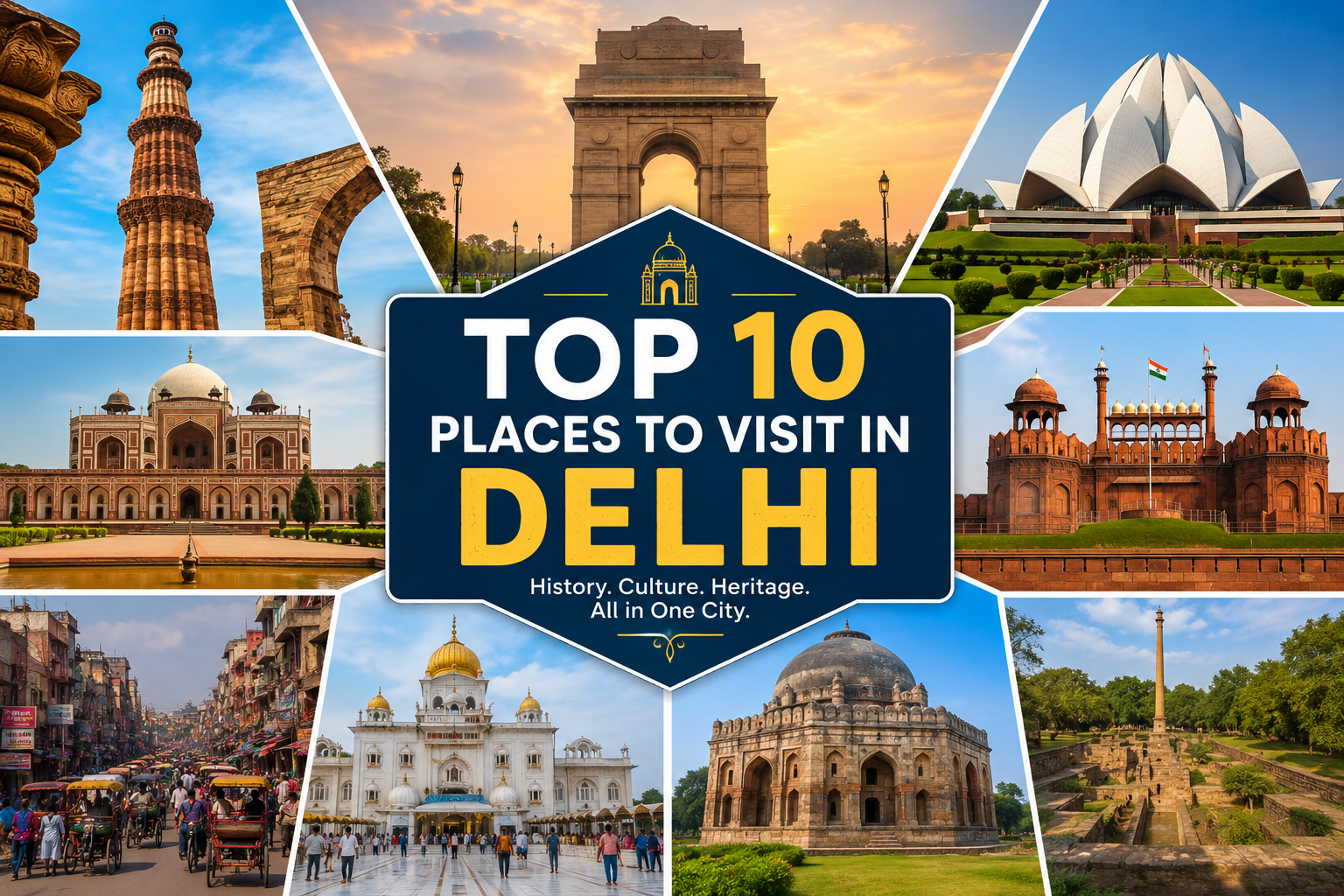
Delhi’s top attractions blend history, culture, and modernity, offering visitors a rich experience from Mughal monuments to serene gardens and bustling markets.
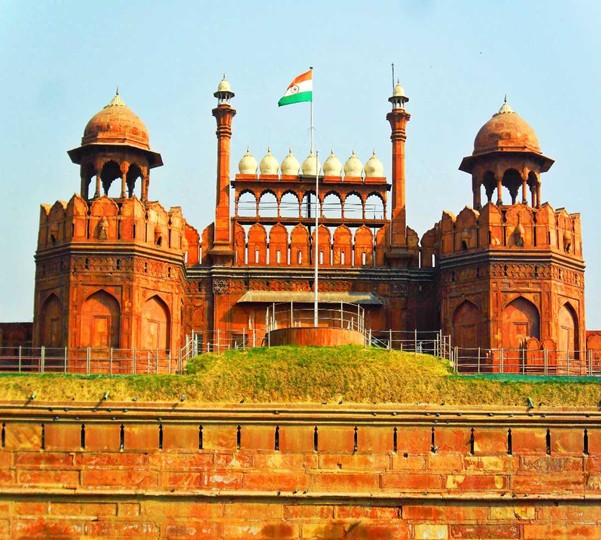
1. Red Fort (Lal Qila)
A UNESCO World Heritage Site, the Red Fort is a 17th-century Mughal fortress built by Shah Jahan. It served as the main residence of Mughal emperors and is a symbol of India’s independence, where the Prime Minister hoists the national flag on Independence Day. Visitors can explore the Diwan-i-Aam, Diwan-i-Khas, Rang Mahal, and enjoy the evening Sound and Light show.
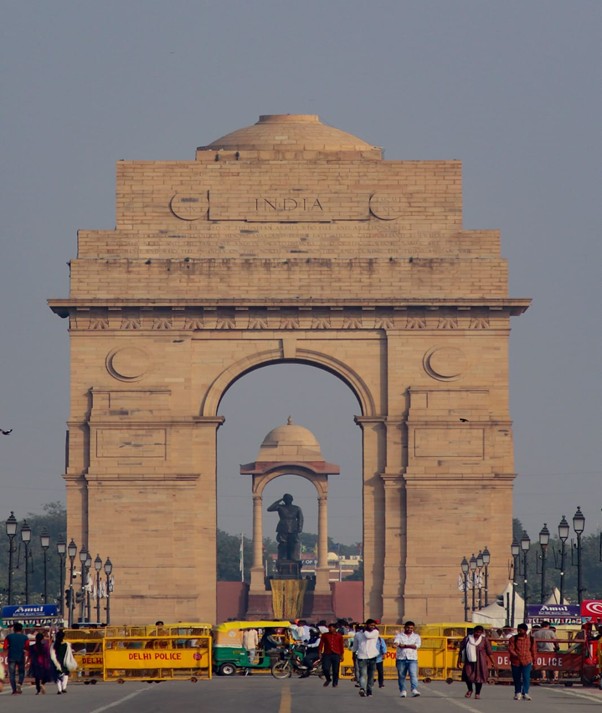
2. India Gate
A 42-meter-high war memorial honoring 70,000 Indian soldiers who died in World War I and the Third Anglo-Afghan War. The surrounding lawns are perfect for picnics, and the monument is beautifully illuminated at night. Nearby is the Amar Jawan Jyoti, an eternal flame for fallen soldiers.
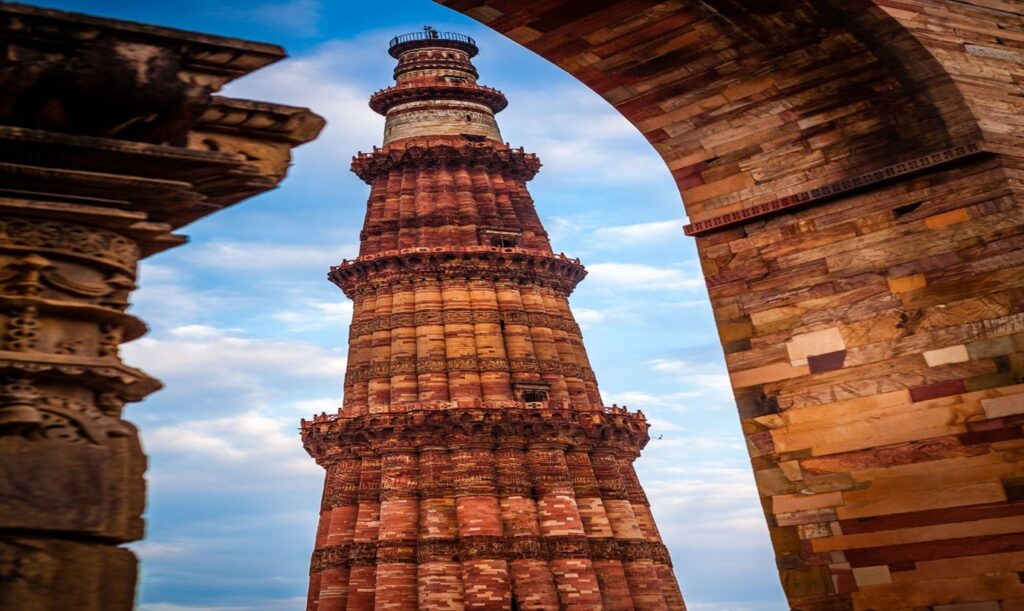
3. Qutub Minar
The tallest brick minaret in the world at 73 meters, Qutub Minar is a UNESCO World Heritage Site showcasing Indo-Islamic architecture. symbolizing the fusion of Hindu, Islamic, and British influences.
Hindu Influence: The minaret was originally built as a victory tower by Qutb-ud-din Aibak, marking the defeat of the last Hindu ruler of Delhi. It features intricate carvings and floral motifs, reflecting Hindu craftsmanship.
Islamic Influence: Over time, the minaret was expanded and rebuilt, incorporating Islamic elements such as Arabic inscriptions and geometric patterns. It became a symbol of Islamic rule in India and is often seen as a representation of the cultural exchange between Hindu and Islamic traditions.
British Influence: The British added a lightning conductor in 1829, enhancing safety and modernizing the structure. The minaret’s design and materials reflect a blend of local and Islamic architectural styles, showcasing the diverse cultural heritage of the region.
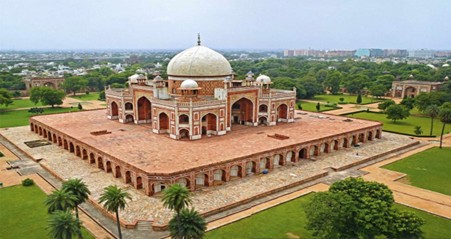
4. Humayun’s Tomb
A Persian-style garden tomb and UNESCO World Heritage Site, Humayun’s Tomb inspired the Taj Mahal. The complex houses tombs of Mughal royals and features the Charbagh gardens. Ideal for early morning or late afternoon visits.
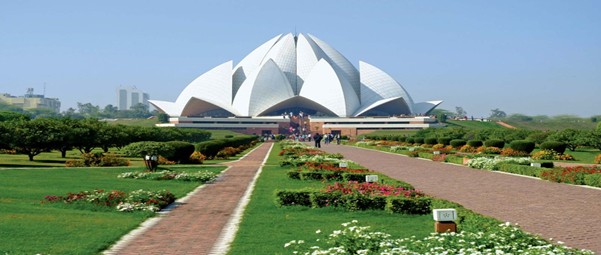
5. Lotus Temple
A Bahá’í House of Worship shaped like a lotus flower, open to all faiths. Known for its serene ambiance and striking architecture, it is a popular spot for meditation and photography
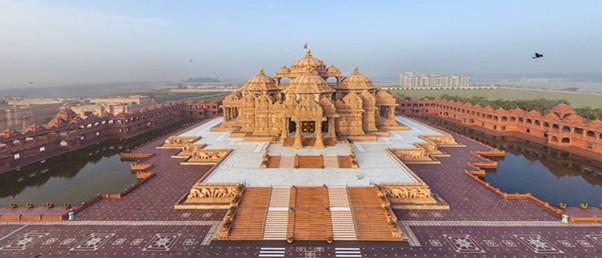
6. Akshardham Temple
A modern Hindu temple complex showcasing India’s cultural heritage through intricate carvings, exhibitions, and a musical water show. Photography is restricted inside, and conservative dress is required.
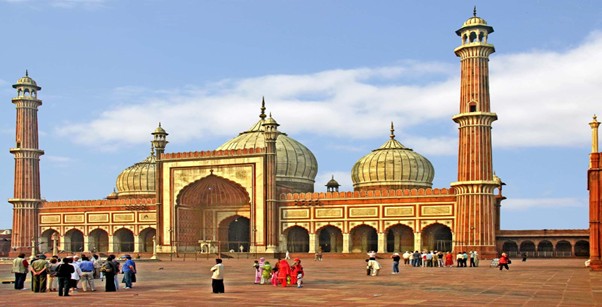
7. Jama Masjid
India’s largest mosque, built by Shah Jahan, accommodating up to 25,000 worshippers. Visitors can climb the minarets for panoramic views of Old Delhi. Strict dress code applies.
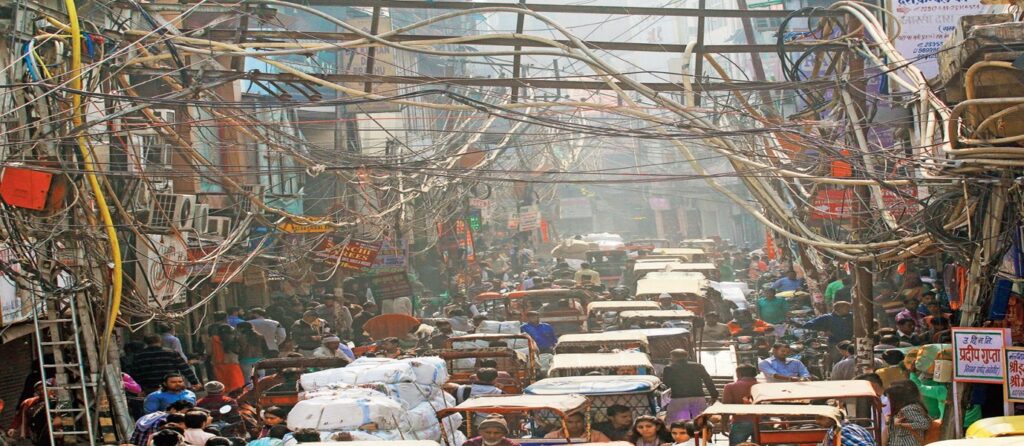
8. Chandni Chowk
A historic 17th-century market in Old Delhi, famous for street food, spices, jewelry, and textiles. Explore narrow lanes, havelis, and temples while experiencing Delhi’s vibrant street life.
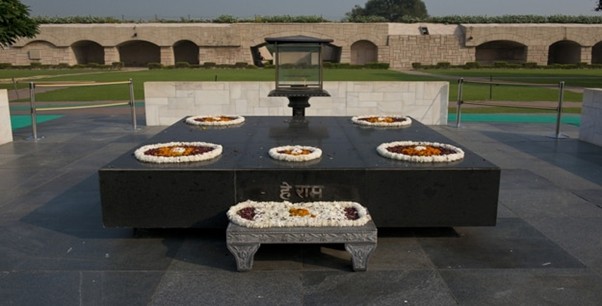
9. Raj Ghat
A memorial dedicated to Mahatma Gandhi, featuring a simple black marble platform and eternal flame. It is a peaceful site for reflection and paying tribute to the Father of the Nation.
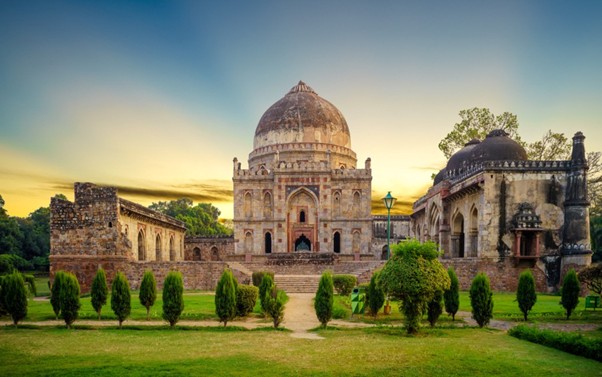
10. Lodhi Gardens
A 90-acre park in Central Delhi, featuring Mughal-era tombs, lush lawns, and walking paths. Ideal for morning walks, yoga, and picnics amidst historical monuments.